


TABLE OF CONTENTS
SDG 12: RESPONSIBLE CONSUMPTION AND PRODUCTION
Research on Responsible Consumption and Production
Turning Plastic Waste into New Products
Developing an Automated Electronic Waste Monitoring, Segregation, and Recycling System
Understanding Consumer Behaviour and Promoting Sustainable Practices
Sustainable Procurement Policy
Minimising Plastics and Disposable Items
Extending Sustainability Standards to Suppliers and Outsourced Services
Waste Reduction in Campus Operations
Paperless Administration and Digital Procurement
Waste Prevention and Reduction at Source
Assessing the Environmental Footprint of Campus Operations
Promoting Responsible Food Handling and Operational Practices
Sustainability Reporting and Accountability
Institutional Reporting on Sustainable Development Goals
International Commitments and Sustainability Accountability
Education, Awareness and Community Engagement
Student-Led Sustainability Clubs
World Environment Day Campaigns
Integrating Responsible Consumption into Teaching and Learning
Community Innovation and Sustainable Solutions
Student Innovation and Circular Economy Initiatives
AIUB Sustainable Futures 2026: Promoting Responsible Consumption Through Experiential Learning
Sustainability Innovation Challenge and Student-Led Product Design
Industry Engagement and Sustainable Production Education
Industrial Visit to PRAN Industrial Park
Industrial Visit to RFL Industrial Park
Institutional Sustainability Assessment and Accountability
SDG 12: RESPONSIBLE CONSUMPTION AND PRODUCTION
Research on Responsible Consumption and Production
AIUB advances research and technological innovation to promote responsible consumption and production, with particular emphasis on waste reduction, recycling, resource recovery, and sustainable consumer behaviour. The University's research addresses key environmental challenges in Bangladesh, particularly plastic and electronic waste, by developing practical solutions that transform discarded materials into valuable resources and encourage more sustainable production and consumption practices.
Turning Plastic Waste into New Products
1. Producing 3D Printing Filament from Recycled Plastic Bottles. Dhaka generates more than 600 tons of plastic waste daily, of which less than 36% is reused. Addressing this challenge, AIUB researcher Dr. Md. Mahadi Hasan and his student team developed a process to convert low-density polyethylene (LDPE) recovered from discarded plastic bottles into filament suitable for 3D printing. The process incorporates several stages, including collection, sorting, shredding, washing, drying, melting, and extrusion, with quality control throughout production. Presented at ICREST 2025, this research demonstrates an innovative approach to plastic waste valorization, transforming discarded materials into useful manufacturing resources and supporting the development of a circular economy in Bangladesh [1].
2. Developing a Recycling Machine to Produce Yarn from Plastic Waste. In 2024, AIUB researchers developed a compact, low-cost machine that transforms recycled plastic flakes into yarn by melting and reshaping the material. Published in MethodsX, the research reported an operational efficiency of approximately 75%. The machine features a space-efficient design, straightforward operation, and low operating costs, providing an accessible technological solution for small-scale recycling initiatives and entrepreneurs. This innovation supports plastic waste recovery while creating opportunities for resource-efficient production and sustainable business development [2].
Managing Electronic Waste
Developing an Automated Electronic Waste Monitoring, Segregation, and Recycling System
AIUB engineering researchers designed and implemented an integrated system for monitoring, sorting, and processing electronic waste, with their research published in 2023. The system uses a conveyor-based mechanism to automatically detect electronic waste and separate it from other waste streams. The identified electronic waste is subsequently shredded to facilitate the recovery of reusable materials. Additionally, the research team developed a web-based platform for digital e-waste collection and monitoring, integrating technological solutions into waste management processes. This initiative contributes to more efficient electronic waste segregation, material recovery, and the promotion of sustainable waste management practices in Bangladesh [3].
Understanding Consumer Behaviour and Promoting Sustainable Practices
1. Sustainable Plastic Management Among Young Consumers. AIUB researchers from the Faculty of Business Administration investigated the factors influencing Generation Z consumers in Bangladesh to reduce plastic consumption and adopt responsible plastic disposal practices. Published in 2024 in the Journal of Material Cycles and Waste Management, the study examines how personal environmental goals and other behavioural factors shape sustainable consumption and waste management decisions. Its findings contribute to a better understanding of young consumers' environmental behaviour and provide valuable insights for developing initiatives and policies that encourage responsible plastic consumption and disposal [4].
2. Applying Artificial Intelligence to Advance Zero-Waste Management. AIUB students have explored the integration of human expertise, artificial intelligence, and machine learning to improve waste management practices in Bangladesh. This research examines how intelligent technologies can support more effective waste management processes, strengthen recycling activities, and contribute to the country's transition toward zero-waste objectives. The work highlights the potential of emerging technologies to support data-driven resource management and more sustainable production and consumption systems [5].
3. Research on Consumer Purchasing Behaviour and Sustainable Business Practices. AIUB researchers have also investigated different dimensions of consumer behaviour and organizational sustainability, including changes in purchasing patterns during the COVID-19 pandemic, consumer acceptance of online grocery shopping, the implementation of lean practices in the ready-made garment industry, and the influence of corporate social responsibility communication on customer loyalty. Collectively, these studies contribute to understanding evolving consumption patterns, resource-efficient production processes, and the role of responsible business practices in fostering more sustainable relationships between companies and consumers [6], [7].
Operational Policies
Sustainable Procurement Policy
AIUB's Sustainable Procurement Policy establishes an institutional framework for acquiring goods and services in accordance with environmental, social, and economic sustainability principles. A designated procurement committee oversees purchasing decisions, integrating sustainability considerations into the University's procurement processes. The policy adopts a life-cycle approach, encouraging the assessment of products and services from production and transportation to use and final disposal [8].
To promote responsible sourcing and resource efficiency, the policy establishes the following procurement practices [8]:
1. Digital procurement and administration: Maximise the use of electronic procurement, digital payments, paperless procedures, and web-based catalogues.
2. Sustainable food sourcing: Prioritise organic and locally produced food whenever possible.
3. Energy-efficient purchasing: Favour energy-efficient products, considering recognised certifications and labels such as Energy Star where available.
4. Product reuse and recovery: Promote exchanges, trade-in arrangements, and supplier take-back programmes to extend product life cycles and facilitate material recovery.
5. Waste reduction: Incorporate waste prevention considerations into purchasing decisions and institutional procurement activities.
6. Reusable packaging: Prioritise reusable and refillable packaging solutions.
7. Reduced packaging materials: Minimise unnecessary packaging and associated material consumption.
8. Responsible transportation: Encourage environmentally responsible delivery and transportation practices.
9. Sustainable documentation: Encourage bidders to submit proposals using recycled paper and adopt double-sided printing and copying.
10. Supplier collaboration and innovation: Work with suppliers to identify and develop environmentally friendly products and services, including sustainable alternatives to conventional offerings.
These provisions integrate sustainability into AIUB's purchasing decisions, promoting responsible resource use, waste prevention, product life-cycle management, and environmentally conscious supply chains.
Minimising Plastics and Disposable Items
AIUB has implemented institutional measures to eliminate disposable plastics on campus as part of its commitment to responsible consumption and production [9]. This initiative promotes more sustainable consumption habits within the university community and supports the reduction of plastic waste generated by campus activities.
The University's Sustainable Procurement Policy reinforces this commitment by prioritising reusable and refillable packaging, minimising packaging materials, and encouraging supplier take-back programmes [8]. Together, these measures support the transition toward more sustainable purchasing and consumption practices while reducing the use of disposable materials across campus operations.
Extending Sustainability Standards to Suppliers and Outsourced Services
AIUB extends its sustainability commitments beyond its internal operations by incorporating environmental responsibility into its relationships with suppliers and outsourced service providers [2]. The University's procurement framework encourages supplier participation in sustainable practices, including product take-back arrangements, waste reduction, and the development of environmentally friendly products and services [8].
By integrating these considerations into procurement and supplier engagement, AIUB promotes shared responsibility across its supply chain and encourages business partners to adopt practices that support resource efficiency, waste prevention, and sustainable production.
Waste Reduction in Campus Operations
Paperless Administration and Digital Procurement
AIUB promotes paperless administrative and procurement processes as part of its commitment to resource efficiency. The University's Sustainable Procurement Policy prioritises electronic procurement, digital payment vouchers, and web-based catalogues, reducing reliance on paper-based documentation and supporting more efficient administrative operations [8]. These practices contribute to responsible resource consumption by limiting the use of paper and other materials associated with conventional administrative procedures.
Waste Prevention and Reduction at Source
AIUB incorporates waste prevention into its procurement practices, prioritising measures that minimise waste generation before materials and products enter the waste stream. The University's Sustainable Procurement Policy encourages reusable and refillable packaging, reduced packaging materials, and supplier take-back and trade-in programmes, promoting product reuse and material recovery [8].
Furthermore, AIUB has reported progress in reducing energy consumption and waste across its campus operations between 2020 and 2025 [9]. These efforts demonstrate the University's commitment to improving resource efficiency, preventing waste generation, and strengthening sustainable practices throughout its institutional activities.
Assessing the Environmental Footprint of Campus Operations
AIUB has undertaken assessments of its campus environmental footprint and greenhouse gas emissions to support more sustainable institutional operations [10]. These assessments contribute to identifying opportunities to improve resource efficiency and advance environmentally responsible practices across the University.
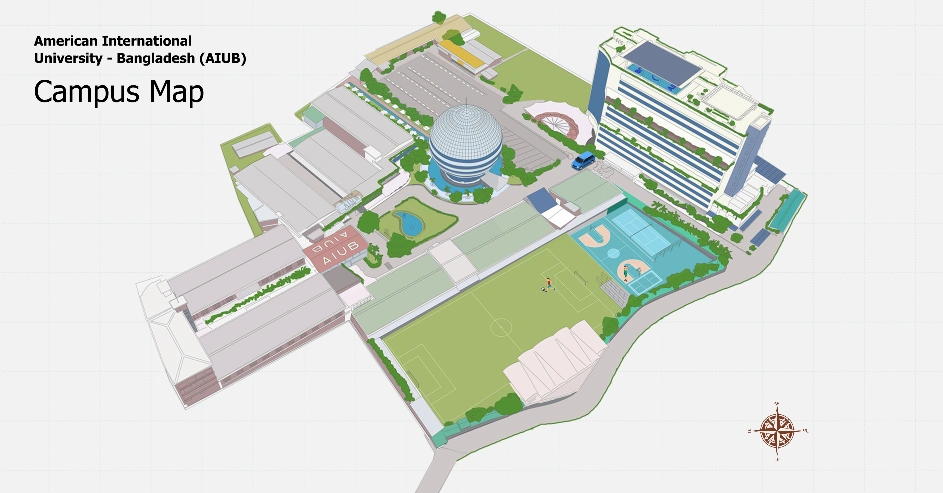
This commitment is also reflected in AIUB's participation in the Race to Zero campaign for universities and colleges, reinforcing its institutional efforts to address environmental impacts and promote more sustainable campus operations [11].
AIUB further broadens its environmental assessment by examining greenhouse gas emissions across Scopes 1, 2, and 3. The assessment encompasses direct institutional emissions, purchased electricity, and indirect sources associated with waste generation, student and staff transportation, and procurement-related activities. By incorporating these categories into its campus footprint assessment, the University adopts a broader approach to understanding the environmental impacts of its institutional operations and identifying opportunities to improve resource efficiency and sustainability performance [12].
Promoting Responsible Food Handling and Operational Practices
AIUB promotes responsible operational practices through staff training and institutional capacity-building activities. Training programmes addressing food hygiene, cleaning, and service operations help strengthen safe and responsible practices in the University's daily activities [13]. These initiatives support the implementation of appropriate food handling and service procedures, contributing to more responsible operational management within the campus community.
Sustainability Reporting and Accountability
Institutional Reporting on Sustainable Development Goals
AIUB demonstrates its commitment to transparency and institutional accountability by regularly documenting and publicly communicating its contributions to the Sustainable Development Goals (SDGs). The University's Institutional Quality Assurance Cell (IQAC) publishes annual SDG Activity Reports, including the AIUB SDG Activity Report 2021, AIUB SDG Activity Report 2022, and AIUB SDG Activity Report 2023. Each report documents the University's initiatives and contributions across all 17 SDGs, providing an institutional record of its sustainability activities and progress [14].
AIUB further strengthens public access to its sustainability information through a dedicated website featuring individual pages for each SDG. These pages present the University's sustainability initiatives, institutional policies, and related reports, providing stakeholders with access to information about its contributions to sustainable development, including responsible consumption and production [9].
International Commitments and Sustainability Accountability
AIUB reinforces its institutional commitment to sustainable development through participation in international initiatives. The University is a signatory of the SDG Accord, demonstrating its commitment to advancing the SDGs and reporting annually on its progress. AIUB also participates as a Satellite Higher Education Institution in the International Association of Universities' Higher Education for Sustainable Development (IAU-HESD) cluster, strengthening its engagement with the international higher education community in promoting sustainable development [14], [15].
These commitments support AIUB's approach to sustainability reporting, institutional transparency, and accountability, ensuring that its contributions to the SDGs remain part of its broader institutional engagement with sustainable development.
Education, Awareness and Community Engagement
Student-Led Sustainability Clubs
AIUB encourages student participation in environmental protection and sustainability initiatives through student-led organisations dedicated to promoting environmental awareness and responsible practices [16], [17].
AIUB Environment Club (AEC). Established in 2023, the club promotes environmental protection and sustainable practices for present and future generations. Its activities address key environmental challenges, including plastic production and excessive plastic consumption, water and air pollution, deforestation, and recycling. The club also extends its awareness initiatives beyond the University through a nationwide network of educational institutions, encouraging broader participation in environmental protection [16].
AIUB Green Energy Club (AGEC). The club promotes awareness and engagement in sustainable energy practices through educational initiatives, community-based projects, and advocacy activities. Its initiatives encourage students to understand the importance of environmentally responsible practices and contribute to a culture of sustainability [17].
World Environment Day Campaigns
AIUB regularly organises World Environment Day activities to raise environmental awareness and encourage responsible consumption, waste reduction, and community participation. The AIUB Environment Club leads several of these initiatives in collaboration with other University departments and student organisations.
The University's campaigns between 2023 and 2026 have included the following activities:
| Year | Theme and activities |
| 2023 | Under the global theme #BeatPlasticPollution, the AIUB Environment Club organised a campus awareness campaign featuring posters and educational messages highlighting plastic pollution, excessive plastic consumption, and sustainable environmental practices [18]. |
| 2024 | In collaboration with the Department of Chemistry and the Office of Student Affairs, the Environment Club distributed saplings and seeds and organised a campus rally under the theme #GenerationRestoration, encouraging environmental awareness and active participation in nature restoration [19]. |
| 2025 | The Environment Club organised Rethink Waste 2025: Zero Waste Product Design and Poster Competition on May 22, encouraging students to explore creative approaches to waste reduction and sustainable product design. On May 27, the club also held a seminar entitled Ending Plastic Pollution, featuring a keynote presentation by a University of Dhaka professor on plastic and dye pollution [20]. |
| 2026 | Under the theme Restore Nature for a Sustainable Future, the Environment Club organised a poster competition, an awareness rally, and a sapling distribution activity, engaging students in environmental education and sustainability initiatives [21]. |
These recurring campaigns demonstrate AIUB's commitment to environmental education and student engagement, particularly in promoting awareness of plastic pollution, waste prevention, and sustainable practices.
Integrating Responsible Consumption into Teaching and Learning
AIUB connects academic learning with responsible consumption and production by exposing students to sustainability concepts, responsible business practices, and real-world industrial operations.
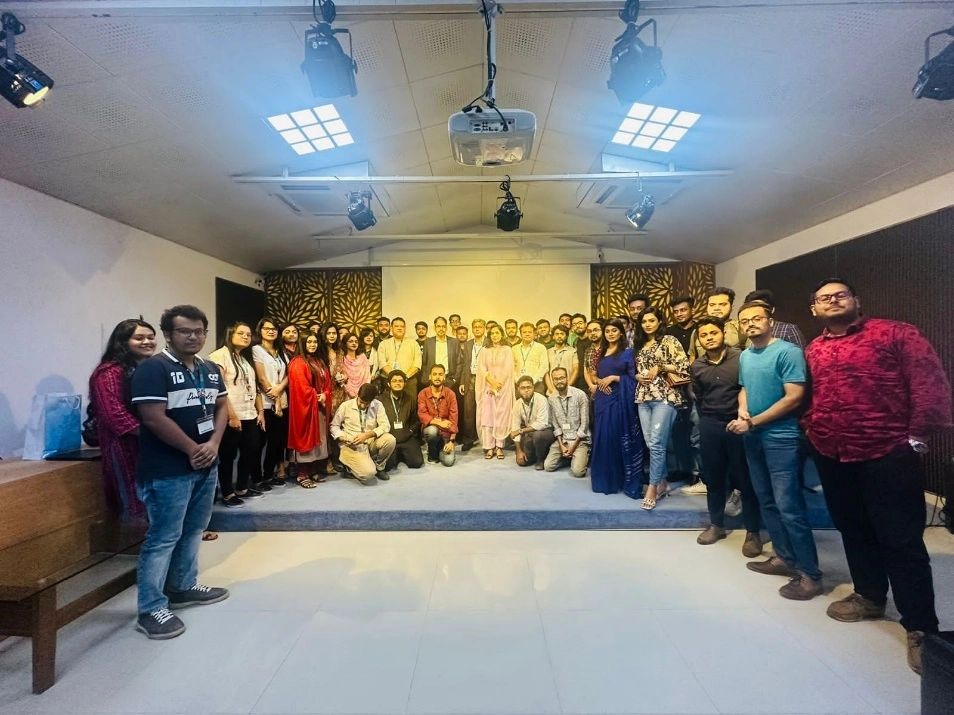
- Responsible Marketing and Sustainable Consumer Behaviour. AIUB organised a seminar entitled Responsible Marketing and Sustainable Consumer Behavior, providing business students with opportunities to explore how marketing strategies influence consumer decisions and how responsible marketing practices can encourage more sustainable purchasing behaviour [22].
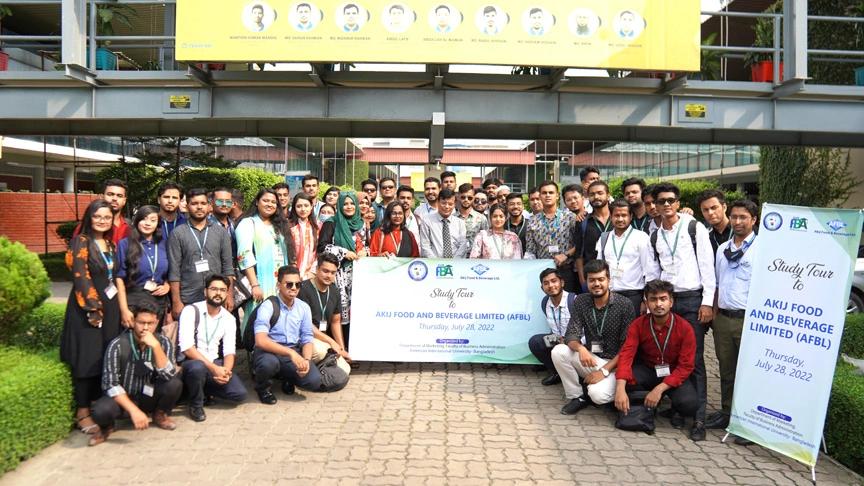
- Experiential Learning in Manufacturing. AIUB students visited Akij Food & Beverage Limited to gain first-hand exposure to industrial manufacturing operations. The visit connected classroom knowledge with real-world production environments, helping students understand industrial processes and their practical applications [23].
These educational activities strengthen students' understanding of the relationship between business practices, production processes, and consumer behaviour, supporting the development of more responsible approaches to consumption and production.
Community Innovation and Sustainable Solutions
AIUB promotes student creativity, social responsibility, and community engagement through its Social Welfare Club, Shomoy, which organises The Ideas Challenge. This initiative provides a platform for students and community members to present innovative solutions to real-world challenges. The 2025 edition brought together participants from 50 educational institutions, encouraging collaboration, knowledge exchange, and the development of creative ideas [24].
By bringing together participants from different educational institutions, the initiative strengthens collaborative innovation and provides opportunities for young people to contribute ideas addressing societal and environmental challenges.
Student Innovation and Circular Economy Initiatives
AIUB Sustainable Futures 2026: Promoting Responsible Consumption Through Experiential Learning
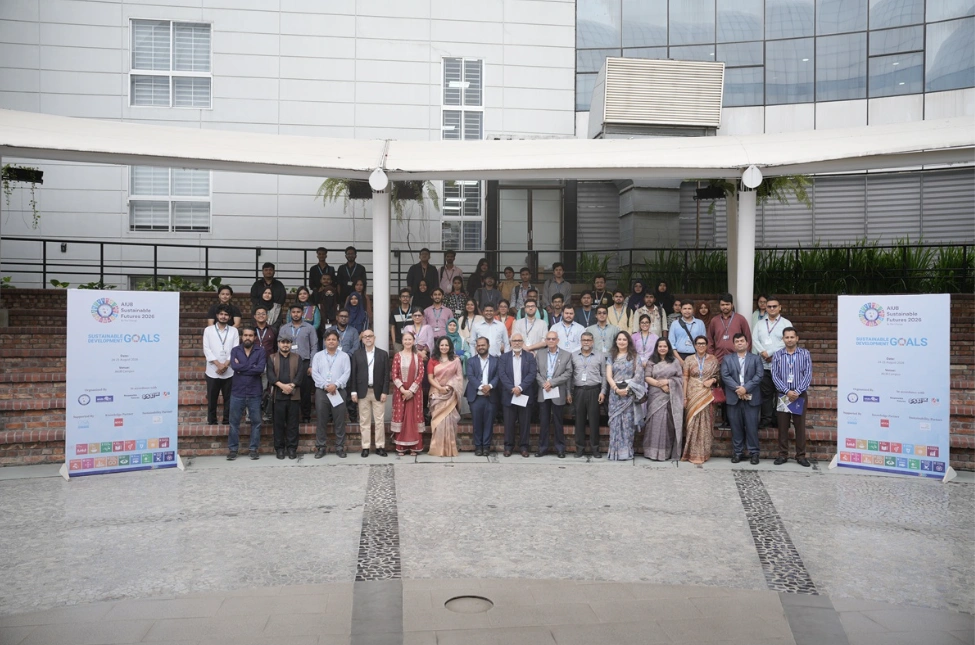
AIUB organised AIUB Sustainable Futures 2026 on August 24–25, 2026, under the theme "Be the Change." Coordinated by the Institutional Quality Assurance Cell (IQAC) in collaboration with the Office of Student Affairs (OSA), the two-day event engaged students, faculty members, external partners, and volunteers in activities promoting sustainability, innovation, and responsible practices [25].
A major component of the event was the SDG Booth Experience, which introduced students to all 17 Sustainable Development Goals through interactive activities. The SDG 12 booth focused on responsible food choices, while the programme also included waste-sorting activities and opportunities to explore sustainable practices through practical learning.
The event further featured a Sustainable Art and Upcycling Competition, encouraging students to transform sustainability concepts into creative expressions and explore the potential of material reuse. These activities provided opportunities for students to engage with waste reduction, resource efficiency, and responsible consumption through collaborative and experiential learning [25].
Sustainability Innovation Challenge and Student-Led Product Design
As part of AIUB Sustainable Futures 2026, AIUB organised the Sustainability Innovation Challenge, a student poster competition designed to encourage practical solutions to environmental and sustainability challenges. The competition received 90 submissions from students, with proposals addressing issues relevant to the University and Bangladesh, including plastic and waste management, food waste reduction, energy conservation, sustainable transportation, and water conservation [26].
Participants were required to identify a sustainability challenge, propose an innovative solution, explain its implementation approach, and present its expected impact. Entries were evaluated based on sustainability impact, innovation, feasibility, scalability, and student engagement. Eleven winning proposals were recognised, including From Machine Waste to Market, AIUB Smart Waste Point, AIUB Plastic Loop, Waste 2 Wear, Eco Sort AI, and Ecobrush [26].
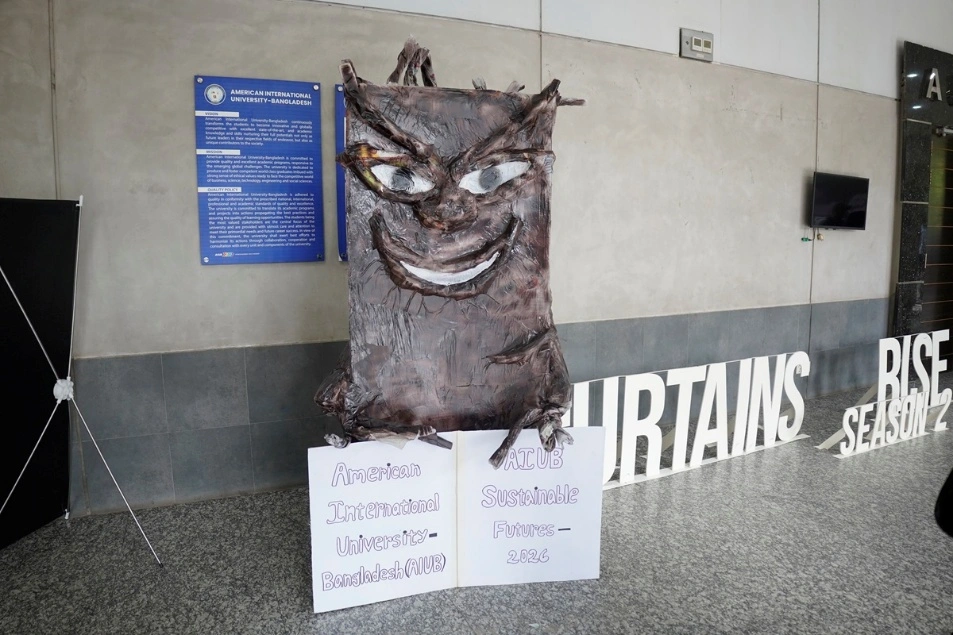
These student-led innovations demonstrate AIUB's commitment to promoting creative approaches to waste prevention, material recovery, product reuse, and sustainable design. The competition also provides a platform for translating environmental awareness into practical ideas that support circular economy principles.
Industry Engagement and Sustainable Production Education
Industrial Visit to PRAN Industrial Park
AIUB strengthens the connection between engineering education and industrial production through academic visits to manufacturing facilities. On October 17, 2026, the Faculty of Engineering organised an industrial visit to PRAN Industrial Park in Ghorashal, Narsingdi, for students from the Electrical and Electronic Engineering and Industrial and Production Engineering departments [27].
The programme included technical presentations on industrial production, electrical systems, automation, and maintenance, followed by guided tours of manufacturing facilities. Students observed food production operations, industrial machinery, quality control processes, and the practical application of engineering principles in large-scale manufacturing. Discussions with industry professionals also provided insights into production management, compliance, and industrial operations [27].
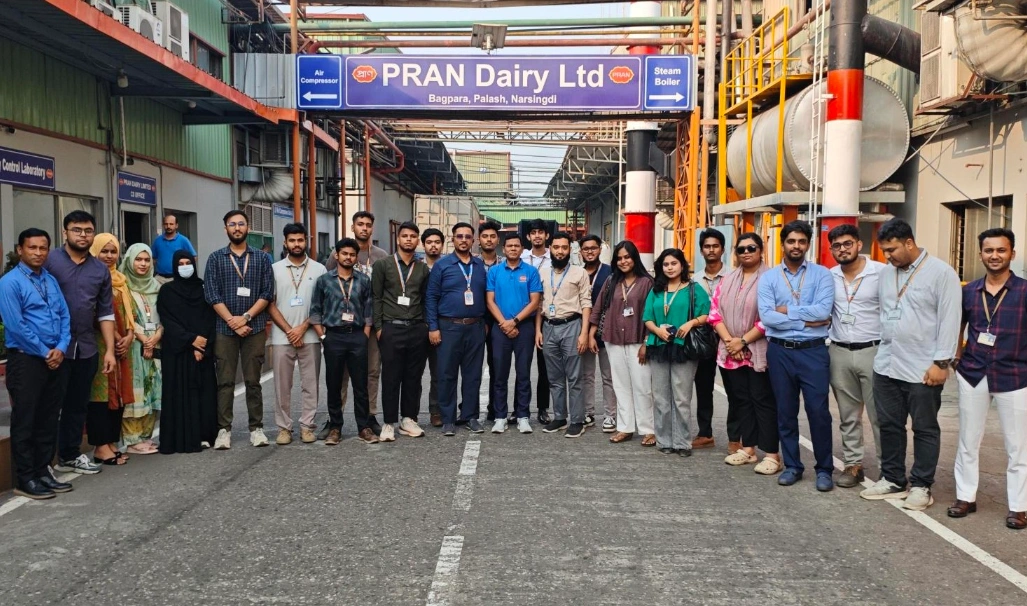
The visit strengthened students' understanding of manufacturing systems and provided practical exposure to the technologies and operational processes involved in industrial production.
Industrial Visit to RFL Industrial Park
On July 2, 2026, AIUB students from the Department of Industrial and Production Engineering visited RFL Industrial Park in Mulgaon, Kaliganj, Gazipur. Organised with the support of the IEOM AIUB Student Chapter, the visit provided students with direct exposure to manufacturing operations and industrial practices [28].
During the programme, participants attended a corporate presentation and toured production facilities under the guidance of industry professionals, including a Quality Control Officer and a Food Engineer. The activities introduced students to beverage and bakery production processes, quality control practices, and large-scale manufacturing operations. An interactive discussion with company representatives further strengthened their understanding of production management and industrial operations [28].
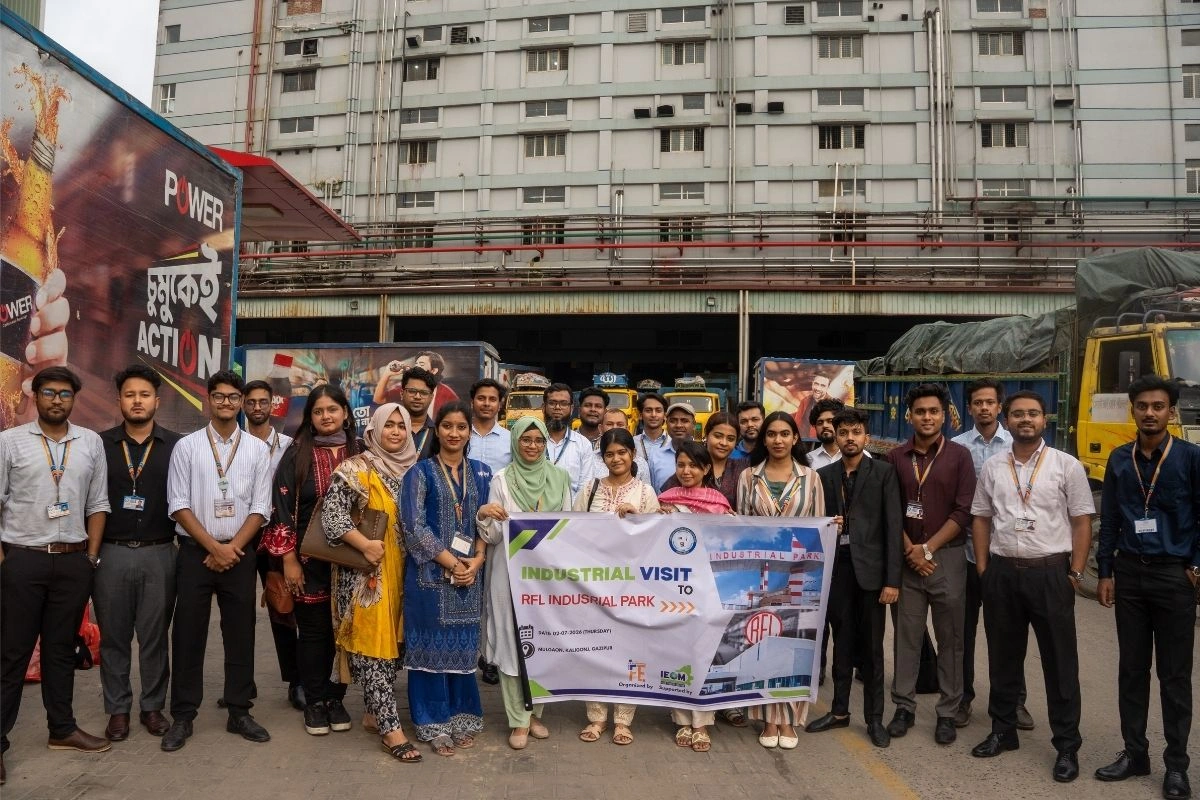
These industry-oriented learning experiences complement AIUB's academic programmes by connecting engineering knowledge with practical manufacturing environments and exposing students to the operational dimensions of production systems.
Institutional Sustainability Assessment and Accountability
Responsible Futures International Audit
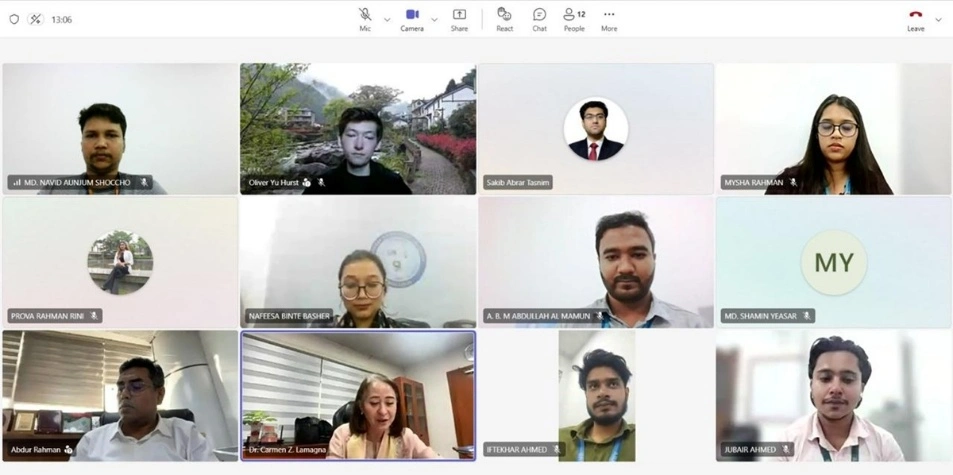
AIUB strengthened its institutional sustainability assessment framework by completing the Responsible Futures International Audit on October 26–27, 2026, coordinated by its Institutional Quality Assurance Cell (IQAC). The University joined the Responsible Futures programme in October 2024, an international whole-institution initiative delivered by Students Organising for Sustainability UK (SOS-UK) in partnership with the International Association of Universities (IAU) [29].
As part of the audit, AIUB submitted 51 reports documenting evidence across institutional leadership and strategy, policies, partnerships, teaching and learning, student engagement, community outreach, research, campus operations, and sustainability outcomes. The assessment also incorporated the participation of ten trained AIUB students who served as student auditors and conducted interviews with university management, faculty members, and fellow students [29].
The audit provides an institutional framework for reviewing how sustainability principles are integrated into university policies, academic activities, and everyday operations. It also reinforces student participation, institutional accountability, and AIUB's commitment to embedding sustainability across the University.
References
| [1] | M. M. Hasan, N. M. N. I. Taj, M. M. H. Naime, M. M. Islam, M. M. R. Biswas, and M. T. Rana, “Production of 3D printing filament from recycled plastic bottles using fused deposition modeling,” [Online]. Available: https://dspace.aiub.edu/jspui/handle/123456789/2572. [Accessed 2026]. |
| [2] | N. Alam et al., “Development of a recycling machine for constructing synthetic yarn from plastic waste,” [Online]. Available: https://dspace.aiub.edu/jspui/handle/123456789/2150. [Accessed 2026]. |
| [3] | M. S. Roy et al., “Design and development of e-waste monitoring, segregation and recycling system,” [Online]. Available: https://dspace.aiub.edu/jspui/handle/123456789/1460. [Accessed 2026]. |
| [4] | M. H. Islam, M. M. Sabbir, M. Z. Anam, and M. T. Islam, “Exploring sustainable plastic management behavior among young consumers in Bangladesh,” [Online]. Available: https://link.springer.com/article/10.1007/s10163-024-02144-w. [Accessed 2026]. |
| [5] | American International University-Bangladesh, “Leveraging Human-Artificial Intelligence (AI) and Machine Learning (ML) Collaborative Approach for Enhancing Waste Management Practices in Bangladesh to Achieve Zero-Waste,” [Online]. Available: https://journal.iou.edu.gm/jis/article/view/307. [Accessed 2026]. |
| [6] | American International University-Bangladesh, “AIUB SDG Activity Report 2022 | SDG 12: Responsible Consumption and Production,” [Online]. Available: https://www.aiub.edu/iqac/sdgs/aiub-sdg-activity-report-2022/SDG12-AIUBActivityReportof2022. [Accessed 2026]. |
| [7] | AIUB Journal of Business and Economics, “Effect of the Covid-19 pandemic on the purchasing behavior of consumers,” [Online]. Available: https://ajbe.aiub.edu/index.php/ajbe/article/view/106. [Accessed 2026]. |
| [8] | American International University-Bangladesh, “Sustainable Procurement Policy of AIUB,” [Online]. Available: https://www.aiub.edu/sustainability/sustainable-procurement-policy-of-aiub. [Accessed 2026]. |
| [9] | American International University-Bangladesh, “SDG 12: Responsible Consumption and Production,” [Online]. Available: https://www.aiub.edu/sustainability/sdg12. [Accessed 2026]. |
| [10] | American International University-Bangladesh, “Campus Building Footprint, CO₂ Emission and Race to Net Zero,” [Online]. Available: https://aiub.edu/sustainability/aiub-campus-footprint-co2-emission-and-race-to-net-zero. [Accessed 2026]. |
| [11] | American International University-Bangladesh, “AIUB's Commitment to Race to Zero: A Step Towards Environmental Sustainability,” [Online]. Available: https://www.aiub.edu/aiubs-commitment-to-race-to-zero-a-step-towards-environmental-sustainability. [Accessed 2026]. |
| [12] | Dhaka, Bangladesh , “American International University-Bangladesh, American International University-Bangladesh (AIUB) Footprint Report 2025.,” [Online]. Available: https://www.aiub.edu/Files/Uploads/aiub_footprint_report_2025.pdf. [Accessed 2026]. |
| [13] | American International University-Bangladesh, “Training on Food Hygiene, Cleaning and Services,” [Online]. Available: https://www.aiub.edu/training-on-food-hygiene-cleaning-and-services. [Accessed 2026]. |
| [14] | American International University-Bangladesh, “AIUB SDG Activity Report 2023 – SDG 17: Partnerships for the Goals,” [Online]. Available: https://www.aiub.edu/iqac/sdgs/aiub-sdg-activity-report-2023/SDG17-AIUBActivityReportof2023. [Accessed 2026]. |
| [15] | American International University-Bangladesh, “AIUB is a Signatory of SDG Accord,” [Online]. Available: https://www.aiub.edu/iqac/sdgs/aiub-is-a-signatory-of-sdg-accord. [Accessed 2026]. |
| [16] | American International University-Bangladesh, “AIUB Environment Club.,” [Online]. Available: https://www.aiub.edu/oncampus/clubs/aiub-environment-club. [Accessed 2026]. |
| [17] | American International University-Bangladesh, “Student led Society,” [Online]. Available: https://aiub.edu/sustainability/student-led-society. [Accessed 2026]. |
| [18] | American International University-Bangladesh, “AIUB Environment Club celebrated World Environment Day,” [Online]. Available: https://www.aiub.edu/aiub-environment-club-celebrated-world-environment-day. [Accessed 2026]. |
| [19] | American International University-Bangladesh, “World Environment Day 2024 celebrated at AIUB,” [Online]. Available: https://www.aiub.edu/world-environment-day-2024-celebrated-at-aiub. [Accessed 2026]. |
| [20] | LinkedIn, participant post on, “Rethink Waste 2025: Zero Waste Product Design and Poster Competition,” [Online]. Available: https://bd.linkedin.com/in/jihan26. [Accessed 2026]. |
| [21] | American International University-Bangladesh, “AIUB Celebrates World Environment Day 2026 with Poster Competition, Rally and Sapling Distribution,” [Online]. Available: https://aiub.edu/aiub-celebrates-world-environment-day-2026-with-poster-competition-rally-and-sapling-distribution. [Accessed 2026]. |
| [22] | American International University-Bangladesh, “Seminar on 'Responsible Marketing and Sustainable Consumer Behavior',” [Online]. Available: https://www.aiub.edu/seminar-on-responsible-marketing-and-sustainable-consumer-behavior. [Accessed 2026]. |
| [23] | American International University-Bangladesh, “AIUB Students Visit Akij Food & Beverage Limited (AFBL).,” [Online]. Available: https://www.aiub.edu/aiub-students-visit-akij-food--beverage-limited-afbl. [Accessed 2026]. |
| [24] | The Financial Express, “AIUB holds Ideas Challenge 2025 competition,” [Online]. Available: https://today.thefinancialexpress.com.bd/print/aiub-holds-ideas-challenge-2025-competition-1762282411. [Accessed 2026]. |
| [25] | American International University-Bangladesh, “AIUB Sustainable Futures 2026: Two Days of Ideas, Action and Inspiration Under the Theme 'Be the Change',” [Online]. Available: https://www.obe.cse.aiub.edu/aiub-sustainable-futures-2026-two-days-of-ideas-action-and-inspiration-under-the-theme-be-the-change. [Accessed 2026]. |
| [26] | American International University-Bangladesh, “AIUB Hosts Student Competitions Promoting Sustainability and Innovation,” [Online]. Available: https://staging.aiub.edu/aiub-hosts-student-competitions-promoting-sustainability-and-innovation. [Accessed 2026]. |
| [27] | American International University-Bangladesh, “Industrial Visit to PRAN Industrial Park Arranged by Faculty of Engineering,” [Online]. Available: https://www.fe.aiub.edu/industrial-visit-to-pran-industrial-park-arranged-by-faculty-of-enginering. [Accessed 2026]. |
| [28] | American International University-Bangladesh, “Industrial Visit to RFL Industrial Park,” [Online]. Available: https://admissions.aiub.edu/industrial-visit-to-rfl-industrial-park-. [Accessed 2026]. |
| [29] | American International University-Bangladesh, “AIUB Completes Responsible Futures International Audit, Highlighting Student Leadership and Institutional Commitment to Sustainability,” [Online]. Available: https://inside.aiub.edu/aiub-completes-responsible-futures-international-audit-highlighting-student-leadership-and-institutional-commitment-to-sustainability. [Accessed 2026]. |