

TABLE OF CONTENTS
SDG 16: PEACE, JUSTICE AND STRONG INSTITUTIONS
Research Contributions to Peace, Justice and Strong Institutions
Access to Justice and Legal Systems
Accountable Public Institutions and Democratic Governance
Crime Prevention, Conflict and Humanitarian Protection
University Governance and Institutional Accountability
Stakeholder Participation and Student Representation
Accessible Complaint and Grievance Redressal Mechanisms
Ethics, Anti-Corruption, Academic Freedom and Institutional Protection Policies
Institutional Ethical Framework and Organisational Culture
Ethics Committee and Institutional Oversight
Anti-Bribery and Anti-Corruption Policy
Academic Freedom and Freedom of Expression
Non-Discrimination and Protection of Complainants
Engagement with Government, Legal Institutions and Society
Legal Education and Practical Engagement with the Justice System
Moot Court Advocacy and International Humanitarian Law
Hosting the Philip C. Jessup International Law Moot Court Competition
Human Rights Education, Legal Awareness and Policy Dialogue
International Collaboration in Legal Education and Academic Exchange
Civic Engagement, Democratic Dialogue and International Affairs
Access to Justice and Pro Bono Legal Services
Bangladesh Pro Bono Seminar 2026: Building Access to Pro Bono in Bangladesh
Institutional Collaboration for Preventing Sexual and Gender-Based Violence
Participation in the UGC–UN Women ESGBV Partnership
Institutional Capacity Development through Training of Trainers
Inclusive Digital Governance and Multistakeholder Participation
Partnership with the Bangladesh Internet Governance Forum (BIGF)
Civic Education and Direct Engagement with Democratic Institutions
Educational Visit to the National Parliament (Jatiya Sangsad)
Academic Dialogue on Institutional Democracy and Governance
Institutional Democracy and Future Bangladesh
Academic Engagement in Peacebuilding and International Cooperation
Peacebuilding in an Eroded Rule-Based World
Refugee Protection and International Legal Responsibility
International Conference on Evolving Refugee Protection Architectures in South Asia 2026
Inter-University Cooperation in Legal Education and Advocacy
Moot Court Training at Noakhali Science and Technology University (NSTU)
SDG 16: PEACE, JUSTICE AND STRONG INSTITUTIONS
Research Contributions to Peace, Justice and Strong Institutions
AIUB faculty contribute to advancing knowledge on justice, governance, human rights and institutional accountability through peer-reviewed academic research. These scholarly contributions address key legal and institutional challenges in Bangladesh and internationally, providing perspectives on improving access to justice, strengthening public institutions, promoting democratic governance and protecting vulnerable populations. The University's research activities encompass several areas directly aligned with SDG 16 [1].
Access to Justice and Legal Systems
- Witness Protection and Criminal Case Backlogs. AIUB research highlights the importance of establishing a dedicated witness protection law in Bangladesh to strengthen the administration of justice, safeguard individuals involved in criminal proceedings and help address delays in the judicial system. This research contributes to discussions on fair trials and more effective legal institutions [2].
- E-Judiciary and Digital Access to Justice. Research on enhancing access to justice through an e-judiciary in Bangladesh explores the role of digital technologies in modernizing judicial services. The study highlights how electronic court systems can improve the accessibility, efficiency and timeliness of justice for citizens [3].
- Legal Responses to Communal Violence. AIUB scholarship addresses legal mechanisms for combating communal violence in contemporary Bangladesh, contributing to the development of stronger legal responses to violence and the protection of affected communities. This research aligns with SDG Target 16.1, which seeks to reduce all forms of violence [4].
Accountable Public Institutions and Democratic Governance
- Citizen's Charters and Public Service Accountability. AIUB research examines the development, principles and implementation of citizen's charters in public service delivery. This work highlights their importance as instruments for promoting transparency, accountability and citizen-oriented governance, contributing to SDG Targets 16.6 and 16.7 [5].
- Media and Democratic Governance. Research on establishing democracy in Bangladesh explores the role of media in democratic consolidation, emphasizing its contribution to public awareness, transparency and institutional accountability [6].
- Blockchain-Based Land Rights Documentation and Verification. The research "Land Rights Documentation and Verification System Using Blockchain Technology" proposes a blockchain-based framework for documenting and verifying land ownership records. By providing a tamper-resistant approach to land information management, this research supports greater transparency, data integrity and legal certainty in property rights administration [7].
Crime Prevention, Conflict and Humanitarian Protection
- Data-Driven Analysis of Crime Determinants. AIUB researchers applied DBSCAN clustering and linear regression techniques to identify factors associated with the World Crime Index. This research demonstrates the application of data analytics to understanding crime patterns and generating evidence that can inform crime-prevention strategies and public policy, contributing to SDG Target 16.1 [8].
- Legal and Humanitarian Approaches to the Rohingya Crisis. AIUB faculty contributed to the academic volume The Rohingya Crisis: Humanitarian and Legal Approaches, addressing the legal and humanitarian dimensions of the Rohingya situation in Bangladesh. This scholarly contribution brings attention to the protection of displaced and vulnerable populations, as well as the importance of justice, human rights and institutional responses to humanitarian challenges [9].
Collectively, these research contributions demonstrate AIUB's engagement with critical issues affecting justice systems, public accountability, democratic governance, crime prevention and human rights. By addressing these challenges through multidisciplinary academic inquiry, the University contributes to the knowledge base supporting more inclusive, transparent and accountable institutions, in alignment with SDG 16.
University Governance and Institutional Accountability
Statutory Governing Bodies

American International University-Bangladesh (AIUB) is an independent, government-approved private university governed by a Board of Trustees (BoT), with institutional structures established in accordance with Bangladesh's Private University Act 2010 [10]. Its governance framework ensures the formal distribution of institutional responsibilities across strategic, executive and academic decision-making bodies.
- Board of Trustees (BoT). The BoT provides strategic direction and oversees the University's institutional leadership. Leadership transitions are formally deliberated and approved during Board meetings, ensuring structured governance and institutional continuity. For example, the appointment of a new Chairman and Vice Chairman was approved at the 202nd meeting of the Board of Trustees [11].
- Syndicate. AIUB maintains a reconstituted Syndicate in accordance with Clause 17 of the Private University Act 2010. Chaired by the Vice Chancellor, this governing body includes the Pro-Vice Chancellor, the Treasurer and nominees of the Board of Trustees, providing an established institutional mechanism for university administration and governance [12].
- Academic Council. Academic governance is supported by the Academic Council, which operates under the leadership of the Vice Chancellor. Reconstituted in accordance with Clause 19(1) of the Private University Act 2010, the Council brings together senior academics representing the University's faculties, nominees of the Board of Trustees and Syndicate, the Proctor, the Controller of Examinations and the Registrar, who serves as Member-Secretary. This composition supports coordinated academic oversight and institutional decision-making [12].
AIUB promotes institutional transparency by making information about the composition of its governing bodies publicly accessible through its official website, allowing students, employees and other stakeholders to understand the University's governance structure [12]. Representatives of the Board of Trustees, Syndicate and Academic Council also participate in major institutional events, including convocations attended by officials of the University Grants Commission (UGC), reinforcing the University's formal engagement with the national higher education framework [13].
Stakeholder Participation and Student Representation
AIUB promotes inclusive and participatory governance by involving different stakeholder groups in institutional decision-making, policy development and strategic planning. Its governance framework recognizes the importance of faculty, administrative staff and students in contributing to university policies and institutional priorities [14].
Key participation mechanisms include:
- Student Representation on University Committees. The University's Diversity and Equality Committee, chaired by the Vice Chancellor, brings together representatives from each faculty, the Registrar's Office, Human Resources, Student Affairs, the Institutional Quality Assurance Cell (IQAC), Administration and the student community. This multidisciplinary composition incorporates diverse institutional perspectives into initiatives addressing diversity, equality and inclusion [15], [16].
- Participatory Policy Development. At the request of the Board of Trustees, AIUB established a Climate Action Task Force comprising faculty members, administrative staff and students to develop the University's Climate Action Plan. This initiative demonstrates the integration of student and employee perspectives into institutional policy development and strategic planning [17].
- Student Organizations and Associations. The Office of Student Affairs supervises a broad network of student clubs and associations, including the AIUB Foreign Student Association. These organizations provide structured opportunities for students to express their interests, engage in collective activities and contribute to the university community [18].
These mechanisms strengthen stakeholder engagement in university affairs and support a participatory institutional environment in which students and employees can contribute to decisions affecting the academic and organizational community.
Accessible Complaint and Grievance Redressal Mechanisms
AIUB maintains formal complaint and grievance procedures that enable students and employees to report concerns and seek institutional assistance through designated administrative channels. These mechanisms support accountability, confidentiality and the protection of individual rights within the university community.
- Accessible Complaint Submission Channels. Students can submit complaints to the Office of Student Affairs through designated complaint forms, email or physical complaint boxes, while employees can direct their concerns to the Office of Human Resources. These established channels provide accessible means of communicating grievances to the relevant institutional authorities [18].
- Confidentiality and Complainant Protection. AIUB safeguards the confidentiality of complainants and the information submitted during the complaint-handling process, supporting a secure environment in which members of the university community can raise concerns [19].
- Dedicated Policies on Discrimination and Sexual Harassment. The University has established specific policies addressing complaints involving discrimination and sexual harassment for both students and employees. These institutional provisions reinforce the protection of individual rights and promote a respectful, equitable and safe university environment [15], [18].
By maintaining formal governing bodies, promoting stakeholder participation and providing accessible grievance redressal mechanisms, AIUB demonstrates its commitment to transparent, inclusive and accountable institutional governance, in alignment with SDG 16.
Ethics, Anti-Corruption, Academic Freedom and Institutional Protection Policies
Institutional Ethical Framework and Organisational Culture
AIUB promotes an ethical organisational culture guided by its Institutional Policy, which incorporates the University's Ethical Values and the Code of Conduct and Disciplinary Procedures for Students. These institutional frameworks establish standards of academic integrity, non-discrimination, accountability and responsible conduct for members of the university community, reinforcing ethical behaviour across academic and administrative activities [20].
The University's Ethical Values address the following principles:
- Academic Integrity. AIUB establishes standards of academic honesty and research integrity, with disciplinary provisions addressing plagiarism, data fabrication and falsification, ghostwriting, unwarranted authorship and thesis piracy.
- Equity and Non-Discrimination. The University's ethical framework promotes fair and merit-based decisions in recruitment, promotion, dismissal and student admission, supported by established procedures for addressing complaints and ensuring due process.
- Accountability and Transparency. AIUB promotes responsible institutional management through accurate information, merit-based decisions and clear provisions addressing conflicts of interest, abuse of authority and harassment. Confidential channels are also established for reporting concerns and submitting complaints.
- Academic Freedom and Mutual Respect. The University's ethical principles support intellectual independence, reasoned academic debate and respectful relationships between faculty members and students.
- Responsible International Partnerships. AIUB emphasizes mutually beneficial international collaborations grounded in institutional integrity, transparency and the responsible representation of institutional interests [20].
Ethics Committee and Institutional Oversight
AIUB has established an Ethics Committee to promote ethical standards and support the implementation of institutional principles across academic, research and administrative activities. Its multidisciplinary composition brings together professors from different academic departments, researchers, legal professionals, ethicists and administrative representatives, with the possibility of involving community members or external experts where appropriate [20].
The Committee's institutional representation also includes members of the Institutional Quality Assurance Cell (IQAC) and the Anti-Corruption Committee, as well as the Institutional Review Board when required [21].
Its responsibilities encompass several areas of institutional ethical oversight:
1. Promotion of Ethical Conduct. Encouraging ethical behaviour and professional integrity among researchers, faculty members, students and other stakeholders.
2. Ethics Education and Awareness. Supporting the dissemination of ethical principles through workshops, seminars and online learning resources.
3. Compliance and Misconduct Oversight. Reviewing compliance with institutional ethical standards and addressing reported misconduct through appropriate investigations, corrective measures and disciplinary procedures.
4. Stakeholder Engagement. Providing opportunities for community feedback and addressing ethical concerns raised by members of the university community.
5. Research Ethics Supervision. Overseeing ethical considerations in research proposals involving human participants, animals or sensitive data.
6. Research Integrity Guidelines. Developing and maintaining institutional guidance on responsible research practices, data management, authorship and conflicts of interest.
7. Conflict Resolution and Ethical Guidance. Supporting the resolution of ethical dilemmas and providing guidance and mediation for faculty members, staff and students [20].
This institutional framework reinforces AIUB's commitment to ethical conduct, responsible research and accountability across its academic and organisational activities.
Anti-Bribery and Anti-Corruption Policy
AIUB's Anti-Bribery and Anti-Corruption Policy establishes an institutional commitment to integrity, transparency and the prevention of bribery and corrupt practices. The policy provides a framework for promoting ethical conduct and preventing improper advantages in the University's academic, administrative and operational activities [22].
Its principal provisions include:
- Comprehensive Institutional Scope. The policy applies to employees, students, contractors, volunteers, agents, representatives and other individuals acting on behalf of the University, extending its ethical requirements across institutional relationships and operations.
- Prohibition of Bribery and Improper Benefits. AIUB prohibits offering, giving, receiving or soliciting bribes, whether monetary or non-monetary, to obtain business opportunities, academic advantages or any other improper benefit.
- Zero-Tolerance Approach. Individuals involved in bribery or corrupt practices are subject to disciplinary measures, which may include termination of employment, academic sanctions or legal action, depending on the circumstances.
- Dedicated Anti-Bribery and Anti-Corruption Committee. The University maintains a cross-institutional committee comprising representatives from the Office of the Vice Chancellor, Human Resources, the concerned faculty, Accounts and Audit, Student Affairs, IQAC and Administration. This structure supports coordinated institutional oversight and the implementation of anti-corruption measures.
- Training and Preventive Measures. The policy incorporates training and awareness activities, together with provisions governing gifts, hospitality and donations, with the Office of Human Resources responsible for maintaining the corresponding institutional guidelines [22].
AIUB also incorporates anti-corruption principles into its financial governance framework. Its Sustainable Investment Policy explicitly maintains the University's commitment to preventing corruption and bribery, extending ethical requirements to its investment practices and financial decision-making [23].
Academic Freedom and Freedom of Expression
AIUB recognises academic freedom as a fundamental institutional principle, allowing members of the university community to express their views freely in their professional capacities and as members of society. This commitment supports intellectual independence, academic inquiry and open scholarly discussion [20].
The University's international engagement framework also recognises academic freedom and institutional autonomy as core values guiding its international relationships and collaborations [17].
For students, the Code of Conduct establishes protections and rights that support freedom of expression and intellectual development, including:
- Freedom of Expression. The right to express ideas, opinions and beliefs in academic settings and through university-sponsored platforms.
- Privacy Protection. The right to privacy regarding personal information and communications.
- Intellectual Inquiry and Academic Discourse. The freedom to pursue intellectual interests, express scholarly opinions and participate in academic discussions [24].
These institutional principles contribute to an academic environment that values intellectual independence, respectful dialogue and the protection of fundamental freedoms, in alignment with SDG Target 16.10.
Non-Discrimination and Protection of Complainants
AIUB's Non-Discrimination Policy establishes merit-based principles for institutional decisions concerning students and employees, promoting equal opportunities and fair treatment throughout the university community. The policy protects individuals against discrimination based on religion, race, colour, age, disability, nationality, marital status and sexual orientation, including gender identity [20].
These protections extend to student admissions, employment decisions and access to the University's academic programmes and institutional activities, reinforcing an inclusive environment in which individuals can participate in university life on equitable terms.
AIUB complements these provisions with established complaint and grievance procedures that provide students and employees with confidential channels for reporting alleged violations and seeking institutional assistance. These mechanisms support the protection of complainants and the appropriate handling of discrimination-related concerns [17], [18].
Together, these policies strengthen the University's institutional commitment to equal treatment, individual rights, confidentiality and protection against discriminatory practices.
Engagement with Government, Legal Institutions and Society
Legal Education and Practical Engagement with the Justice System
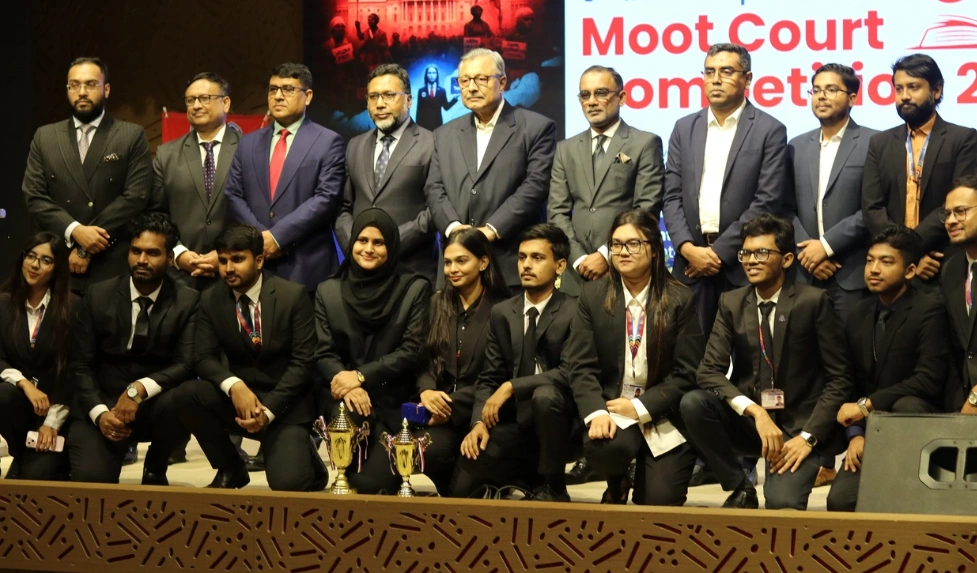
AIUB contributes to strengthening the rule of law through legal education that combines academic instruction, practical experience and professional development. The University's Department of Law, within the Faculty of Arts and Social Sciences, offers Bachelor of Laws (LLB) and Master of Laws (LLM) programmes aimed at preparing competent legal professionals with strong ethical values who can contribute to Bangladesh's legal system and national development [25].
The Department complements classroom instruction with practical exposure to judicial institutions and legal proceedings through regular study visits to courts. These activities allow students to observe civil and criminal procedures, understand judicial practices and develop a practical understanding of the administration of justice.
Representative activities include:
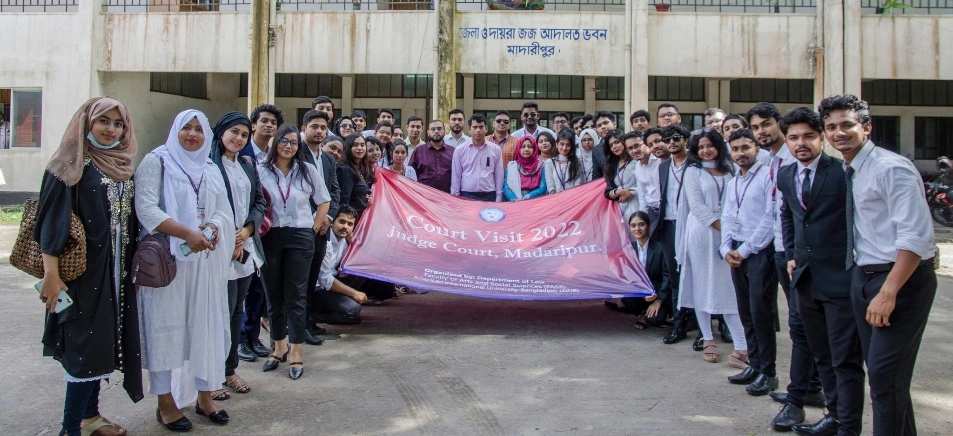
- Madaripur Judge Court (August 2022). Students visited the court to gain first-hand exposure to civil and criminal trial procedures [26].
- District and Sessions Judge Court, Narsingdi. AIUB law students participated in court visits during the 2022–2023 academic period, strengthening their understanding of judicial proceedings and court operations [14].
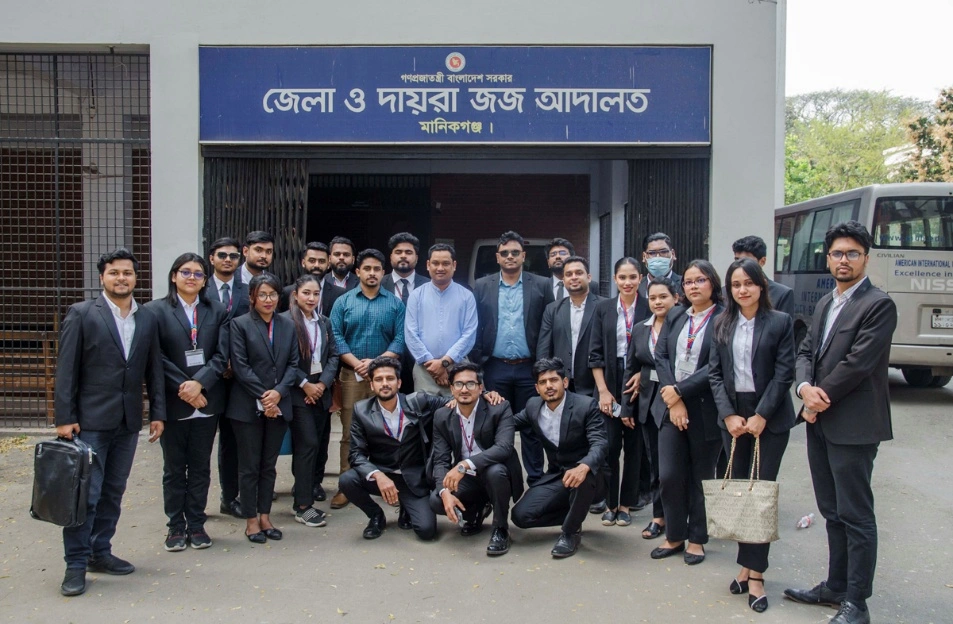
- Manikganj District and Sessions Judge Court (March 2024). The visit provided students with practical insights into the functioning of the judicial system and the administration of justice [27].
- Dhaka District and Sessions Judge's Court (September 2024). Students further developed their understanding of judicial processes through direct exposure to court proceedings [28].
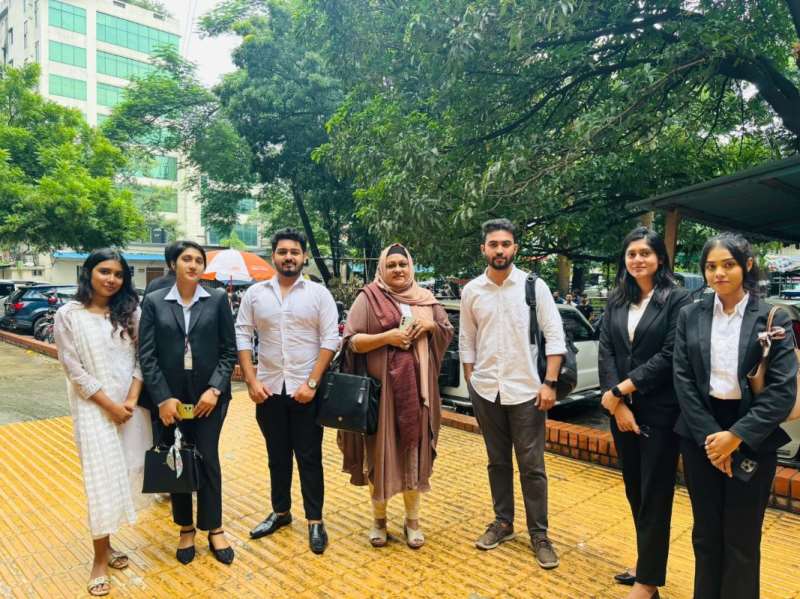
AIUB also supports students' professional preparation through activities addressing legal practice and advocacy. These include a webinar on Bangladesh Bar Council enrolment and student participation in a Criminal Trial Advocacy Program, helping future legal professionals develop the knowledge and practical skills required for legal practice [14].
Moot Court Advocacy and International Humanitarian Law
AIUB promotes practical legal education and advocacy skills through participation in national and international moot court competitions. These activities enable law students to strengthen their legal research, argumentation, interpretation of international law and understanding of judicial procedures.
The University's achievements include:
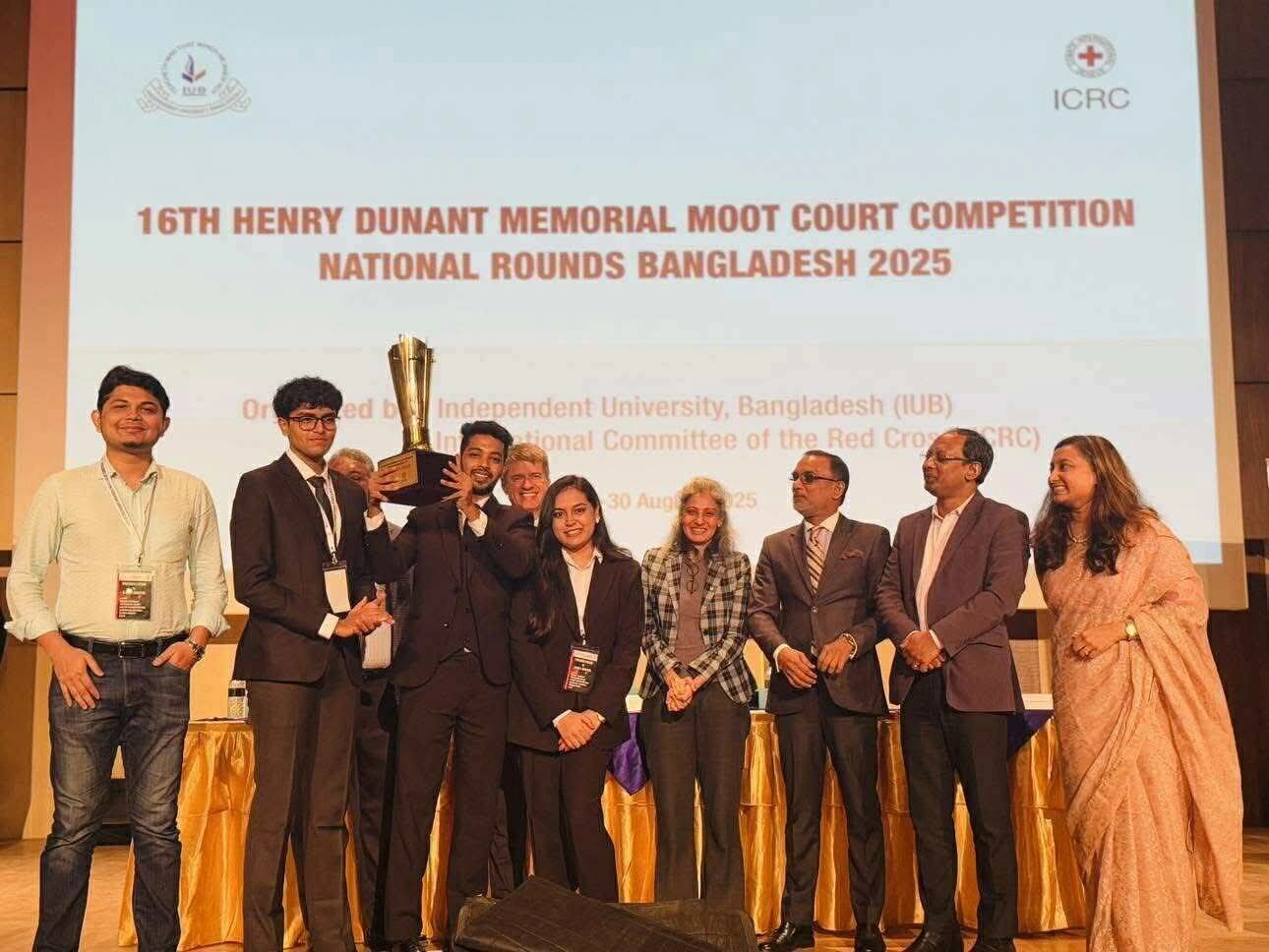
- Henry Dunant Memorial Moot Court Competition 2025. The AIUB team won the national rounds of this International Committee of the Red Cross (ICRC) competition on international humanitarian law (IHL), defeating Daffodil International University in the final. This achievement highlights AIUB's contribution to promoting legal knowledge and the principles of international humanitarian law [29].
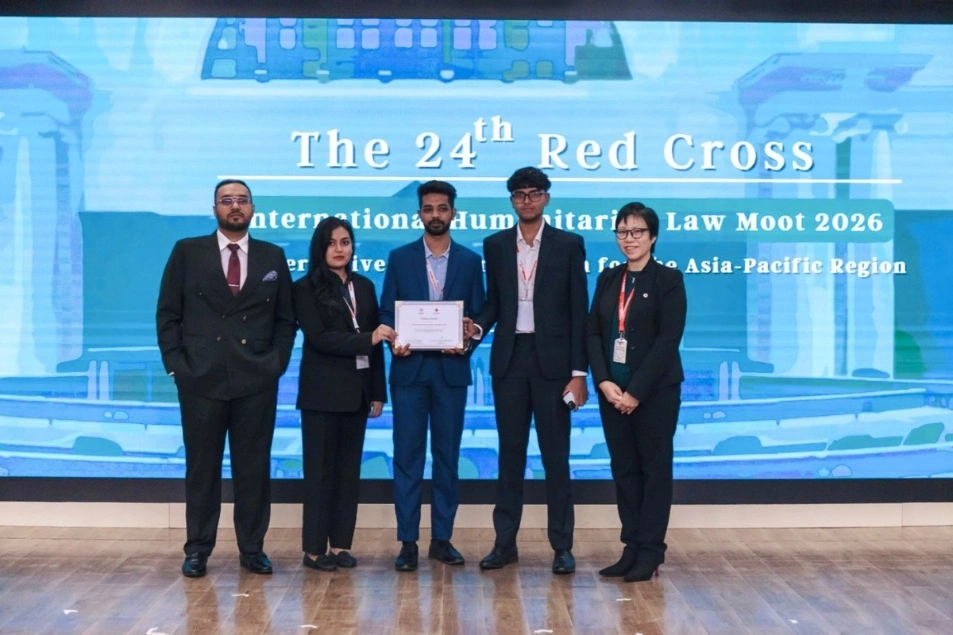
- Red Cross IHL Moot, Asia-Pacific Regional Rounds 2026. Following its national championship, AIUB became the only team representing Bangladesh at the 24th Asia-Pacific Regional Rounds, held in Hong Kong in March 2026. This participation extended the University's engagement with international humanitarian law and regional legal discourse [30].
- National and International Moot Court Competitions. In 2026, an AIUB team reached the quarter-finals and secured seventh place in the 4th Professor Dr. Khabir Uddin Ahmed National Moot Court Competition. AIUB students have also participated in the Justice P.N. Bhagwati International Moot Court Competition, the Jessup Bangladesh rounds and the BUP Moot Court Competition, gaining experience in legal advocacy and international legal frameworks [14], [31].

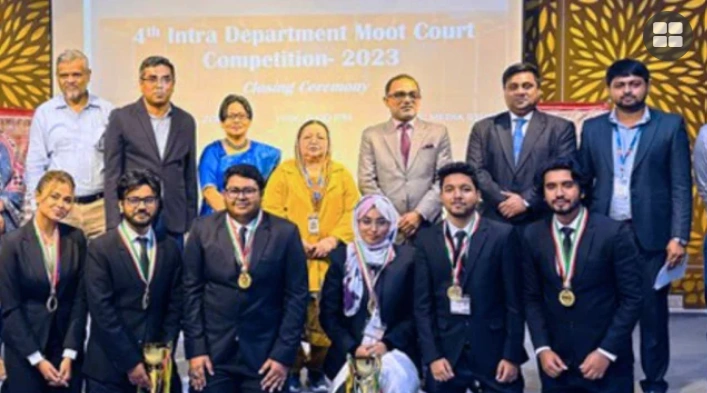
- Intra-Department Moot Court Competitions. The AIUB Law and Mooting Society organises annual internal moot court competitions to strengthen students' legal reasoning, research and oral advocacy. The 2023 edition featured a High Court judge as its chief guest, reinforcing the connection between legal education and the judicial profession [32].
Hosting the Philip C. Jessup International Law Moot Court Competition
AIUB contributes to the development of legal education and international academic exchange by hosting the Bangladesh Qualifying Rounds of the Philip C. Jessup International Law Moot Court Competition. Organised by the International Law Students Association, Jessup is one of the world's leading international law moot court competitions, involving more than 850 law schools from nearly 100 countries.
AIUB hosted the 8th Bangladesh Qualifying Rounds in February 2024, providing law students from across the country with an opportunity to engage in international legal advocacy and debate [33].
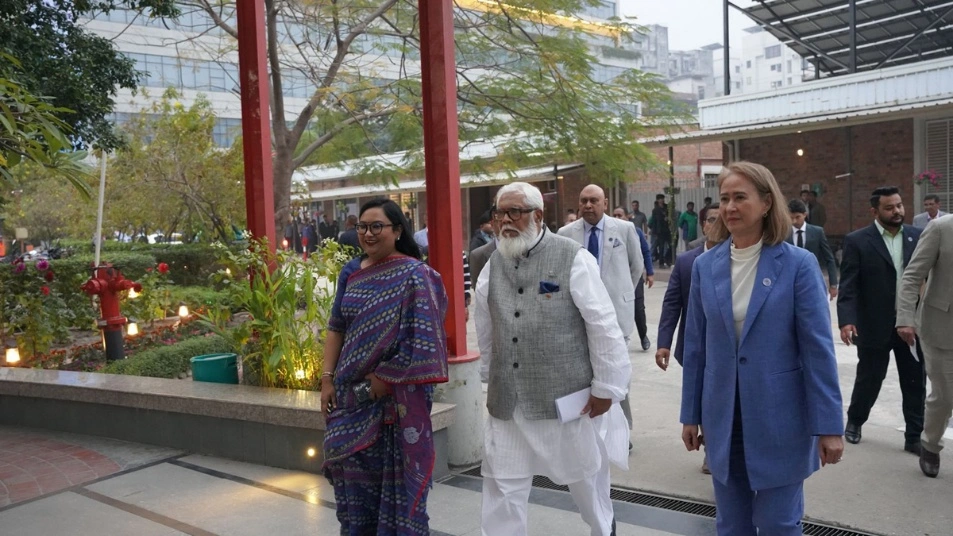
In 2026, the University hosted the 10th Bangladesh Qualifying Rounds under the joint patronage of AIUB, the International Law Students Association and Hearth Bangladesh. The event brought together distinguished members of the legal profession, including Justices of the High Court Division and senior advocates of the Supreme Court of Bangladesh [34].
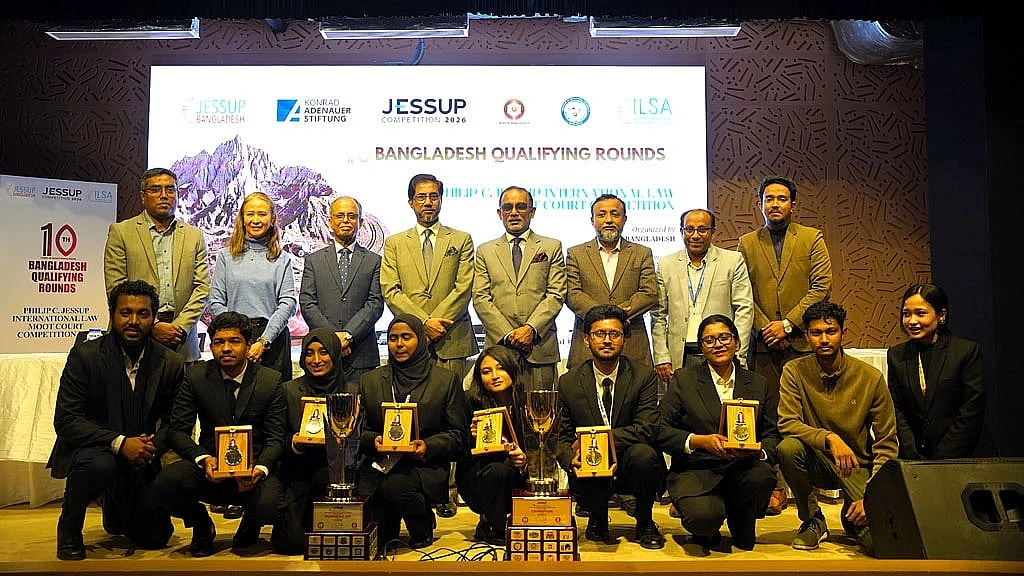
By providing a national platform for this international competition, AIUB facilitates the exchange of legal perspectives, strengthens students' advocacy skills and promotes engagement with international law among universities in Bangladesh.
Human Rights Education, Legal Awareness and Policy Dialogue
AIUB promotes awareness of human rights, legal responsibilities and contemporary legal challenges through academic programmes, student initiatives and engagement with external organisations. These activities provide opportunities for students to understand legal protections, develop advocacy skills and engage with issues affecting individuals and society.
Key initiatives include:
- HROC Legal Skills Boot Camp 2025. AIUB law students participated in a three-day residential programme organised by the Human Rights Observation Center. The initiative brought together 120 participants from 30 universities for training in human rights, legal research and advocacy, providing an inter-university platform for developing legal skills and strengthening awareness of human rights [35].
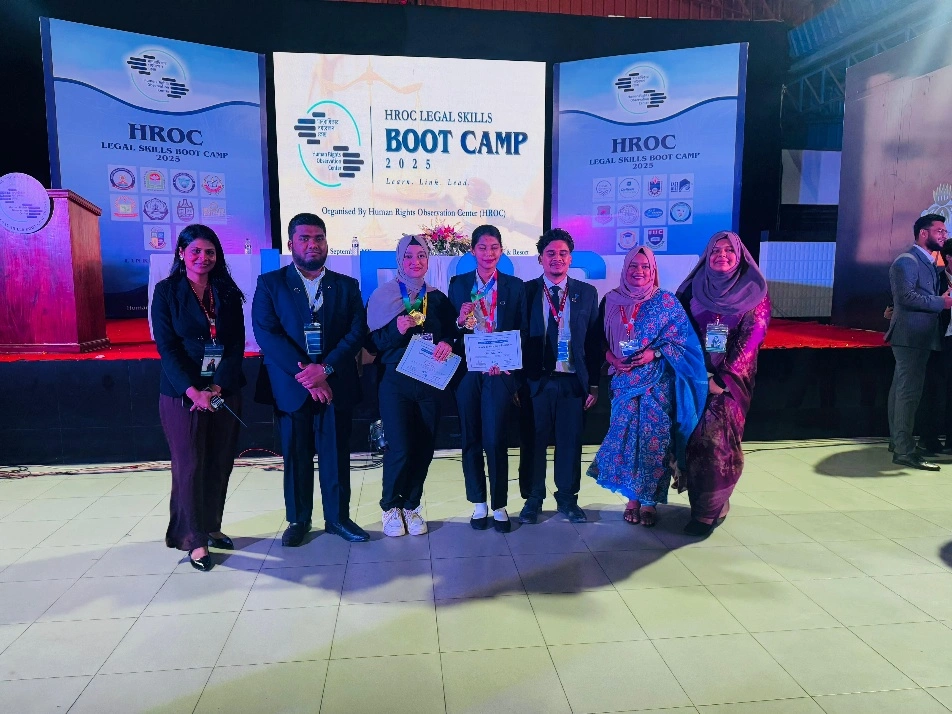
- Human Rights Club and Law Club. AIUB supports student organisations that promote human rights education and legal awareness through seminars, workshops and discussions on contemporary legal issues. These initiatives encourage student engagement with fundamental rights, legal responsibilities and the role of law in society [36].
- Legal Reform on Maternity Benefits and Gender-Based Violence Prevention. The Department of Law organised a seminar addressing recent amendments to the Bangladesh Labour Rules, with particular attention to maternity benefits and the prevention of gender-based violence. The activity brought together law and Human Resource Management students to discuss legal protections and developments in labour legislation [37].
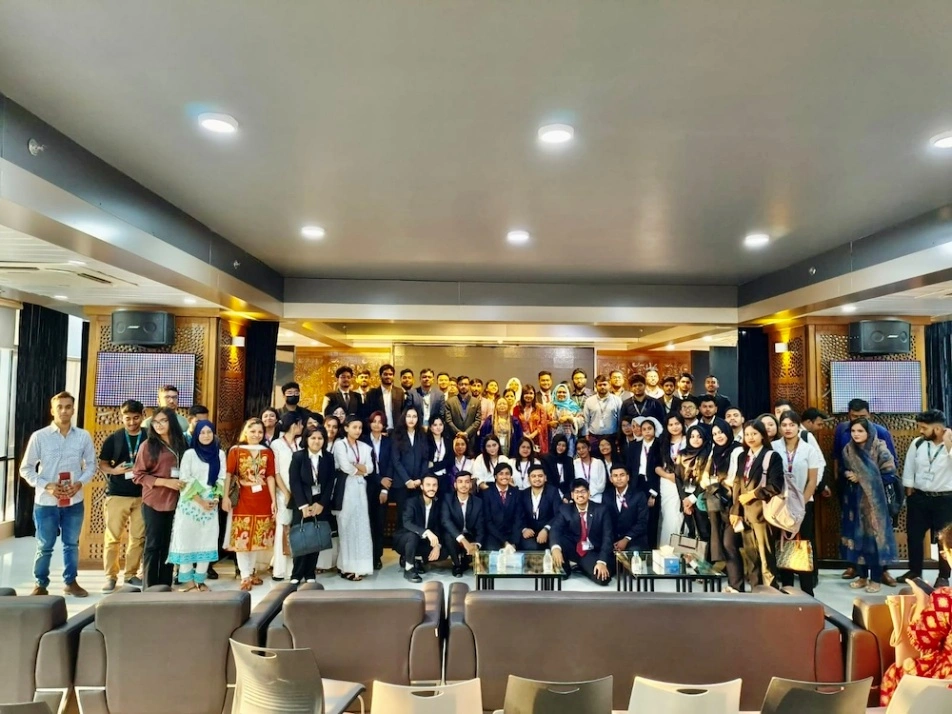
- Cybercrime and Digital Evidence. In collaboration with the Strengthening Rule of Law Programme of the National Center for State Courts (NCSC), supported by the US Department of State, AIUB's Department of Law organised an academic session on cybercrime and the admissibility of digital evidence under Bangladeshi law. The initiative strengthened students' understanding of emerging legal challenges and the application of legal procedures in digital environments [38].
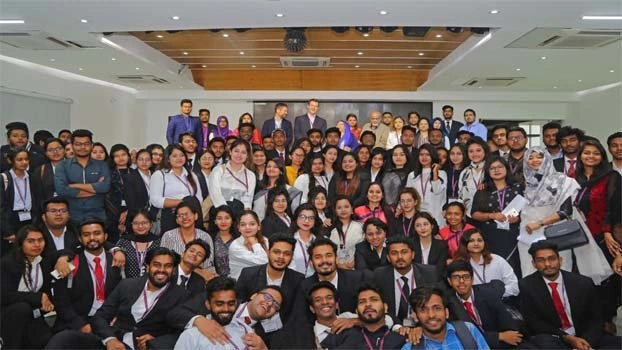
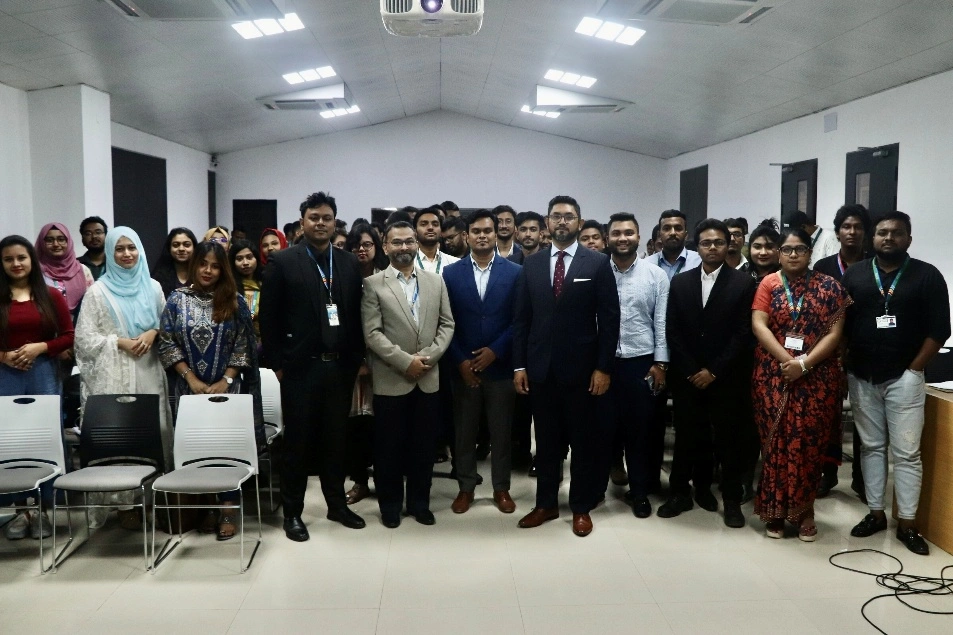
- Legal Awareness for Entrepreneurs. AIUB organised a session for business students addressing the legal responsibilities and regulatory requirements associated with operating a business in Bangladesh. This initiative promotes awareness of legal compliance and responsible business practices among future professionals [39].
International Collaboration in Legal Education and Academic Exchange
AIUB extends its engagement with the international legal and academic community through participation in global forums focused on the development of legal education.
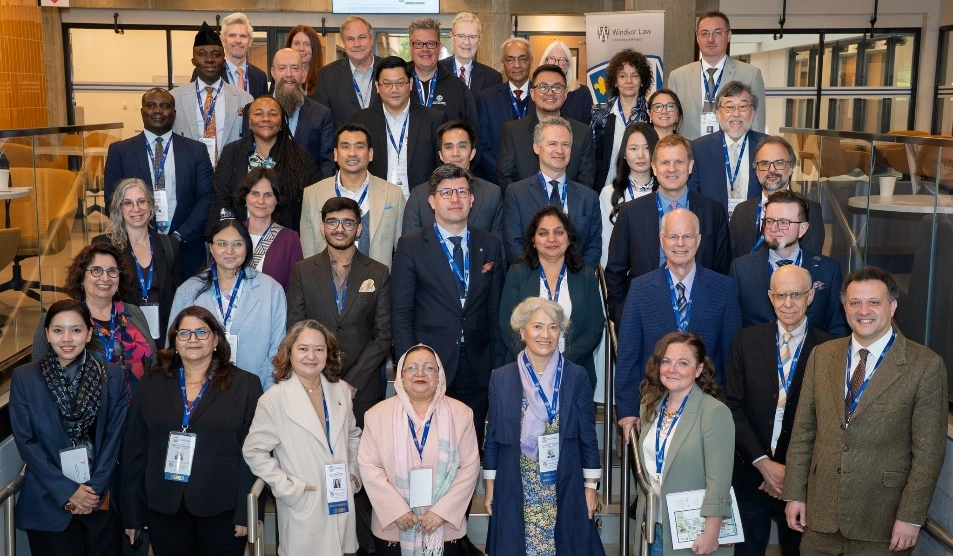
In 2024, the Advisor of the University's Department of Law represented AIUB at the Global Law Deans' Forum and Annual Meeting of the International Association of Law Schools, contributing to international academic exchange and discussions on contemporary legal education [40].
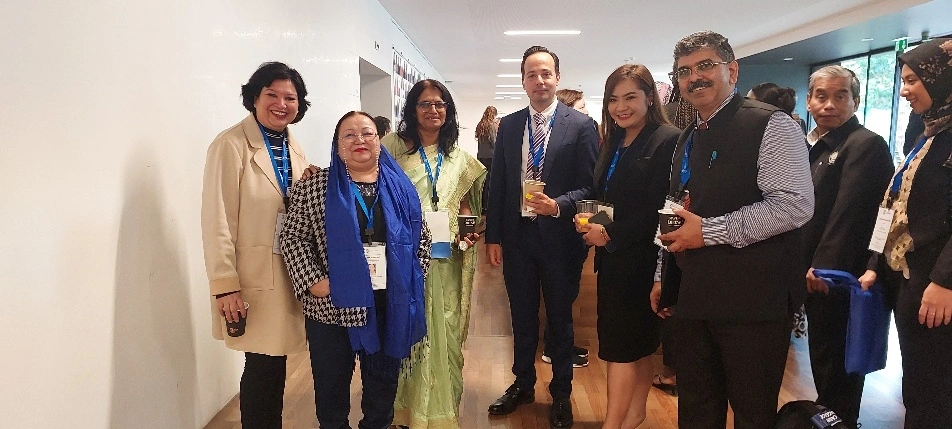
In 2026, the Department's Advisor participated again in the international forum, sharing AIUB's experience in adapting legal education to contemporary global developments and emerging challenges. This participation strengthened the University's international academic engagement and its contribution to discussions on the evolution of legal education [41].
Civic Engagement, Democratic Dialogue and International Affairs
AIUB provides academic and extracurricular platforms for students, government representatives and experts to engage in discussions on democratic governance, international relations and issues of national and global importance. These initiatives encourage informed debate, civic participation and a deeper understanding of public affairs.
- Model United Nations and International Affairs. AIUB served as the venue partner for the Bangladesh International Model United Nations (BiMUN) 2023, organised by the United Nations Youth and Students Association of Bangladesh (UNYSAB). The event included the participation of the Director of the United Nations Wing of the Ministry of Foreign Affairs and focused on addressing climate vulnerability for a sustainable future [42], [43].
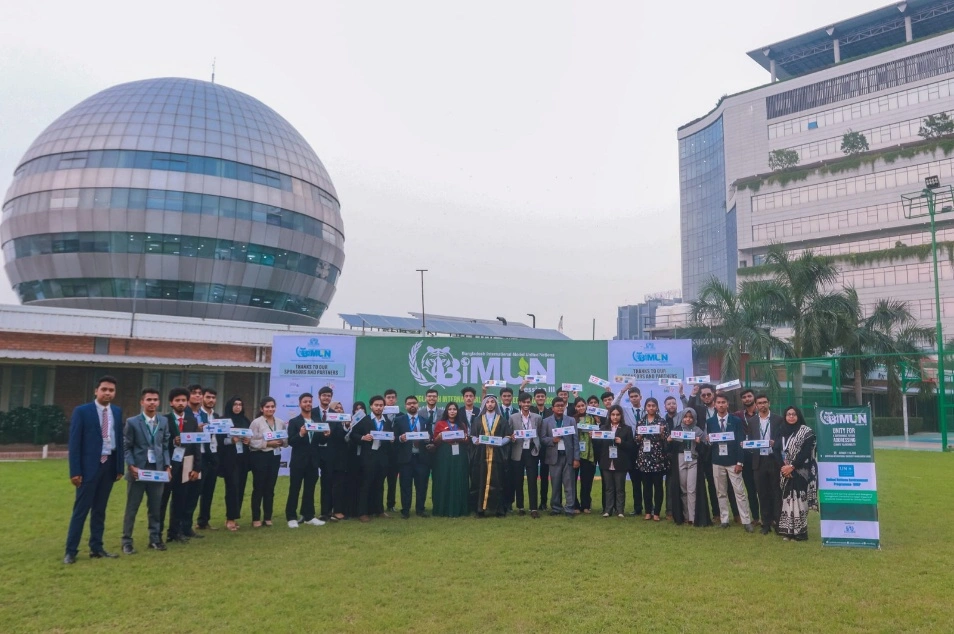
- In December 2025, AIUB hosted the 11th edition of Bangladesh Model United Nations under the theme "Just Energy Transition". The event featured the Foreign Secretary of Bangladesh as its chief guest, providing students with opportunities to engage with diplomatic perspectives and international policy discussions [44], [45].

- Debate and Democratic Engagement. The AIUB Oratory Club won the ATN Bangla Debate for Democracy 2022, a parliamentary-style debate competition in which the University team defeated four competing teams. This achievement reflects AIUB's promotion of critical thinking, public argumentation and informed democratic debate among students [46].

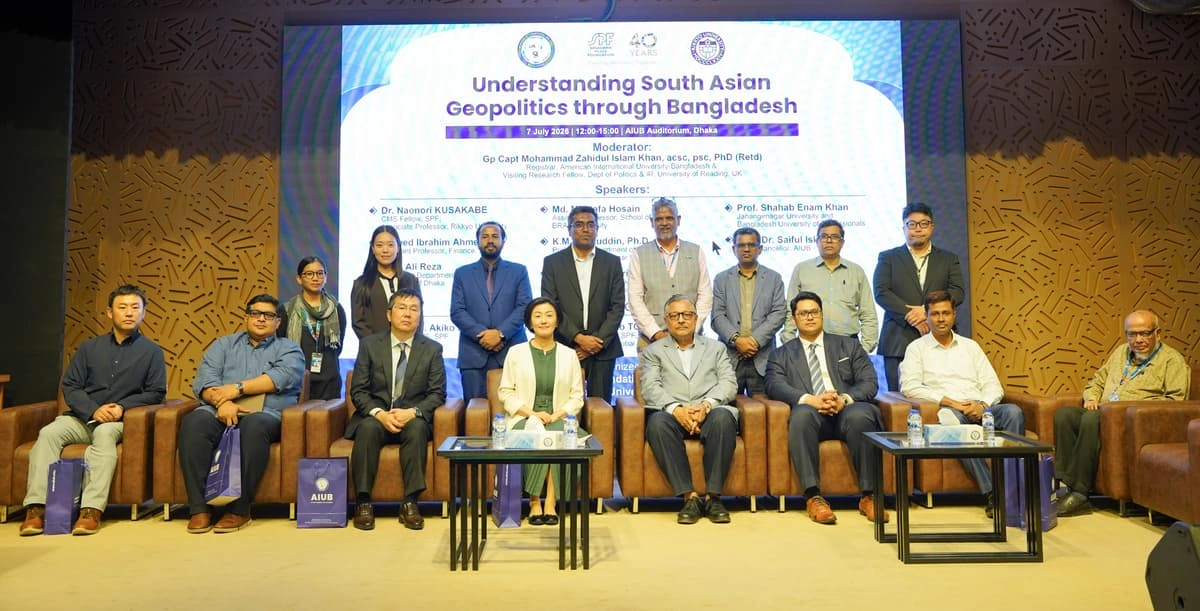
- Geopolitical Dialogue and Regional Affairs. In July 2026, AIUB hosted the international seminar "Understanding South Asian Geopolitics through Bangladesh" at the AIUB Auditorium. The event brought together speakers from leading universities to discuss regional geopolitical developments and Bangladesh's position within the broader South Asian context [47], [48].
Through these initiatives, AIUB strengthens its engagement with legal institutions, government representatives, academic organisations and civil society. Its contributions to legal education, human rights awareness, international humanitarian law and democratic dialogue demonstrate the University's commitment to promoting the rule of law, informed civic participation and peaceful, inclusive societies, in alignment with SDG 16.
Access to Justice and Pro Bono Legal Services
AIUB strengthens its engagement with the justice system by facilitating collaboration among legal institutions, government representatives, legal practitioners and academic organisations to promote access to justice in Bangladesh.
Bangladesh Pro Bono Seminar 2026: Building Access to Pro Bono in Bangladesh
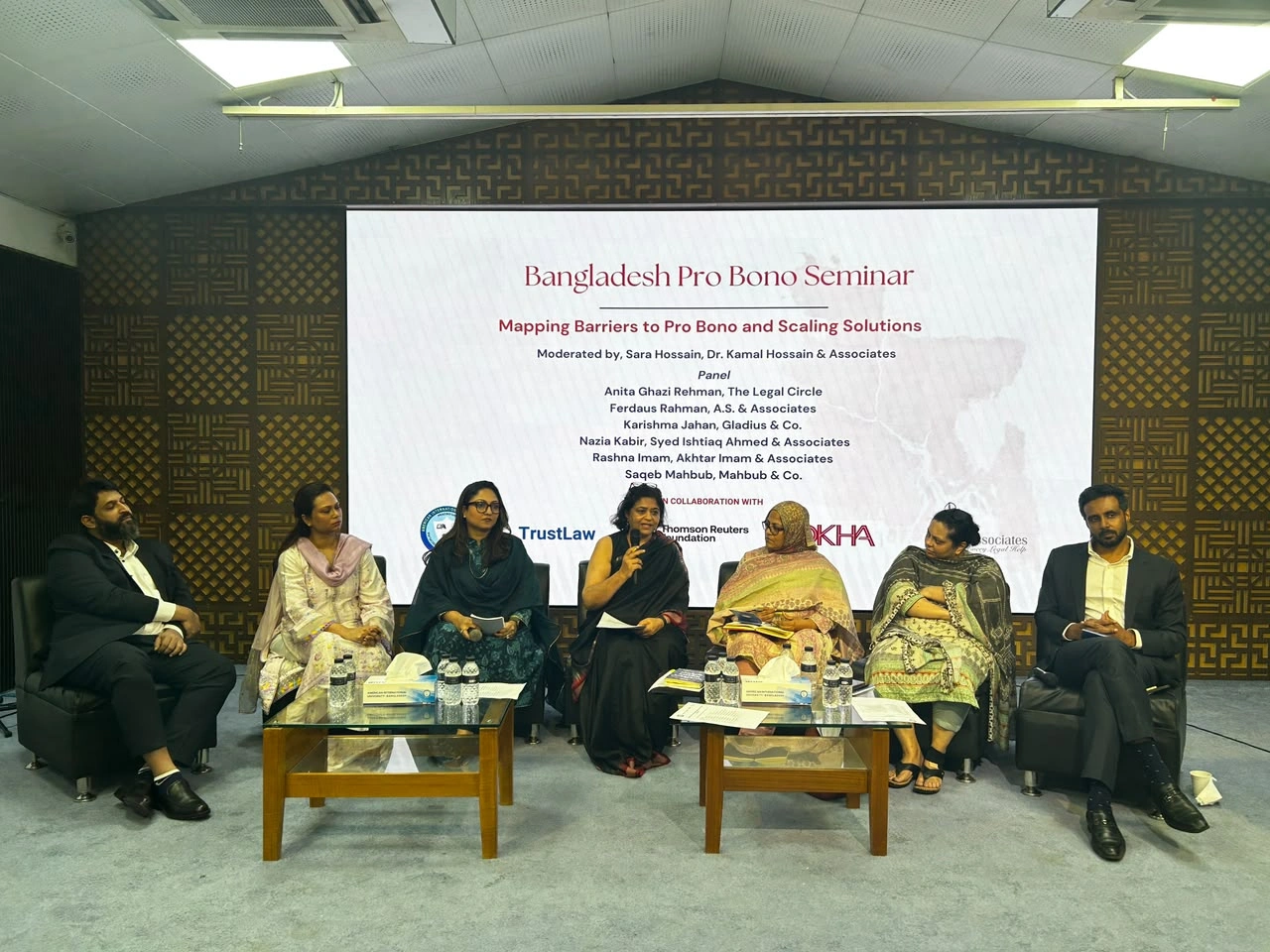
On October 31, 2026, AIUB, in partnership with TrustLaw, the pro bono legal network of the Thomson Reuters Foundation, organised the Bangladesh Pro Bono Seminar 2026 at its campus. The event brought together representatives from the judiciary, government, legal profession and academia to explore strategies for expanding access to justice through voluntary legal services.
The programme featured a keynote address by Additional Attorney General Barrister Aneek R. Haque on the state of access to justice in Bangladesh and the role of pro bono services. It also included contributions from Hon'ble Justice Fatema Anwar of the High Court Division and a representative of the Directorate of Legal Aid, who discussed policy measures for promoting a pro bono culture and strengthening legal assistance.
A panel discussion moderated by Barrister Sara Hossain brought together six legal practitioners to examine institutional barriers to pro bono services, professional incentives and practical approaches for encouraging law firms and individual practitioners to provide voluntary legal assistance. The seminar established a platform for dialogue and cooperation among judicial institutions, legal professionals and universities, reinforcing AIUB's contribution to strengthening access to justice and promoting a sustainable culture of pro bono legal services in Bangladesh [49].
Institutional Collaboration for Preventing Sexual and Gender-Based Violence
AIUB actively contributes to national efforts to prevent sexual and gender-based violence (SGBV) through institutional collaboration, capacity development and evidence-based initiatives aimed at creating safer and more inclusive educational environments.
Participation in the UGC–UN Women ESGBV Partnership
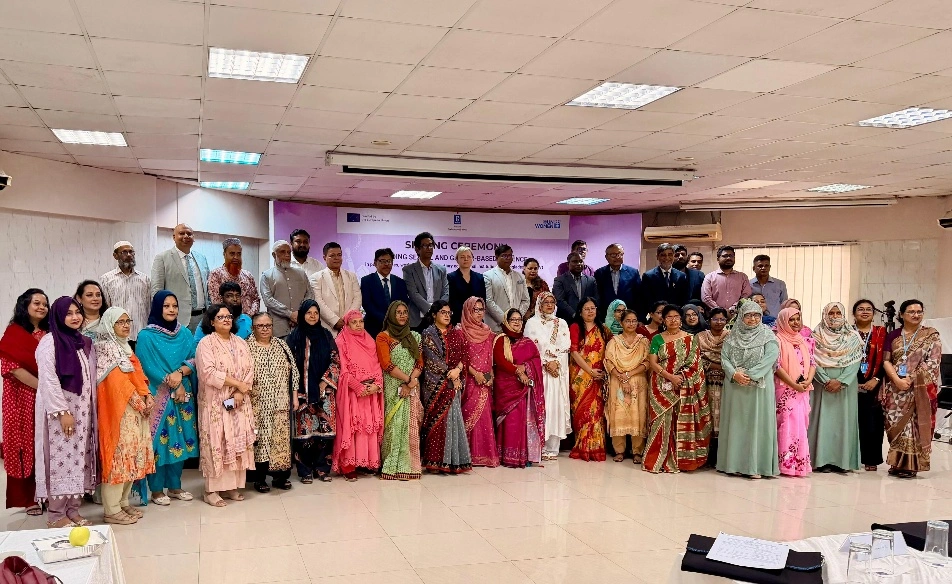
In August 2026, AIUB participated in the partnership initiative titled Ending Sexual and Gender-Based Violence in Public Spaces, Workplaces and Tertiary Educational Institutions in Bangladesh (ESGBV), led by UN Women and the University Grants Commission (UGC). The initiative, supported by the European Union and implemented in collaboration with Ain o Salish Kendra (ASK), brings together five selected universities to strengthen institutional capacity to prevent sexual harassment and gender-based violence.
AIUB's Vice Chancellor, together with representatives from the Proctor's Office, Human Resources and the Institutional Quality Assurance Cell, participated in the partnership signing ceremony and institutional commitment discussions. The collaboration supports coordinated approaches to strengthening university policies, prevention mechanisms and safe, inclusive campus environments [50].
Institutional Capacity Development through Training of Trainers
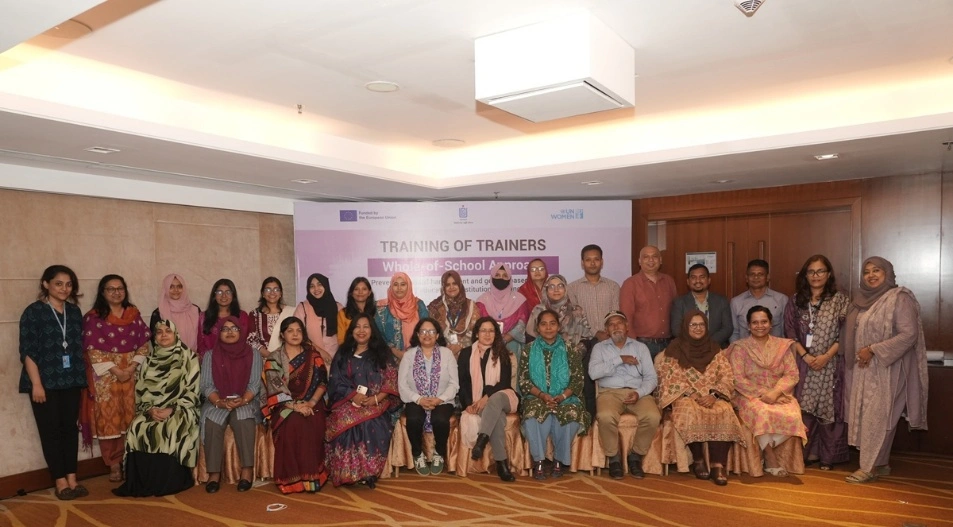
On September 20–22, 2026, AIUB representatives participated in a three-day Training of Trainers programme on the Whole-of-School Approach to preventing sexual harassment and gender-based violence in tertiary educational institutions. Organised by UN Women and UGC under the ESGBV project, the training addressed institutional responsibilities, reporting and referral procedures, confidentiality, survivor-centred responses, digital safety, stakeholder engagement and accountability.
The programme also included an Institutional 90-Day Action Planning exercise, enabling participating universities to translate the training into practical institutional commitments and strengthen their prevention and response mechanisms [51].
Evidence-Based Assessment of Campus Safety. On October 13–14, 2026, AIUB hosted a two-day baseline data collection activity under the ESGBV project. A total of 111 participants, including students, faculty members, administrative staff and transport personnel, contributed to quantitative surveys and focus group discussions addressing safety perceptions, attitudes and experiences related to gender-based violence.
The exercise involved coordination across all four faculties and different university stakeholder groups, providing an institutional evidence base for assessing safety conditions and monitoring the project's progress towards 2028 [52].
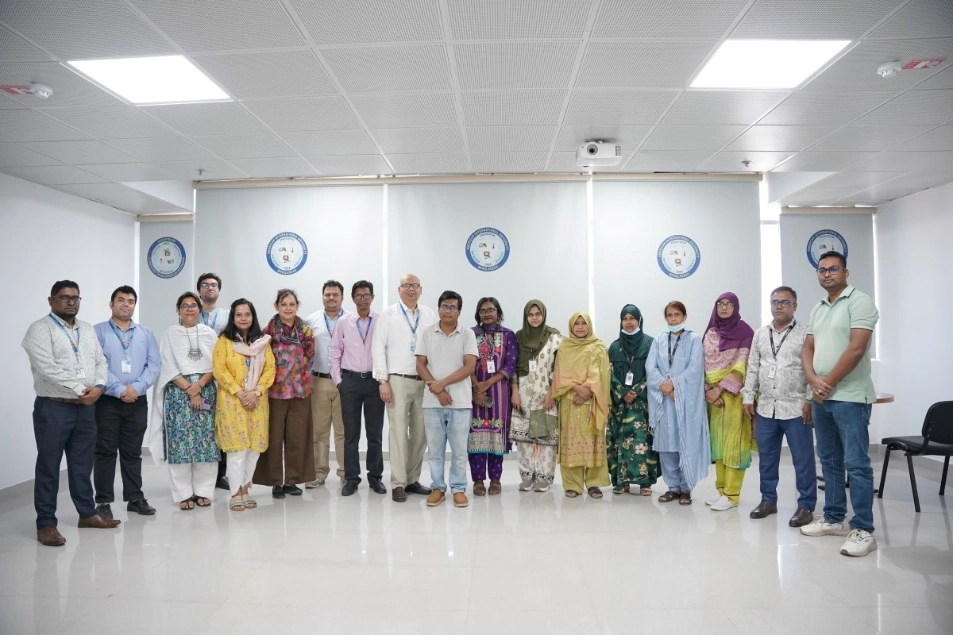
These complementary initiatives demonstrate AIUB's engagement in national collaborative efforts to prevent gender-based violence, strengthen institutional responses and promote safe, respectful and inclusive environments across higher education.
Inclusive Digital Governance and Multistakeholder Participation
AIUB promotes inclusive and accountable digital governance by fostering collaboration with specialised organisations working on Internet policy, emerging technologies and public participation.
Partnership with the Bangladesh Internet Governance Forum (BIGF)
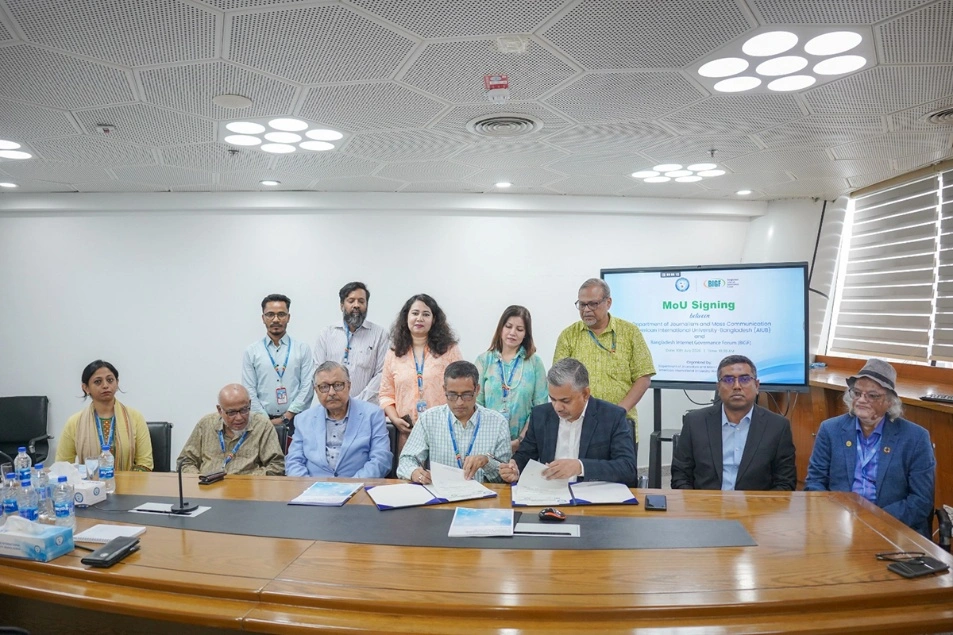
On July 16, 2026, AIUB's Department of Journalism and Mass Communication signed a Memorandum of Understanding with the Bangladesh Internet Governance Forum (BIGF) to strengthen cooperation in research, policy advocacy, knowledge exchange, capacity development and multistakeholder participation in Internet and digital governance.
The agreement establishes a collaborative framework for engaging with national and international processes, including the World Summit on the Information Society, AI for Good, the Internet Governance Forum and the Global Dialogue on AI Governance.
Under this partnership, AIUB and BIGF will jointly organise research activities, policy dialogues, awareness programmes, training initiatives and stakeholder consultations. These activities are intended to engage students, researchers, journalists, civil society representatives, policymakers and technical experts in discussions on digital transformation and Internet governance.
The partnership also emphasises the importance of addressing inequalities in digital participation, protecting rights in digital environments and ensuring that individuals from diverse social and economic backgrounds can contribute meaningfully to the development of digital policies and governance frameworks [53].
This collaboration strengthens AIUB's contribution to inclusive policymaking, responsible technology governance and participatory institutional development.
Civic Education and Direct Engagement with Democratic Institutions
AIUB strengthens civic education by providing students with opportunities to engage directly with national democratic institutions and observe the practical functioning of parliamentary governance.
Educational Visit to the National Parliament (Jatiya Sangsad)
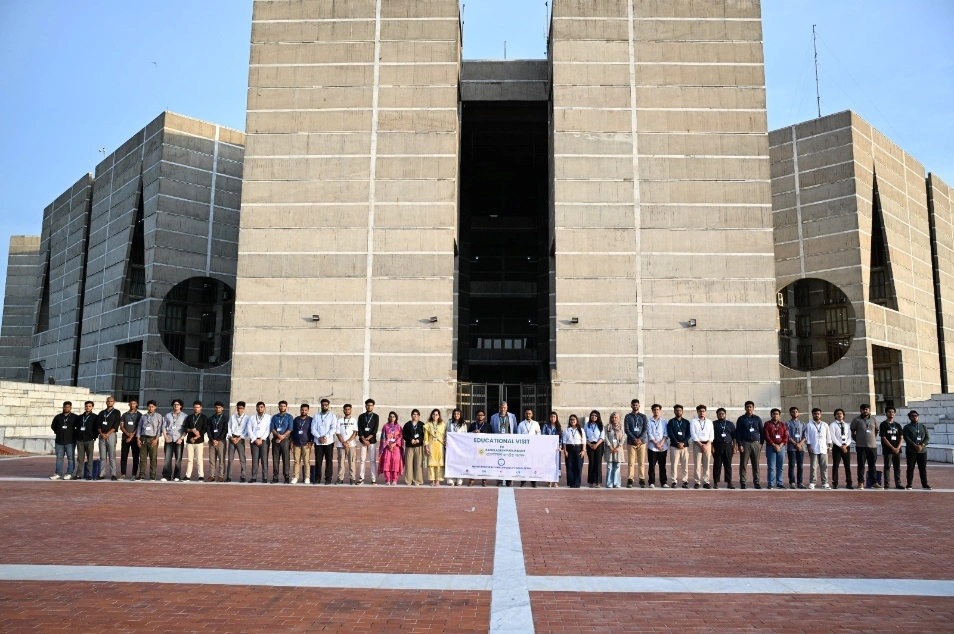
On July 14, 2026, AIUB's Department of Social Sciences organised an educational visit to the National Parliament of Bangladesh for undergraduate students enrolled in the Bangladesh Studies course. The visit was conducted with the approval of the Secretary of the Parliament Secretariat.
During the visit, students observed live parliamentary proceedings, including the presentation and debate of a bill concerning the establishment of a new public university by the Minister of Education. They also gained insights into legislative procedures, public policy formulation and the constitutional responsibilities of the Jatiya Sangsad.
The programme additionally introduced students to the National Parliament Library and its archival collections, highlighting the importance of preserving legislative records as resources for research, policymaking and institutional accountability.
By connecting academic instruction with direct observation of parliamentary activities, AIUB promotes students' understanding of democratic institutions, legislative processes and responsible citizenship [54].
Academic Dialogue on Institutional Democracy and Governance
AIUB contributes to discussions on democratic governance and institutional development by promoting academic research, evidence-based dialogue and engagement with experts in public administration and governance.
Institutional Democracy and Future Bangladesh
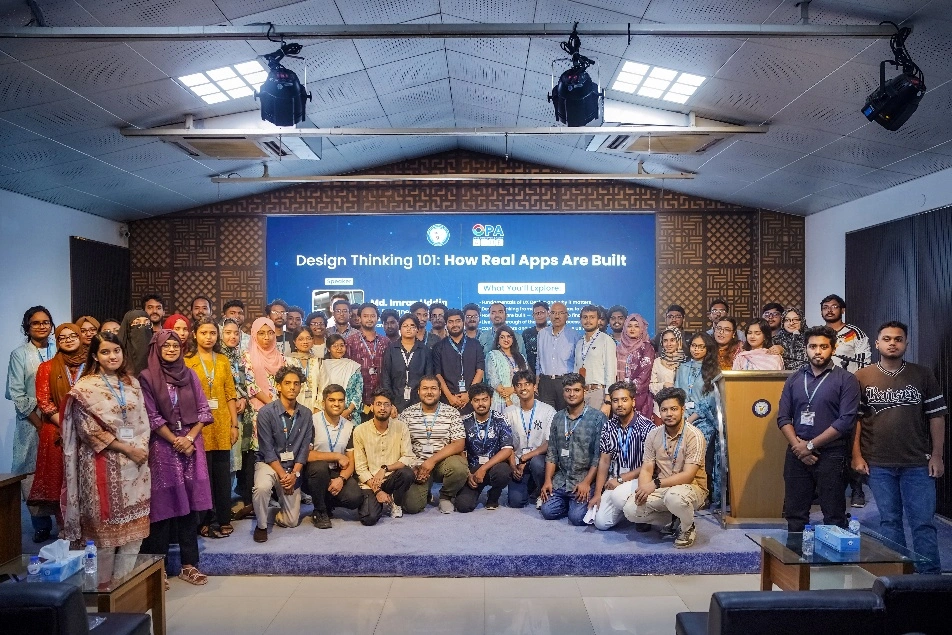
On June 28, 2026, AIUB's Department of Management, within the Faculty of Business Administration, organised a seminar titled Institutional Democracy and Future Bangladesh. The event brought together university academics, researchers and students to examine institutional democracy and the future of governance in Bangladesh.
The programme featured the presentation of a research paper titled "Bangladesh's Path to Institutional Democracy: Lessons from Failure and Building Blocks", which analysed the country's democratic transition using directed content analysis, focused synthesis and meta-synthesis approaches. The research addressed institutional checks and balances, political inclusiveness, rule-based governance, democratic accountability and public trust.
The seminar also featured an expert discussion led by a professor from the Department of Public Administration at Jahangirnagar University, addressing the importance of an independent judiciary, transparent electoral institutions, empowered local governments, media freedom and civic participation.
An interactive discussion involving academic leaders, faculty members and students provided an opportunity to exchange perspectives on institutional reform, democratic resilience and citizen participation. The event reinforced AIUB's role as an academic platform for research and informed dialogue on strengthening democratic institutions in Bangladesh [55].
Academic Engagement in Peacebuilding and International Cooperation
AIUB promotes academic engagement with international peacebuilding, conflict prevention and the role of multilateral institutions in maintaining a rules-based international order.
Peacebuilding in an Eroded Rule-Based World
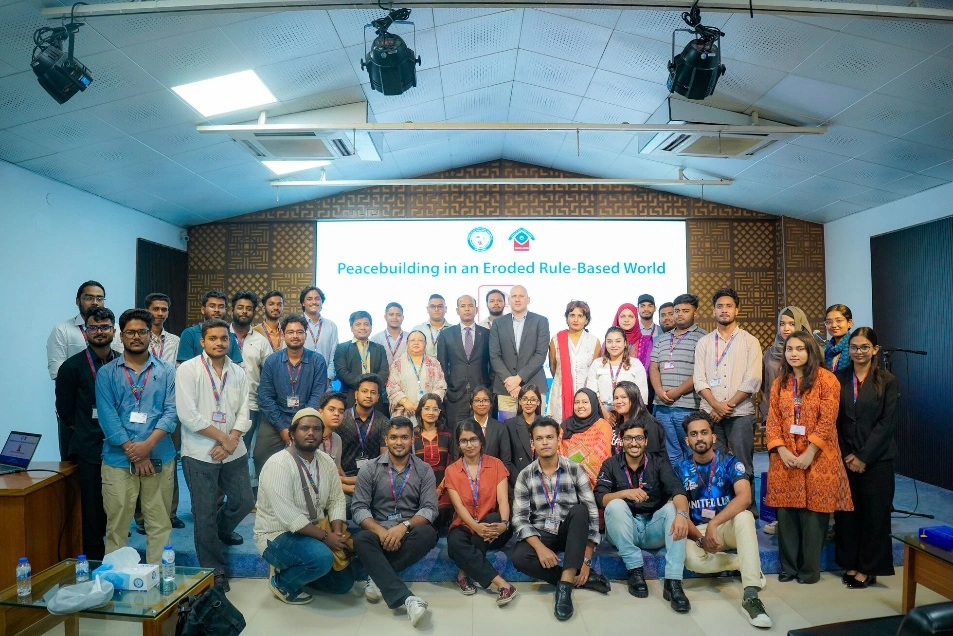
On August 11, 2026, AIUB's Department of Law organised an academic programme titled "Peacebuilding in an Eroded Rule-Based World", bringing together faculty members and students to discuss contemporary challenges to international peace, security and the rules-based international system.
The programme featured Dr. Marc Raphael Dietrich, Program Manager of Nexus at the Embassy of Switzerland in Bangladesh, whose professional experience includes international cooperation, governance and peacebuilding in conflict-affected contexts, including previous work with the United Nations, the European Union Advisory Mission and the Organization for Security and Co-operation in Europe (OSCE).
The lecture examined how the erosion of international rules and institutions affects peacebuilding efforts, highlighting the importance of individuals, communities, institutional frameworks and shared normative principles in preventing and resolving conflicts.
The discussion also addressed the role of international institutions and multilateral decision-making, including how geopolitical considerations influence the implementation of international norms and collective responses to conflicts.
By bringing international cooperation and peacebuilding expertise into its academic environment, AIUB provides students and faculty with opportunities to engage critically with global governance, conflict prevention and the importance of strengthening international institutions [56].
Refugee Protection and International Legal Responsibility
AIUB contributes to advancing legal knowledge on refugee protection, humanitarian governance and international legal obligations through faculty and student research presented at academic forums addressing displacement and humanitarian challenges in South Asia.
International Conference on Evolving Refugee Protection Architectures in South Asia 2026
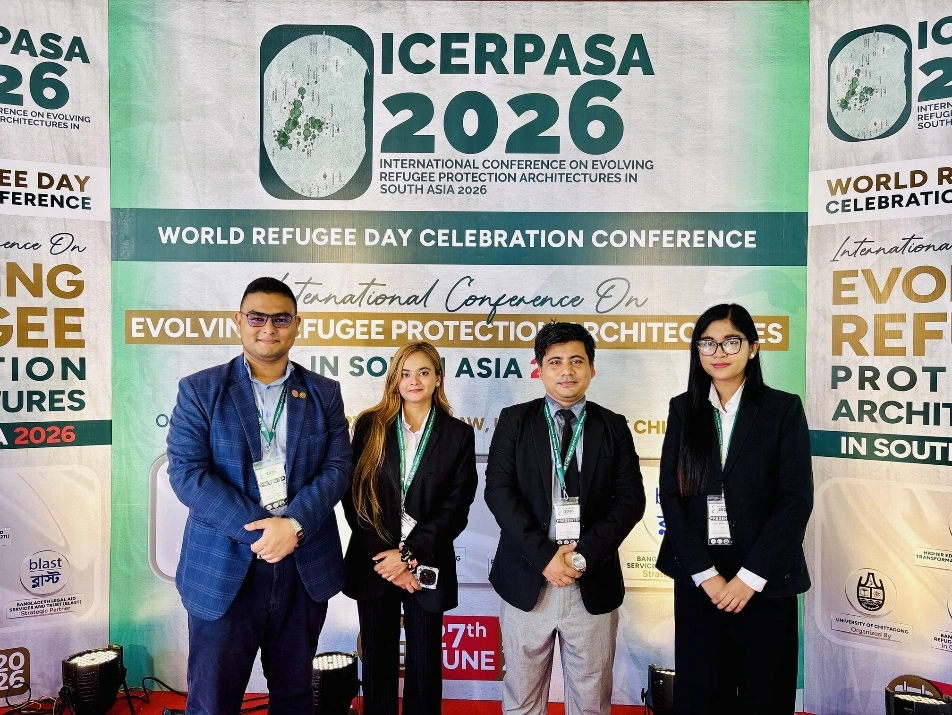
On June 27, 2026, faculty members and students from AIUB's Department of Law participated in the International Conference on Evolving Refugee Protection Architectures in South Asia, hosted by the Faculty of Law of the University of Chittagong in collaboration with the Bangladesh Center for Refugee Law Studies (BCRLS).
AIUB faculty and students presented research addressing different dimensions of refugee protection and international legal responsibility:
- Humanitarian Governance in Rohingya Refugee Camps. Md. Jahedul Islam, Lecturer in the Department of Law, presented research examining the humanitarian-administrative governance framework operating in Bangladesh's Rohingya refugee camps and its implications for states that are not parties to the 1951 Refugee Convention.
- International Responsibility-Sharing for Refugee Protection. AIUB students Samaun Fardosy Orthi and Md. Thahamid Al Mahabul Khan, under the supervision of Assistant Professor Tasnuva Anika, presented joint research exploring legal frameworks for strengthening international responsibility-sharing mechanisms in response to large-scale refugee movements.
- The Principle of Non-Refoulement. AIUB student Sumaya Hossain Meharin presented a research poster examining the development of non-refoulement as a universal principle of international law extending beyond treaty-based obligations.
These contributions demonstrate AIUB's engagement with contemporary legal challenges concerning displaced populations, international humanitarian responsibilities and the protection of fundamental rights. They also strengthen the University's participation in regional academic discussions on refugee law and humanitarian governance [57].
Inter-University Cooperation in Legal Education and Advocacy
AIUB extends its contribution to strengthening legal education and access to justice by sharing academic expertise and practical legal knowledge with other higher education institutions in Bangladesh.
Moot Court Training at Noakhali Science and Technology University (NSTU)
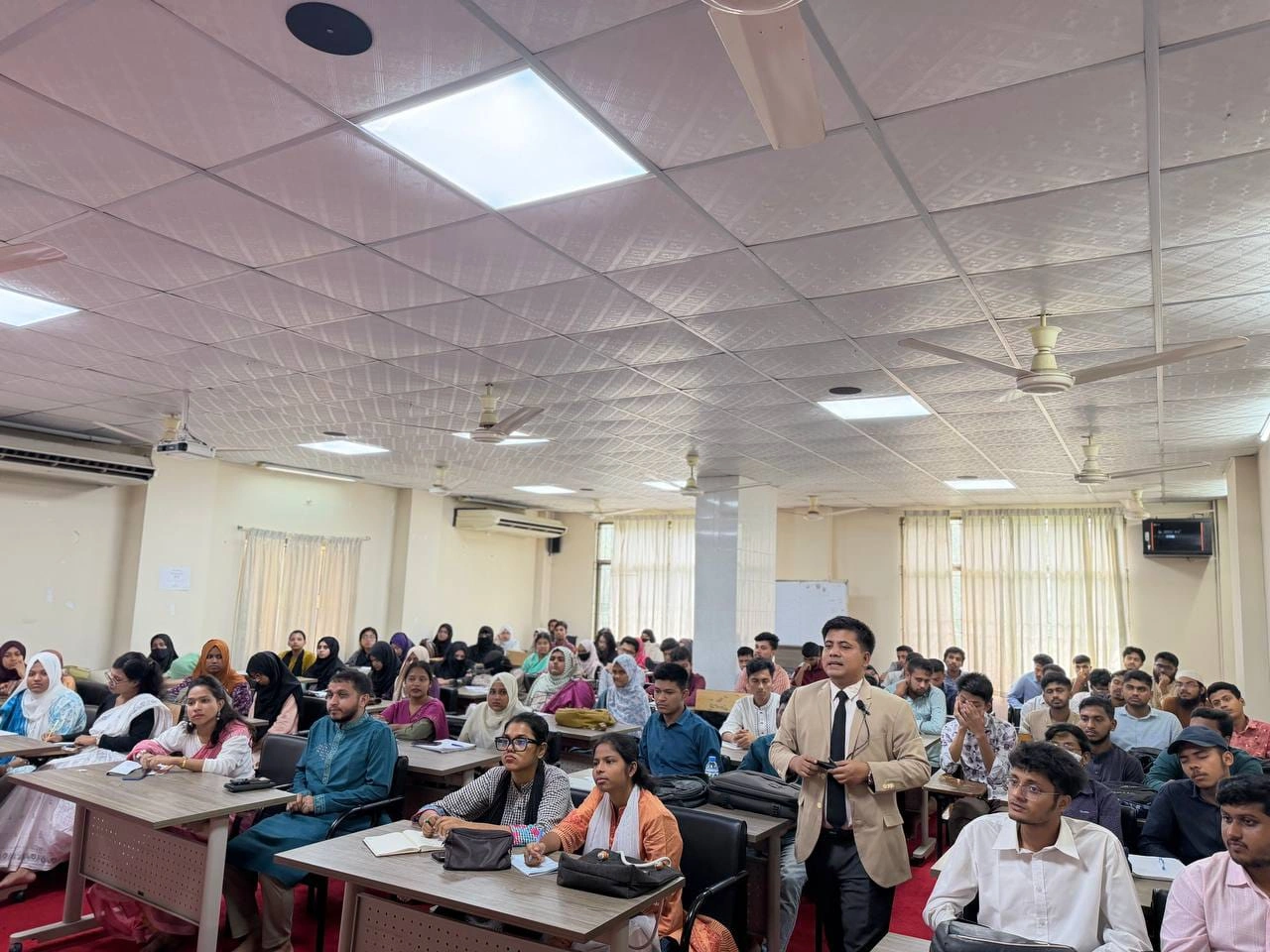
On August 25, 2026, Md. Jahedul Islam, Lecturer in AIUB's Department of Law, was invited to conduct a specialised moot court training session for 120 students at Noakhali Science and Technology University (NSTU). Organised by the NSTU Moot Court Society under the programme "From Research to Rebuttal: Mastering Memorial & Oral Advocacy", the activity focused on legal research, memorial writing and oral advocacy.
The training provided practical guidance on identifying relevant legal authorities, developing persuasive legal arguments and translating legal research into effective written submissions. The programme also emphasised youth leadership, community service and empowerment through legal education.
This academic engagement demonstrates AIUB's contribution to inter-university knowledge exchange, the development of legal advocacy skills and the strengthening of collaborative relationships between public and private higher education institutions in Bangladesh [58].
References
| [1] | American International University-Bangladesh, “SDG 16: Peace, Justice, and Strong Institutions – AIUB SDG Activity Report 2022,” [Online]. Available: https://www.aiub.edu/iqac/sdgs/aiub-sdg-activity-report-2022/sdg16-aiubactivityreportof2022. [Accessed 2026]. |
| [2] | Md Maksudur Rahman, Md Khalid Rahman, “Addressing the necessity for a 'witness protection law' to eliminate backlogs in criminal cases in Bangladesh,” [Online]. Available: https://garuda.kemdiktisaintek.go.id/documents/detail/3215649 . [Accessed 2026]. |
| [3] | UUM Journal of Legal Studies, “Enhancing access to justice through e-judiciary in Bangladesh: A study,” [Online]. Available: https://e-journal.uum.edu.my/index.php/uumjls/article/view/13659. [Accessed 2026]. |
| [4] | SSRN, “Legal mechanisms to combat communal violence in contemporary Bangladesh,” [Online]. Available: https://papers.ssrn.com/sol3/papers.cfm?abstract_id=4381995. [Accessed 2026]. |
| [5] | Britain International of Humanities and Social Sciences Journal , “Citizen's charter in public services: Development, principles and practice,” [Online]. Available: https://doi.org/10.33258/biohs.v4i3.799. [Accessed 2026]. |
| [6] | AIUB Journal of Business and Economics, “"Establishing democracy in Bangladesh: Evaluating the role of media,” [Online]. Available: https://ajbe.aiub.edu/index.php/ajbe/article/view/131/121. [Accessed 2026]. |
| [7] | Springer, Singapore, “Land rights documentation and verification system using blockchain technology,” [Online]. Available: https://link.springer.com/chapter/10.1007/978-981-16-3071-2_31. [Accessed 2026]. |
| [8] | Springer, Cham , “Factors behind the World Crime Index: Some parametric observations using DBSCAN and linear regression,” [Online]. Available: https://link.springer.com/chapter/10.1007/978-3-030-93247-3_69. [Accessed 2026]. |
| [9] | M. Hasan, S. M. Murshed, and P. Pillai, Eds., “The Rohingya Crisis: Humanitarian and Legal Approaches. London, U.K.: Routledge,” [Online]. Available: https://www.taylorfrancis.com/books/edit/10.4324/9781003304883/rohingya-crisis-manzoor-hasan-syed-mansoob-murshed-priya-pillai. [Accessed 2026]. |
| [10] | American International University-Bangladesh, “Information or overview,” [Online]. Available: https://aiub.edu/about/Information. [Accessed 2026]. |
| [11] | The Financial Express, “Dr. Hasanul A. Hasan begins tenure as Chairman and Ishtiaque Abedin Vice Chairman of AIUB Board of Trustees,” [Online]. Available: https://thefinancialexpress.com.bd/education/dr-hasanul-a-hasan-begins-tenure-as-chairman-and-ishtiaque-abedin-vice-chairman-of-aiub-board-of-trustees. [Accessed 2026]. |
| [12] | American International University-Bangladesh, “General information,” [Online]. Available: https://aiub.edu/about/general-information. [Accessed 2026]. |
| [13] | The Business Standard, “AIUB celebrates 23rd convocation with 1,766 graduates,” [Online]. Available: https://www.tbsnews.net/economy/corporates/aiub-celebrates-23rd-convocation-1766-graduates-1309056. [Accessed 2026]. |
| [14] | American International University-Bangladesh, “SDG 16: Peace, Justice, and Strong Institutions – AIUB SDG Activity Report 2023,” [Online]. Available: https://www.aiub.edu/iqac/sdgs/aiub-sdg-activity-report-2023/sdg16-aiubactivityreportof2023. [Accessed 2026]. |
| [15] | American International University-Bangladesh, “Diversity and Equality Committee,” [Online]. Available: https://www.aiub.edu/sustainability/diversity-and-equality-committee. [Accessed 2026]. |
| [16] | American International University-Bangladesh, “Student representation at American International University-Bangladesh (AIUB),” [Online]. Available: https://www.aiub.edu/sustainability/student-representation-at-american-international-university-bangladesh-aiub-. [Accessed 2026]. |
| [17] | American International University-Bangladesh, “Institutional Policy,” [Online]. Available: https://aiub.edu/administration/institutional-policy. [Accessed 2026]. |
| [18] | American International University-Bangladesh, “Policy Regarding Discrimination Complaints for Students,” [Online]. Available: https://aiub.edu/offices/osa/student-complaint-policy/policy-regarding-discrimination-complaints-for-students. [Accessed 2026]. |
| [19] | American International University-Bangladesh, “Policy Regarding Sexual Harassment Complaints for Students,” [Online]. Available: https://www.aiub.edu/offices/osa/student-complaint-policy/policy-regarding-sexual-harassment-complaints-for-students. [Accessed 2026]. |
| [20] | American International University-Bangladesh, “AIUB support and facilitate a holistic ethical organizational culture,” [Online]. Available: https://aiub.edu/sustainability/aiub-support-and-facilitate-a-holistic-ethical-organizational-culture. [Accessed 2026]. |
| [21] | American International University-Bangladesh, “AIUB ethical values,” [Online]. Available: https://www.aiub.edu/administration/institutional-policy/aiub-ethical-values. [Accessed 2026]. |
| [22] | American International University-Bangladesh, “Anti-corruption policy,” [Online]. Available: https://aiub.edu/sustainability/anti-corruption-policy. [Accessed 2026]. |
| [23] | American International University-Bangladesh, “AIUB's sustainable investment policy,” [Online]. Available: https://aiub.edu/sustainability/aiubs-sustainable-investment-policy. [Accessed 2026]. |
| [24] | American International University-Bangladesh, “AIUB code of conduct or disciplinary procedures for students,” [Online]. Available: https://aiub.edu/administration/institutional-policy/code-of-conduct. [Accessed 2026]. |
| [25] | American International University-Bangladesh, “Department of Law,” [Online]. Available: https://aiub.edu/faculties/fass/department-of-laws. [Accessed 2026]. |
| [26] | American International University-Bangladesh, “Law students visited Madaripur Judge Court,” [Online]. Available: https://www.aiub.edu/law-students-visited-madaripur-judge-court. [Accessed 2026]. |
| [27] | American International University-Bangladesh, “Law students visited District and Sessions Judge Court, Manikganj,” [Online]. Available: https://www.aiub.edu/law-students-visited-district-and-sessions-judge-court-manikganj. [Accessed 2026]. |
| [28] | American International University-Bangladesh, “Court visit by the students of the Department of Law,” [Online]. Available: https://www.aiub.edu/court-visit-by-the-students-of-the-department-of-law. [Accessed 2026]. |
| [29] | American International University-Bangladesh, “AIUB moot court team is crowned champion of the 16th Henry Dunant Memorial Moot Court Competition 2025,” [Online]. Available: https://www.aiub.edu/aiub-moot-court-team-is-crowned-champion-of-the-16th-henry-dunant-memorial-moot-court-competition-2025. [Accessed 2026]. |
| [30] | American International University-Bangladesh, “Team AIUB represents Bangladesh at the IHL Moot Asia-Pacific Regional Rounds in Hong Kong,” [Online]. Available: https://aiub.edu/team-aiub-represents-bangladesh-ihl-moot-asia-pacific-regional-rounds-in-hong-kong-. [Accessed 2026]. |
| [31] | American International University-Bangladesh, “AIUB mooting team advances to quarterfinals and achieves 7th position in the 4th Professor Dr. Khabir Uddin Ahmed National Moot Court Competition,” [Online]. Available: https://aiub.edu/aiub-mooting-team-advances-to-quarterfinals-and-achieves-7th-position-in-the-4th-professor-dr-khabir-uddin-ahmed-national-moot-court-competition. [Accessed 2026]. |
| [32] | Dhaka Tribune, “AIUB holds fourth Intra-Department Moot Court Competition,” [Online]. Available: https://www.dhakatribune.com/bangladesh/education/322217/aiub-holds-fourth-intra-department-moot-court. [Accessed 2026]. |
| [33] | American International University-Bangladesh, “8th Bangladesh Qualifying Rounds of the Philip C. Jessup International Law Moot Court Competition Commences at AIUB,” [Online]. Available: https://www.aiub.edu/8th-bangladesh-qualifying-rounds-of-the-philip-c-jessup-international-law-moot-court-competition-commences-at-aiub. [Accessed 2026]. |
| [34] | bdnews24.com, “AIUB arranges Philip C Jessup moot court competition 2026,” [Online]. Available: https://bdnews24.com/campus/ce338591b327. [Accessed 2026]. |
| [35] | American International University-Bangladesh, “Students of Law Shine at HROC Legal Skills Boot Camp 2025,” [Online]. Available: https://www.aiub.edu/students-of-law-shine-at-hroc-legal-skills-boot-camp-2025. [Accessed 2026]. |
| [36] | American International University-Bangladesh, “Clubs from Faculty of Arts and Social Sciences,” [Online]. Available: https://aiub.edu/oncampus/faculty-wise-clubs/clubs-from-faculty-of-arts-and-social-sciences. [Accessed 2026]. |
| [37] | American International University-Bangladesh, “A Seminar on ‘Recent Legal Reforms on Maternity Benefit and the Prevention of Gender Based Violence’ Organized by the Department of Law,” [Online]. Available: https://www.aiub.edu/a-seminar-on-recent-legal-reforms-on-maternity-benefit-and-the-prevention-of-gender-based-violence-organized-by-the-department-of-law. [Accessed 2026]. |
| [38] | ngladesh Post, “Session on cyber crime and digital evidence at AIUB,” [Online]. Available: https://bangladeshpost.net/posts/session-on-cyber-crime-and-digital-evidence-at-aiub-27023. [Accessed 2026]. |
| [39] | American International University-Bangladesh, “A talk on 'Legal Awareness for the Entrepreneurs in Bangladesh' organized by the Department of Law,” [Online]. Available: https://www.aiub.edu/a-talk-on-legal-awareness-for-the-entrepreneurs-in-bangladesh-organized-by-the-department-of-law. [Accessed 2026]. |
| [40] | American International University-Bangladesh, “Advisor of Law represents AIUB at the 2024 Global Law Deans Forum,” [Online]. Available: https://www.aiub.edu/advisor-of-law-represents-aiub-at-the-2024-global-law-deans-forum. [Accessed 2026]. |
| [41] | American International University-Bangladesh, “Department of Law Advisor at the 2026 IALS Global Law Deans' Forum & Annual Meeting,” [Online]. Available: https://aiub.edu/department-of-law-advisor-at-the-2026-ials-global-law-deans-forum--annual-meeting. [Accessed 2026]. |
| [42] | American International University-Bangladesh, “BiMUN 2023 held at AIUB,” [Online]. Available: https://www.aiub.edu/bimun-2023-held-at-aiub. [Accessed 2026]. |
| [43] | United News of Bangladesh, “BiMUN '23 session aims to address climate vulnerability for a sustainable future held in Dhaka,” [Online]. Available: https://unb.com.bd/category/Bangladesh/bimun-23-session-aims-to-address-climate-vulnerability-for-a-sustainable-future-held-in-dhaka/123580. [Accessed 2026]. |
| [44] | The Business Standard, “3-day Bangladesh Model United Nations kicks off, urging justice in energy transition,” [Online]. Available: https://www.tbsnews.net/events/3-day-bangladesh-model-united-nations-kicks-urging-justice-energy-transition-1319626. [Accessed 2026]. |
| [45] | The Bangladesh Today, “3-day Bangladesh Model United Nations begins,” [Online]. Available: https://thebangladeshtoday.com/?p=31751. [Accessed 2026]. |
| [46] | American International University-Bangladesh, “AIUB Oratory Club (AOC) won the ATN Bangla Debate for Democracy 2022,” [Online]. Available: https://www.aiub.edu/aiub-oratory-club-aoc-won-the-atn-bangla-debate-for-democracy-2022. [Accessed 2026]. |
| [47] | The Financial Express, “AIUB hosts international seminar on 'Understanding South Asian Geopolitics through Bangladesh',” [Online]. Available: https://thefinancialexpress.com.bd/education/aiub-hosts-international-seminar-on-understanding-south-asian-geopolitics-through-bangladesh. [Accessed 2026]. |
| [48] | Dhaka Tribune, “AIUB hosts seminar on 'Understanding South Asian Geopolitics through Bangladesh',” [Online]. Available: https://www.tbsnews.net/economy/corporates/aiub-hosted-seminar-south-asian-geopolitics-1482291. [Accessed 2026]. |
| [49] | American International University-Bangladesh (AIUB, “Bangladesh Pro Bono Seminar 2026: Building Access to Pro Bono in Bangladesh,” [Online]. Available: https://www.aiub.edu/bangladesh-pro-bono-seminar-2026-building-access-to-pro-bono-in-bangladesh. [Accessed 2026]. |
| [50] | American International University-Bangladesh (AIUB), “AIUB Participates in UGC–UN Women Partnership Signing Ceremony under the ESGBV Project,” [Online]. Available: https://english.aiub.edu/aiub-participates-in-ugcun-women-partnership-signing-ceremony-under-the-esgbv-project. [Accessed 2026]. |
| [51] | American International University-Bangladesh (AIUB), “AIUB Participates in Training of Trainers on Preventing Sexual Harassment and Gender-Based Violence,” [Online]. Available: https://www.aiub.edu/aiub-participates-in-training-of-trainers-on-preventing-sexual-harassment-and-gender-based-violence. [Accessed 2026]. |
| [52] | American International University-Bangladesh (AIUB), “AIUB Conducts Baseline Survey on Ending Sexual and Gender-Based Violence in Collaboration with UN Women,” [Online]. Available: https://study.aiub.edu/aiub-conducts-baseline-survey-on-ending-sexual-and-gender-based-violence-in-collaboration-with-un-women. [Accessed 2026]. |
| [53] | American International University-Bangladesh (AIUB), “BIGF and AIUB Sign Agreement to Promote Inclusive AI Governance in Bangladesh,” [Online]. Available: https://opendata.aiub.edu/bigf-and-aiub-sign-agreement-to-promote-inclusive-ai-governance-in-bangladesh-. [Accessed 2026]. |
| [54] | American International University-Bangladesh (AIUB), “AIUB Students Witness Parliamentary Democracy Through Educational Visit to Jatiya Sangsad,” [Online]. Available: https://intranet.aiub.edu/aiub-students-witness-parliamentary-democracy-through-educational-visit-to-jatiya-sangsad. [Accessed 2026]. |
| [55] | American International University-Bangladesh (AIUB), “Seminar on ‘Institutional Democracy and Future Bangladesh’,” [Online]. Available: https://calendar.aiub.edu/seminar-on-institutional-democracy-and-future-bangladesh--. . [Accessed 2026]. |
| [56] | American International University-Bangladesh (AIUB), “AIUB Department of Law Hosts Lecture on ‘Peacebuilding in an Eroded Rule-Based World’,” [Online]. Available: https://medicine.aiub.edu/aiub-department-of-law-hosts-lecture-on-peacebuilding-in-an-eroded-rule-based-world. [Accessed 2026]. |
| [57] | American International University-Bangladesh (AIUB), “AIUB Law Faculty and Students Presented Research at an International Refugee Law Conference,” [Online]. Available: https://www.aiub.edu/aiub-law-faculty-and-students-presented-research-at-an-international-refugee-law-conference. [Accessed 2026]. |
| [58] | American International University-Bangladesh (AIUB), “AIUB Law Faculty Conducts Moot Court Training Session at NSTU,” [Online]. Available: https://www.aiub.edu/aiub-law-faculty-conducts-moot-court-training-session-at-nstu. [Accessed 2026]. |
| [59] | American International University-Bangladesh, “Policy at AIUB that Protects Those Reporting Discrimination from Educational or Employment Disadvantages,” [Online]. Available: https://aiub.edu/sustainability/sdg5/sdg5-initiative/policy-at-aiub-that-protects-those-reporting-discrimination-from-educational-or-employment-disadvantages. [Accessed 2026]. |
| [60] | American International University-Bangladesh, “Court Visit by the Students of the Department of Law,” [Online]. Available: https://www.aiub.edu/court-visit-by-the-students-of-the-department-of-law. [Accessed 2026]. |