


TABLE OF CONTENTS
SDG 7: AFFORDABLE AND CLEAN ENERGY
Research on Renewable and Clean Energy
Clean Electricity for Remote Communities
Smarter and More Efficient Power Systems
Clean Transport and Clean Energy Innovation
Solar Energy for Sustainable Agriculture
Clean Energy and Energy Efficiency on Campus
Commitment to Net Zero: Race to Zero
Measuring the Campus Carbon Footprint
Energy Education and Capacity Building
Renewable Energy in the Curriculum
Public Lectures on Clean Energy
Hands-On Workshops and Training
Encouraging Women's Participation in the Energy Sector
Clean Energy in the Community: Outreach, Policy and Industry
Promoting Rooftop Solar Energy
Community Outreach and Industry Engagement
Contributing to Energy Policy Development
Strategic Partnerships and Collaborative Initiatives
International Commitments to Sustainable Energy
Additional Initiatives and Progress in Sustainable Energy
Institutional Reporting on SDG 7 Progress
Demonstrating Clean Energy Innovations through International Collaboration
Applied Research and Innovation in Solar-Powered Technologies
Industry Engagement and Practical Training in Electricity Infrastructure
SDG 7: AFFORDABLE AND CLEAN ENERGY
Research on Renewable and Clean Energy
AIUB advances research and innovation in renewable energy technologies, focusing on practical solutions that expand access to clean electricity, improve energy efficiency, and support the transition toward sustainable energy systems. Its research activities address the application of hybrid renewable energy systems, the optimisation of electricity generation and distribution, and the development of clean energy solutions for transportation and agriculture.
Clean Electricity for Remote Communities
AIUB researchers investigate hybrid renewable energy systems as sustainable alternatives for providing electricity to remote and off-grid communities in Bangladesh. These studies combine locally available renewable resources to improve energy accessibility while reducing electricity generation costs and environmental impacts.
- Solar–wind–biogas hybrid system (2023). Presented at the IEEE International Conference on Robotics, Electrical and Signal Processing Techniques (ICREST), this research evaluated solar, wind, and biogas resources in remote areas of Chapainawabganj district. Based on field assessments, the study designed a 100 kW hybrid power generation system, demonstrating its potential to reduce electricity costs and CO₂ emissions while improving access to reliable electricity in geographically isolated communities [1].
- Off-grid hybrid energy system for Kuakata (2024). Published in the international journal Energies and co-authored by AIUB faculty, this study optimised an off-grid energy system integrating solar photovoltaic (PV) technology, diesel generation, and battery storage for a decentralised power plant in Kuakata, with a daily electricity demand of 3,000 kWh. The findings indicated that CO₂ emissions could be reduced by more than 30% compared with conventional power generation. Furthermore, the study demonstrated the technical and economic feasibility of a 100% renewable energy configuration at an affordable cost of energy [2].
- Bifacial solar tower technology. AIUB research also explores the application of bifacial solar towers as a renewable energy solution for telecommunications infrastructure, supporting the use of solar power to supply telecom base stations [3].
Smarter and More Efficient Power Systems
AIUB contributes to the advancement of sustainable electricity systems by investigating technologies that improve renewable energy generation, forecasting accuracy, and power distribution efficiency. Its research includes photovoltaic-thermal collectors and ensemble machine learning models for forecasting solar power generation, supporting more effective energy management and renewable energy integration [4].
Additional research contributions address key aspects of sustainable power system development, including:
- Hybrid island microgrids: optimisation of technical performance and economic feasibility to support reliable and cost-effective electricity generation in isolated power systems [5].
- Efficient electricity distribution: optimisation strategies aimed at minimising operational costs in electrical distribution networks and promoting more sustainable system operation [6].
- Intelligent power system control: development of virtual synchronous generator controllers to enhance the stability and sustainable operation of electricity distribution systems incorporating renewable energy sources [7].
Clean Transport and Clean Energy Innovation
AIUB promotes engineering innovation in sustainable transportation by encouraging students to develop practical applications of clean energy technologies. One notable achievement is an award-winning autonomous electric car designed and built by AIUB engineering students. The vehicle integrates solar and wind energy generation with regenerative braking, demonstrating the potential of combining renewable energy technologies and energy recovery mechanisms in electric transportation [8].
The university further supports student engagement in sustainable energy innovation through its Center for Sustainable Energy Research (CSER), established under the Dr. Anwarul Abedin Institute of Innovation. The centre provides opportunities for students to participate in sustainable energy research and develop technological solutions addressing energy-related challenges and climate change [9].
Solar Energy for Sustainable Agriculture
AIUB participates in an international research consortium led by Durham University and supported by the World Bank through the Asian Disaster Preparedness Center (ADPC). The initiative focuses on developing a behavioural toolkit to encourage the adoption of solar-powered irrigation systems among farmers. By promoting solar energy as an alternative to diesel-powered irrigation pumps, the project supports the transition toward cleaner agricultural practices, reduces reliance on fossil fuels, and advances the use of renewable energy in Bangladesh's agricultural sector [10], [11].
Clean Energy and Energy Efficiency on Campus
AIUB integrates renewable energy generation, energy-efficient infrastructure, and institutional climate commitments into its campus sustainability strategy. These initiatives support the adoption of cleaner energy sources, the optimisation of energy consumption, and the gradual reduction of the university's carbon footprint.
Solar Power on Campus
AIUB has incorporated solar energy into its campus energy infrastructure, with an installed solar power capacity of more than 130 kW [12]. This investment in renewable energy generation contributes to reducing the university's reliance on conventional electricity sources and lowering its carbon footprint. Combined with energy efficiency measures, solar power forms part of AIUB's commitment to developing a cleaner and smarter campus [13].
Energy-Efficient Buildings
AIUB incorporates energy efficiency considerations into the development and improvement of its campus infrastructure. The university has adopted energy-efficient building standards and is upgrading its facilities to improve energy performance and reduce overall consumption [14].
These efforts are reinforced by the university's Climate Action Plan, which establishes measures to promote the use of energy-efficient appliances, lighting, and heating and cooling systems. The plan also encourages further investment in renewable energy technologies, particularly solar panels, and the adoption of environmentally friendly construction materials. Collectively, these measures support more sustainable building operations and contribute to reducing campus energy consumption [15].
Commitment to Net Zero: Race to Zero
AIUB has joined the Race to Zero campaign, a global initiative that mobilises organisations across different sectors, including higher education institutions, to accelerate the transition toward a net-zero emissions economy. The campaign promotes ambitious climate action, including halving global emissions by 2030 and achieving net-zero emissions by 2050 [16].
AIUB is recognised among the signatories of the Race to Zero for Universities and Colleges, reinforcing its institutional commitment to climate action and sustainable campus operations [17]. In alignment with this commitment, the university's Climate Action Plan establishes a pathway for progressively reducing campus carbon emissions, with the long-term objective of achieving net-zero carbon emissions and developing a carbon-neutral campus [15].
Measuring the Campus Carbon Footprint
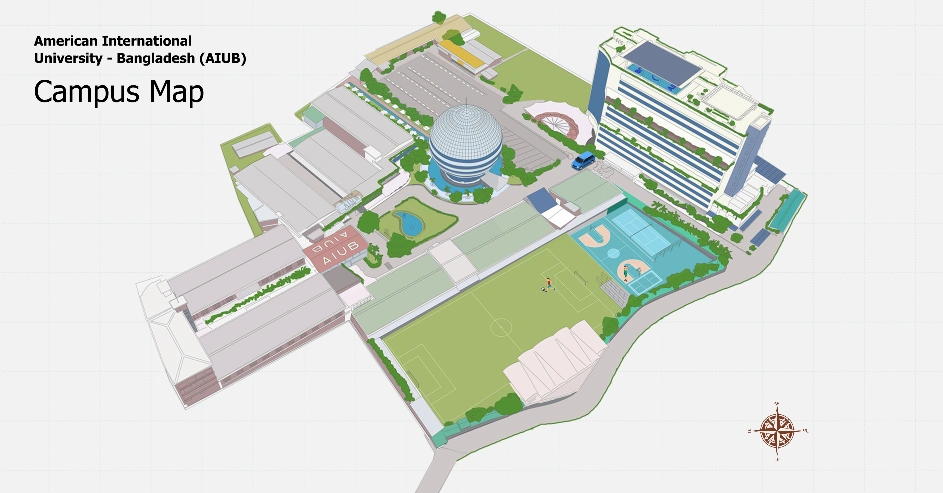
AIUB has conducted a campus carbon footprint assessment to quantify and evaluate emissions associated with its institutional operations. The assessment covers direct greenhouse gas emissions, emissions from purchased electricity, and other indirect emission sources, providing a comprehensive overview of the university's environmental impact [18].
The assessment identifies electricity consumption as a major contributor to the university's carbon footprint and provides an evidence-based foundation for strengthening its sustainability strategy. Its findings support institutional decisions on expanding renewable energy generation, improving energy efficiency across campus facilities, and encouraging sustainable practices among students, faculty, and administrative staff.
Energy Education and Capacity Building
AIUB strengthens education and capacity building in sustainable energy by integrating renewable energy topics into its academic curriculum and providing specialised learning opportunities for students and faculty. Through academic courses, expert lectures, practical workshops, and international training programmes, the university develops technical knowledge and competencies that support the adoption and advancement of clean energy technologies.
Renewable Energy in the Curriculum
AIUB integrates renewable energy education into its engineering curriculum through the course EEE 4231: Renewable Energy Technology. The course introduces students to current energy challenges and emerging sustainable energy solutions, covering solar, wind, biomass, and geothermal energy, as well as energy storage technologies, smart grids, vehicle-to-grid systems, and Bangladesh's renewable energy policies. Its combination of theoretical instruction and laboratory activities enables students to develop both fundamental knowledge and practical competencies in renewable energy technologies [9].
Public Lectures on Clean Energy
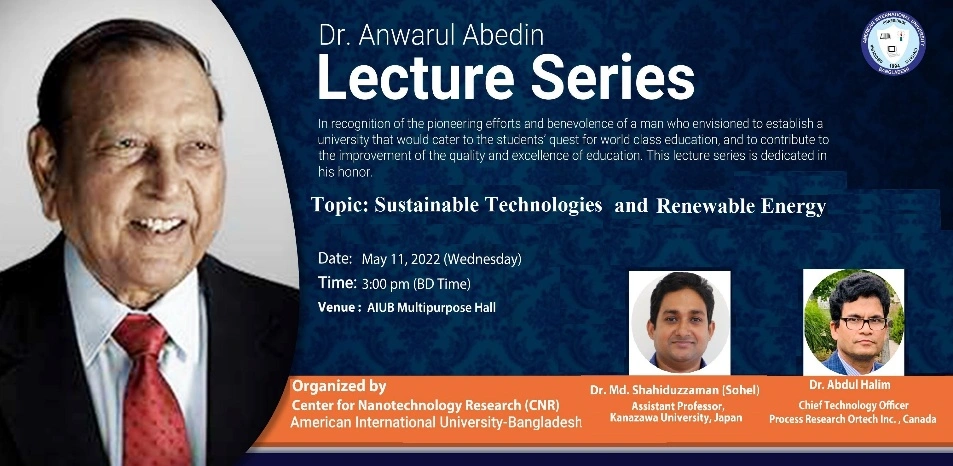
AIUB promotes knowledge exchange and specialised learning in sustainable energy through the Dr. Anwarul Abedin Lecture Series, which brings experts to the university to discuss technological developments and emerging challenges in the energy sector. Relevant sessions have addressed:
- "Sustainable Technologies and Renewable Energy" (2022). This lecture explored renewable energy generation, different types of solar cells, applications of nanotechnology in renewable energy, perovskite solar cells, and sustainable production of battery-grade lithium, exposing participants to emerging technologies for clean energy generation and storage [19].
- "Electric Vehicle – Challenges and Opportunities" (2023). The session examined the benefits and challenges of electric mobility, highlighting the potential of electric vehicles to reduce environmental pollution and energy-related costs while supporting more sustainable transportation systems [20].
- "SMART Power Flow Controllers – A Necessity for Future Power Grid." This lecture addressed smart power flow control technologies and their role in improving electricity grid performance, supporting more efficient and reliable power system operations [21].
Hands-On Workshops and Training
AIUB complements classroom instruction with practical workshops and specialised training activities that allow students to develop technical competencies in renewable energy modelling, simulation, and sustainable power systems.
| Activity | Skills and knowledge developed |
| Hybrid Power System Simulation Including Renewable Energy Sources Using PSCAD (July 2023) | Modelling and simulation of hybrid power systems incorporating renewable energy sources [22]. |
| Modeling and Performance Analysis of Hybrid Energy Systems Using PSCAD (October 2023) | Practical experience in analysing the performance of hybrid energy systems using specialised simulation software [23]. |
| Workshop by Grameen Shakti (September 2023) | Knowledge of greenhouse gas emissions, climate change, renewable energy technologies, and the benefits and applications of different types of solar panels [24]. |
| IEEE Day 2023 Seminar: "Smart Power Systems: Automating Sustainability in the Age of Climate Change" | Exploration of solar energy, electric vehicles, biofuels, and the development of climate-resilient energy infrastructure. The seminar engaged more than 50 participants [25]. |
AIUB also promotes the international professional development of its academic staff. An AIUB faculty delegation participated in a five-day international training programme on smart renewable energy at Politecnico di Milano, Italy, gaining exposure to international expertise and developments in smart renewable energy technologies [26].
Encouraging Women's Participation in the Energy Sector
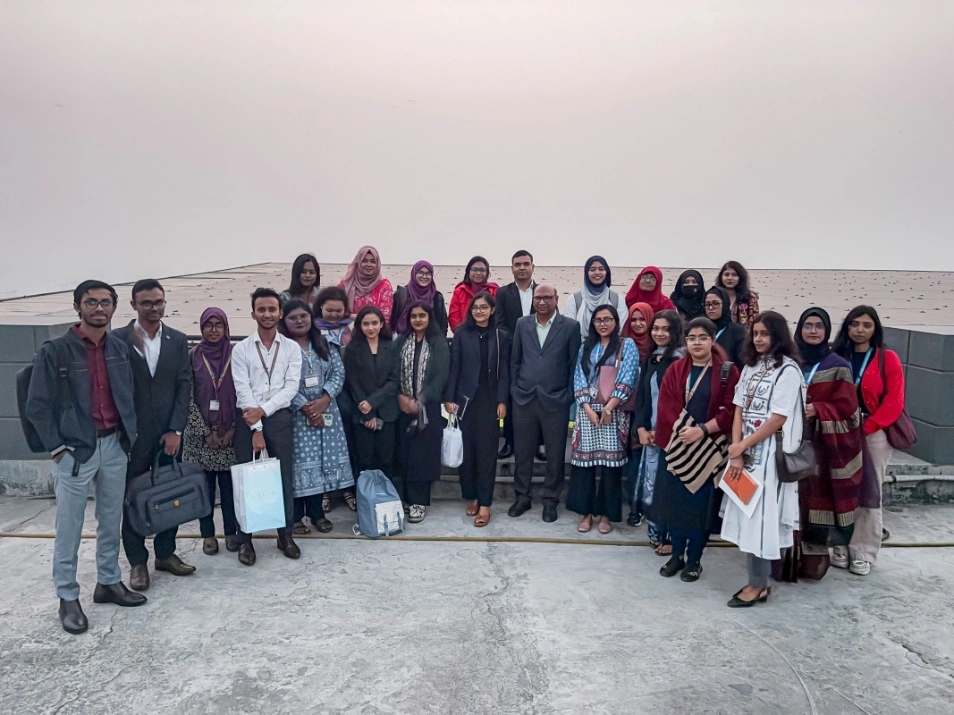
AIUB promotes women's participation in the energy sector by supporting educational and professional development opportunities for female students. Its initiatives include a programme focused on renewable energy career pathways for female students, encouraging their engagement with sustainable energy technologies and potential careers in the power and renewable energy industries [27].
The university also participates in the WePOWER network, a regional initiative supporting women's participation and professional advancement in the energy sector. This collaboration further reinforces AIUB's commitment to developing a more inclusive energy workforce, as discussed in Section 6.
Clean Energy in the Community: Outreach, Policy and Industry
AIUB extends its commitment to sustainable energy beyond its campus by promoting renewable energy adoption, facilitating knowledge exchange with external stakeholders, and engaging with government institutions and industry representatives. These activities contribute to raising awareness of clean energy technologies, encouraging energy efficiency, and supporting the development of sustainable energy practices across Bangladesh.
Promoting Rooftop Solar Energy
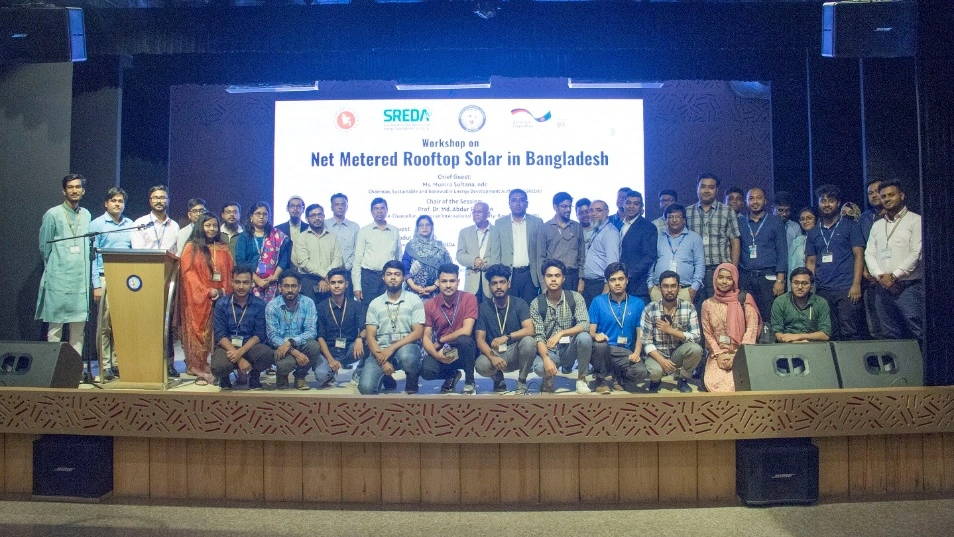
AIUB supports the promotion and adoption of renewable energy technologies by providing a platform for knowledge exchange between government institutions, industry stakeholders, and the academic community. On June 5, 2023, the university hosted a workshop organised by the Sustainable and Renewable Energy Development Authority (SREDA), Bangladesh's government agency responsible for promoting renewable energy and energy efficiency, on "Net Metered Rooftop Solar in Bangladesh" [28].
The event addressed the environmental and economic benefits of net-metered rooftop solar systems, their implementation requirements, applicable regulatory frameworks, and business models for managing investment and operating costs. The Chairman of SREDA participated as the chief guest and highlighted the positive environmental contributions of renewable energy adoption. By hosting this initiative, AIUB facilitated dialogue and knowledge exchange on the practical and regulatory aspects of expanding rooftop solar energy in Bangladesh [28].
Community Outreach and Industry Engagement
AIUB extends its expertise in sustainable energy to external communities and industrial stakeholders through outreach and capacity-building activities. These initiatives include educational programmes on energy efficiency and renewable energy technologies, helping raise public awareness of sustainable energy practices.
The university also supports local industries by providing energy efficiency assessments and specialised workshops, facilitating the identification of opportunities to optimise energy consumption and encouraging the adoption of more efficient technologies and operational practices [14].
Contributing to Energy Policy Development
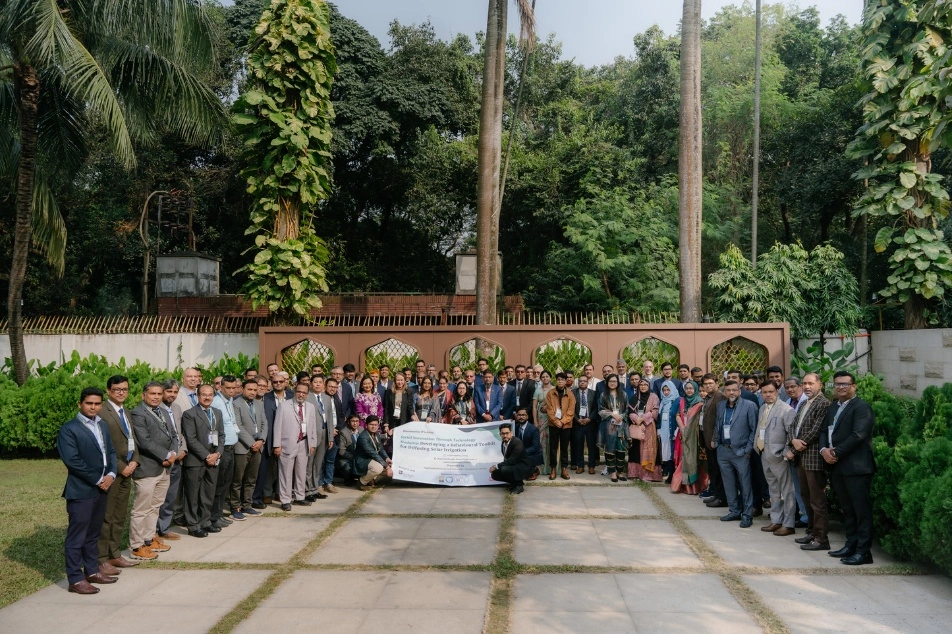
AIUB promotes the integration of research-based knowledge into policy discussions by engaging government representatives and relevant stakeholders in initiatives addressing renewable energy adoption in agriculture.
As part of its solar-powered irrigation research project, the university hosted a policy engagement workshop in February 2024, bringing together key institutional representatives, including the Chairman of the Bangladesh Agricultural Development Corporation and a Director of SREDA [29]. The initiative continued with a dissemination workshop in December 2024, attended by the Additional Secretary of the Ministry of Agriculture, providing a platform to share research findings and discuss opportunities for expanding solar-powered irrigation in Bangladesh [10], [11].
These engagement activities strengthen collaboration between academia and public institutions, facilitating the exchange of research findings and supporting informed discussions on policies that encourage renewable energy adoption in the agricultural sector.
Partnerships for Clean Energy
AIUB strengthens its contribution to sustainable energy through partnerships and institutional commitments involving government agencies, international organisations, academic institutions, and professional networks. These relationships facilitate research collaboration, knowledge exchange, capacity building, and the promotion of renewable energy technologies, while supporting broader efforts toward a sustainable and inclusive energy transition.
Strategic Partnerships and Collaborative Initiatives
AIUB collaborates with national and international organisations to advance renewable energy research, promote clean energy technologies, and strengthen professional capacities in the energy sector.
| Partner | Collaboration and contribution |
| Sustainable and Renewable Energy Development Authority (SREDA) | Collaboration on renewable energy promotion, including the organisation of a workshop on net-metered rooftop solar at AIUB and participation in policy engagement activities addressing solar-powered irrigation [28], [29]. |
| World Bank and Asian Disaster Preparedness Center (ADPC), in collaboration with Durham University, Curtin University, the University of Rajshahi, and Khulna University | Participation in an international research consortium focused on developing strategies to encourage farmers to adopt solar-powered irrigation systems, supporting renewable energy integration in agriculture [10], [29]. |
| South Asia Women in Power Sector Professional Network (WePOWER) | AIUB became the first educational institution to join WePOWER as an institutional partner, supporting women's participation in the energy and power sector and promoting gender inclusion in science, technology, engineering, and mathematics (STEM) [30]. |
| Grameen Shakti | Collaboration in educational activities, including a workshop for AIUB students addressing renewable energy technologies, solar energy applications, and environmental sustainability [24]. |
| Politecnico di Milano, Italy | International academic engagement through a five-day smart renewable energy training programme attended by an AIUB delegation, strengthening institutional expertise in sustainable energy technologies [26]. |
AIUB's partnership with WePOWER also supports concrete activities to expand women's participation in the energy sector. In September 2024, AIUB and the WePOWER Bangladesh National Chapter jointly organised a seminar on career development opportunities for female students in the power sector. The event featured speakers from major power-sector organisations in Bangladesh, providing students with insights into professional opportunities and career pathways in the industry [31].
International Commitments to Sustainable Energy
AIUB reinforces its institutional sustainability strategy through participation in international initiatives that promote climate action and the achievement of the Sustainable Development Goals.
- Race to Zero for Universities and Colleges: AIUB is a signatory of this global campaign, which mobilises higher education institutions to accelerate climate action, contribute to halving global emissions by 2030, and achieve net-zero emissions by 2050. This commitment aligns with the university's objective of progressively reducing its carbon footprint and developing a carbon-neutral campus [16], [17].
- SDG Accord: AIUB is a signatory of the SDG Accord, reaffirming its commitment to placing the Sustainable Development Goals at the centre of its institutional activities and contributing to their achievement by 2030. This commitment encompasses SDG 7 and the promotion of affordable, reliable, sustainable, and modern energy [32].
Additional Initiatives and Progress in Sustainable Energy
Institutional Reporting on SDG 7 Progress
AIUB reinforces its commitment to sustainable development through institutional reporting that documents its contributions to affordable and clean energy. The university published the AIUB Sustainability Report (2020–2025): Advancing SDG 7 – Affordable and Clean Energy, providing a consolidated overview of its progress and initiatives across renewable energy adoption, energy-efficient campus operations, academic programmes, research and innovation, student and faculty engagement, community outreach, and international partnerships [33].
The report presents AIUB's integrated approach to advancing SDG 7 by documenting how clean energy principles are incorporated into institutional operations, research activities, educational programmes, and external collaborations. This publication strengthens the university's commitment to transparency, accountability, and the continuous assessment of its contributions to sustainable energy development [33].
Demonstrating Clean Energy Innovations through International Collaboration
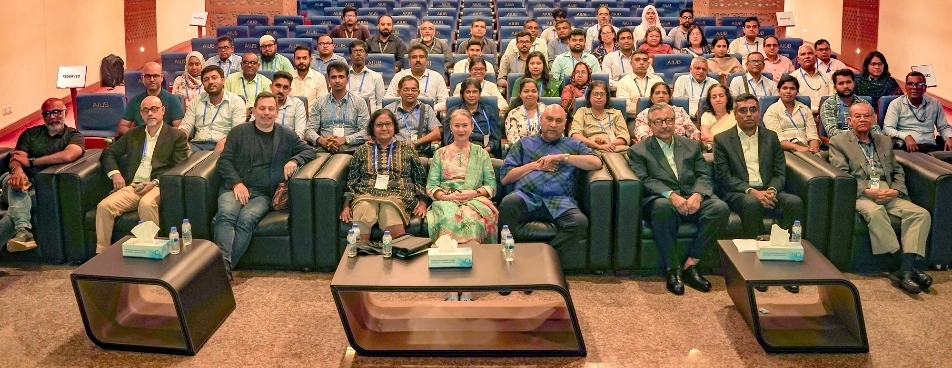
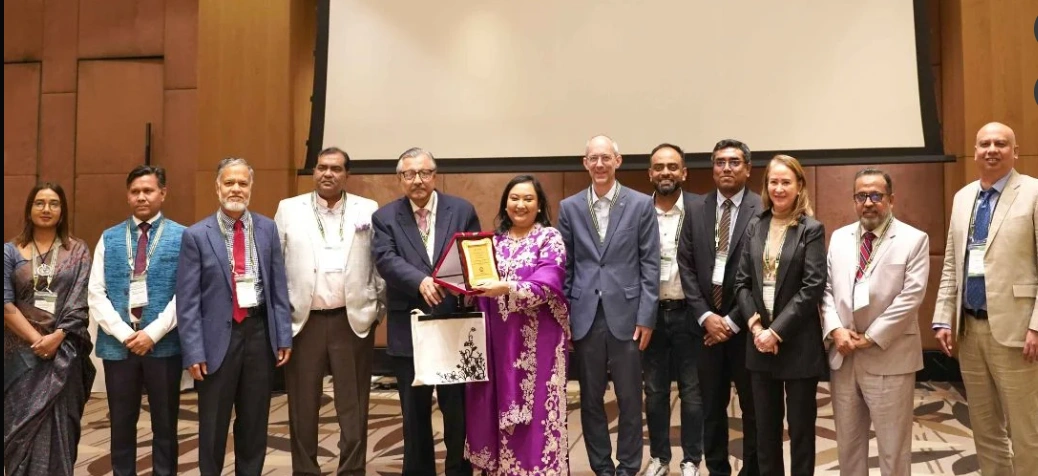
AIUB promotes international knowledge exchange and demonstrates practical renewable energy solutions through collaborations with regional and international stakeholders. On May 27, 2025, the university hosted a field visit as part of the South Asia Regional Workshop on Inclusive Clean Energy Transitions in Bangladesh, Maldives, and Sri Lanka [34].
The visiting delegation included representatives from the Asian Development Bank (ADB), the University of Melbourne, and Grameen Shakti Ltd., alongside scholars from participating countries. During the visit, participants explored AIUB's renewable energy infrastructure and technological innovations, including its solar photovoltaic installation, Renewable Energy Technology Laboratory, off-grid solar-powered cold storage system, and solar PV-based electric power tiller. The delegation also experienced a campus tour using an electric vehicle powered by solar energy and developed by AIUB [34].
The event provided an international platform for demonstrating practical clean energy applications and exchanging knowledge on inclusive energy transitions. It also strengthened AIUB's engagement with international development organisations and academic institutions working to expand sustainable energy solutions across South Asia.
Applied Research and Innovation in Solar-Powered Technologies
AIUB advances the development of affordable clean energy technologies through applied research projects that address practical challenges in agriculture, electricity management, and sustainable transportation.
- Solar PV Operated E-Power Tiller. Developed through collaborative research between AIUB's Center for Sustainable Energy Research (CSER), the Dr. Anwarul Abedin Institute of Innovation, and Deakin University, Australia, this project introduces a photovoltaic-powered electric agricultural tiller as an alternative to conventional diesel-powered equipment. The system operates using electric motors and a portable solar PV charging station, providing noise-free operation without direct greenhouse gas emissions during use. By eliminating the need for diesel and grid electricity, the innovation offers opportunities to reduce agricultural operating costs while supporting cleaner farming practices [35].
- The project received the Best Sustainable Development Goal (SDG) Posterity Award at the 3rd International Conference on Robotics, Electrical and Signal Processing Techniques (ICREST 2023), recognising its contribution to sustainable technological innovation [35].
- Smart IoT-enabled Solar Power Supervision and Regulation System (2024). AIUB researchers developed an intelligent solar power monitoring and regulation system integrating photovoltaic panels, an Arduino Uno microcontroller, an ESP8266 Wi-Fi module, and the ThingSpeak platform. The system enables real-time monitoring, data visualisation, and remote supervision of solar energy performance. The reported results demonstrated approximately 90% operational efficiency and 20% energy savings, highlighting the potential of IoT technologies to improve photovoltaic energy utilisation and support more efficient renewable energy management [36].
- Energy Recovery and Power Management in Electric Vehicles (2025). AIUB researchers investigated an enhanced regenerative braking system combining supercapacitors and brushless DC (BLDC) motors to improve energy recovery and storage in electric vehicles. The proposed system incorporates advanced control algorithms and power management strategies to optimise the distribution of recovered energy between supercapacitors and batteries. The research reported an overall energy recovery efficiency of 92.5%, demonstrating the potential of intelligent energy management technologies to improve electric vehicle efficiency and reduce energy losses [37].
These projects illustrate AIUB's contribution to developing practical technological solutions that expand the applications of renewable energy and improve energy efficiency across different sectors.
Industry Engagement and Practical Training in Electricity Infrastructure
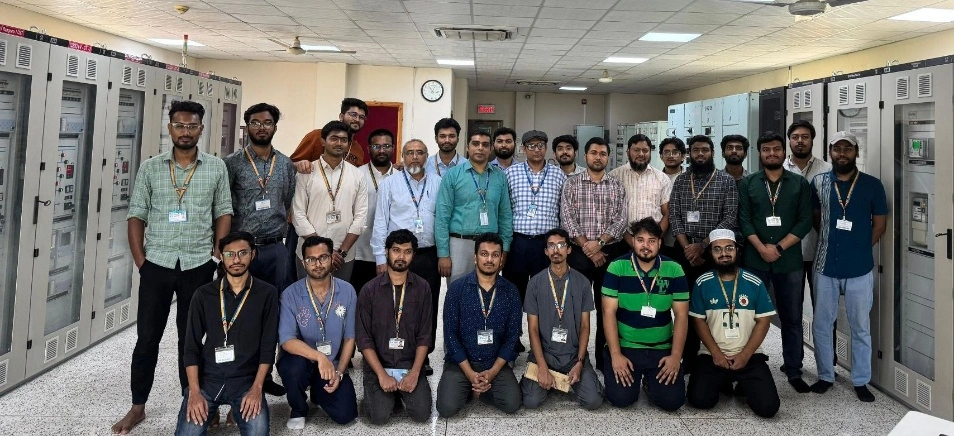
AIUB strengthens engineering education and industry engagement by providing students with opportunities to explore the infrastructure and technologies that support electricity transmission, distribution, and grid management.
On April 23, April 30, and May 7, 2026, the Faculty of Engineering organised three industrial visits to the DESCO 132/33 kV Grid Substation, involving a total of 120 final-year students from the Department of Electrical and Electronic Engineering [38].
The programme provided direct exposure to the operation of Bangladesh's electricity infrastructure, including high-voltage transmission lines, distribution transformers, voltage regulation, protection mechanisms, switching systems, and load management. Students also observed the use of programmable logic controllers (PLCs) and software-based monitoring and control technologies in real-time grid operations. DESCO engineers conducted technical briefings and guided demonstrations covering substation operations, transformer synchronisation, switchyard maintenance, and industrial automation [38].
This collaboration between AIUB and the electricity sector strengthens students' practical understanding of modern power infrastructure and prepares future engineers to contribute to the reliable, efficient, and sustainable operation of electricity systems.
References
| [1] | M. K. Saifullah, R. Halder, S. Afroz, A. H. Shatil, and K. F. Ahmed, “Design of an off-grid solar-wind-bio hybrid power generation for remote areas of Chapainawabgonj district in Bangladesh using HOMER,” [Online]. Available: https://ieeexplore.ieee.org/document/10070032. [Accessed 2026]. |
| [2] | S. M. N. Hasan et al., “Techno-economic performance and sensitivity analysis of an off-grid renewable energy-based hybrid system: A case study of Kuakata, Bangladesh,” [Online]. Available: https://www.mdpi.com/1996-1073/17/6/1476. [Accessed 2026]. |
| [3] | A. S. M. Ibrahim, M. Rahman, D. K. Dipu, A. Mohammad, G. C. Mazumder, and S. M. N. Shams, “Bi-facial solar tower for telecom base stations,” [Online]. Available: https://www.researchgate.net/publication/379897490_Bi-Facial_Solar_Tower_for_Telecom_Base_Stations. [Accessed 2026]. |
| [4] | American International University-Bangladesh, “AIUB SDG Activity Report 2022 | SDG 7: Affordable and Clean Energy.,” [Online]. Available: https://www.aiub.edu/iqac/sdgs/aiub-sdg-activity-report-2022/SDG7-AIUBActivityReportof2022. [Accessed 2026]. |
| [5] | Technology and Economics of Smart Grids and Sustainable Energy, Springer, 2022, “Optimized performance and economic assessment for hybrid island microgrid system considering uncertainties,” [Online]. Available: https://link.springer.com/article/10.1007/s40866-022-00156-9. [Accessed 2026]. |
| [6] | Sustainability, “Operational cost minimization of electrical distribution network during switching for sustainable operation,” [Online]. Available: https://www.mdpi.com/2071-1050/14/7/4196. [Accessed 2026]. |
| [7] | Sustainability, vol. 14, no. 17, art. 10798, 2022, “"Genetic algorithm-optimized adaptive network fuzzy inference system-based VSG controller for sustainable operation of distribution system,” [Online]. Available: https://www.mdpi.com/2071-1050/14/17/10798. [Accessed 2026]. |
| [8] | Capstone Project, “Faculty of Engineering, AIUB, "Design and Implementation of an Autonomous Electric Car,” [Online]. Available: https://sites.google.com/view/capstone-project-g22/. [Accessed 2026]. |
| [9] | American International University-Bangladesh, “AIUB Sustainable Courses,” [Online]. Available: https://www.aiub.edu/sustainability/aiub-sustainable-courses. [Accessed 2026]. |
| [10] | American International University-Bangladesh, “AIUB hosts dissemination workshop on solar irrigation and climate adaptation,” [Online]. Available: https://www.aiub.edu/aiub-hosts-dissemination-workshop-on-solar-irrigation-and-climate-adaptation. [Accessed 2026]. |
| [11] | Dhaka Tribune, “AIUB Hosts Dissemination Workshop on Solar Irrigation and Climate Adaptation,” [Online]. Available: https://www.dhakatribune.com/bangladesh/education/368162/aiub-hosts-dissemination-workshop-on-solar. [Accessed 2026]. |
| [12] | American International University-Bangladesh, “Why Study Here.,” [Online]. Available: https://www.aiub.edu/about/why-study-here. [Accessed 2026]. |
| [13] | American International University-Bangladesh, “SDG 7: Affordable and Clean Energy,” [Online]. Available: https://www.aiub.edu/sustainability/sdg7. [Accessed 2026]. |
| [14] | American International University-Bangladesh, “AIUB SDG Activity Report 2023 | SDG 7: Affordable and Clean Energy.,” [Online]. Available: https://www.aiub.edu/iqac/sdgs/aiub-sdg-activity-report-2023/SDG7-AIUBActivityReportof2023. [Accessed 2026]. |
| [15] | American International University-Bangladesh, “AIUB Climate Action Plan,” [Online]. Available: https://www.aiub.edu/sustainability/aiub-climate-action-plan. [Accessed 2026]. |
| [16] | American International University-Bangladesh, “AIUB's Commitment to Race to Zero: A Step Towards Environmental Sustainability,” [Online]. Available: https://www.aiub.edu/aiubs-commitment-to-race-to-zero-a-step-towards-environmental-sustainability. [Accessed 2026]. |
| [17] | Race to Zero for Universities and Colleges, “Current Signatories.,” [Online]. Available: https://www.educationracetozero.org/current-signatories. [Accessed 2026]. |
| [18] | American International University-Bangladesh, “Campus Building Footprint, CO2 Emission and Race to Net Zero.,” [Online]. Available: https://www.aiub.edu/sustainability/aiub-campus-footprint-co2-emission-and-race-to-net-zero. [Accessed 2026]. |
| [19] | American International University-Bangladesh, “Dr. Anwarul Abedin Lecture Series 'Sustainable Technologies and Renewable Energy',” [Online]. Available: https://www.aiub.edu/dr-anwarul-abedin-lecture-series-sustainable-technologies-and-renewable-energy. [Accessed 2026]. |
| [20] | Dhaka Tribune, “AIUB organizes Dr Anwarul Abedin's lecture series on electric vehicles,” [Online]. Available: https://www.dhakatribune.com/bangladesh/323889/aiub-organizes-dr-anwarul-abedin-s-lecture-series. |
| [21] | The Business Standard, “AIUB holds lecture series titled 'SMART Power Flow Controllers – A Necessity for Future Power Grid',” [Online]. Available: https://www.tbsnews.net/economy/corporates/aiub-holds-lecture-series-titled-smart-power-flow-controllers-necessity-future. [Accessed 2026]. |
| [22] | American International University-Bangladesh, “Workshop on 'Hybrid Power System Simulation including Renewable Energy Source using PSCAD Software',” [Online]. Available: https://www.aiub.edu/workshop-on-hybrid-power-system-simulation-including-renewable-energy-source-using-ps. [Accessed 2026]. |
| [23] | American International University-Bangladesh, “Workshop on 'Modeling and Performance Analysis of Hybrid Energy Systems Using PSCAD Software',” [Online]. Available: https://www.aiub.edu/workshop-on-modeling-and-performance-analysis-of-hybrid-energy-systems-using-pscad-software. [Accessed 2026]. |
| [24] | American International University-Bangladesh, “Workshop conducted by 'Grameen Shakti',” [Online]. Available: https://www.aiub.edu/workshop-conducted-by-grameen-shakti. [Accessed 2026]. |
| [25] | IEEE vTools, “Celebration of IEEE Day 2023: Seminar on 'Smart Power Systems: Automating Sustainability in the Age of Climate Change',” [Online]. Available: https://events.vtools.ieee.org/m/379054. [Accessed 2026]. |
| [26] | The Business Standard, “AIUB team joins renewable energy training in Italy,” [Online]. Available: https://www.tbsnews.net/economy/corporates/aiub-team-joins-renewable-energy-training-italy-1499216. [Accessed 2026]. |
| [27] | American International University-Bangladesh, “Empowering Future Leaders – Exploring Renewable Energy Pathways for Female Students,” [Online]. Available: https://www.aiub.edu/empowering-future-leaders---exploring-renewable-energy-pathways-for-female-students. [Accessed 2026]. |
| [28] | American International University-Bangladesh, “SREDA Organized a Workshop on 'Net Metered Rooftop Solar in Bangladesh' at AIUB,” [Online]. Available: https://www.aiub.edu/sreda-organized-a-workshop-on-net-metered-rooftop-solar-in-bangladesh-at-aiub. [Accessed 2026]. |
| [29] | American International University-Bangladesh, “Policy Engagement Workshop on collaborative research — 'Social Innovation Through Technology Nudging: Developing a Behavioral Toolkit for Diffusing Solar Irrigation',” [Online]. Available: https://www.aiub.edu/policy-engagement-workshop-on-collaborative-research---social-innovation-through-technology-nudging-developing-a-behavioral-toolkit-for-diffusing-solar-irrigation. [Accessed 2026]. |
| [30] | American International University-Bangladesh, “AIUB Is an Institutional Partner of WePOWER,” [Online]. Available: https://www.aiub.edu/aiub-is-an-institutional-partner-of-wepower. [Accessed 2026]. |
| [31] | American International University-Bangladesh, “Seminar on Female Students Career-Building Opportunities in Power Sector,” [Online]. Available: https://www.aiub.edu/seminar-on-female-students-career-building-opportunities-in-power-sector. [Accessed 2026]. |
| [32] | American International University-Bangladesh, “AIUB is a Signatory of SDG Accord,” [Online]. Available: https://www.aiub.edu/iqac/sdgs/aiub-is-a-signatory-of-sdg-accord. [Accessed 2026]. |
| [33] | American International University-Bangladesh (AIUB), “AIUB Sustainability Report (2020–2025): Advancing SDG 7 – Affordable and Clean Energy.,” [Online]. Available: https://www.aiub.edu/Files/Uploads/sdg7.pdf. [Accessed 2026]. |
| [34] | American International University-Bangladesh (AIUB), “AIUB Hosts Field Visit as Part of South Asia Regional Workshop on Inclusive Clean Energy Transitions,” [Online]. Available: https://www.aiub.edu/aiub-hosts-field-visit-as-part-of-south-asia-regional-workshop-on-inclusive-clean-energy-transitions. [Accessed 2026]. |
| [35] | Dr. Anwarul Abedin Institute of Innovation (D2A2I), “Center for Sustainable Energy Research (CSER),” [Online]. Available: https://d2a2i.aiub.edu/center-CSER.html. [Accessed 2026]. |
| [36] | S. K. Shib, M. T. Rahman, D. R. Dipto, A. Shufian, et al., “Smart IoT-enabled Solar Power Supervision and Regulation System,” [Online]. Available: https://www.bio-conferences.org/articles/bioconf/pdf/2024/63/bioconf_sage-grace2024_02004.pdf. [Accessed 2026]. |
| [37] | A. Shufian, S. K. Shib, D. R. Dipto, M. T. Rahman, M. A. Islam, and M. M. Islam, “Energy Recovery and Power Management in EVs Using Supercapacitors and Regenerative Braking,” [Online]. Available: http://dspace.aiub.edu:8080/jspui/handle/123456789/2679.. [Accessed 2026]. |
| [38] | American International University-Bangladesh (AIUB), “Industrial Visit to the DESCO 132/33 KV Grid Substation,” [Online]. Available: https://admissions.aiub.edu/industrial-visit-to-the-desco-13233-kv-grid-substation-.. [Accessed 2026]. |