


TABLE OF CONTENTS
SDG 11: SUSTAINABLE CITIES AND COMMUNITIES
Research on Sustainable Cities and Communities
Improving Housing Conditions in Informal Settlements
Student-Led Housing Design for Low-Income Communities
Research on Smart, Safe, and Resilient Cities
Architecture Research and Institutional Capacity
Public Access to Campus Spaces and Resources
Open Access to Educational Facilities and Digital Resources
Green and Open Spaces on Campus
Public Cultural Festivals and Community Engagement
Celebrating and Promoting Bengali Culture
Documenting and Preserving Intangible Cultural Heritage
Heritage Education and Conservation of Historic Sites
Artistic Expression and Cultural Exhibitions
Assessing the Campus Environmental Footprint
Institutional Commitment to Net-Zero Emissions
Supporting Access to Affordable Student Accommodation
Digital Access to Educational Resources
Community Engagement and Urban Resilience
Community-Based Disaster Response and Relief
Supporting Children from Underprivileged Communities
Promoting Community Participation in Sustainable Development
Safe Infrastructure, Green Spaces and Sustainable Urban Development
Campus Safety and Emergency Preparedness
Expanding Urban Green Spaces Through Community Partnerships
Institutional Partnerships for Sustainable Building and Construction
Community Participation in Climate-Resilient Housing Solutions
SDG 11: SUSTAINABLE CITIES AND COMMUNITIES
Research on Sustainable Cities and Communities
Improving Housing Conditions in Informal Settlements
AIUB contributes to improving housing conditions in informal settlements through applied architectural research focused on affordable and sustainable housing solutions. In 2023, researchers from the Department of Architecture, Ashik Vaskor Mannan, Saiful Hasan Tarik, Arefeen Ibrahim, and Ajmeri Nusrat Shoma, published a study entitled Transforming Slum Dwellings into Better Livable Units: An Approach through Minimum Intervention in the AIUB Journal of Science and Engineering [1], [2].
The research focused on the Duaripara informal settlement in Mirpur, within the Dhaka North City Corporation area. The research team assessed existing housing conditions, residents' socioeconomic circumstances, and their financial capacity to undertake improvements. Based on these findings, the researchers proposed affordable retrofitting solutions, including improved ventilation and natural lighting through redesigned openings, as well as enhanced thermal insulation. These interventions were designed to improve indoor living conditions while remaining financially accessible to residents [1].
The research also translated academic knowledge into practical action. The Department of Architecture conducted the study, while Habitat for Humanity International – Bangladesh implemented the proposed interventions on the ground [1]. This collaboration demonstrates AIUB's contribution to developing practical, affordable housing solutions that improve living conditions in informal settlements and promote more inclusive and sustainable urban communities [1].
Student-Led Housing Design for Low-Income Communities
AIUB integrates affordable housing and community-oriented design into architectural education, encouraging students to develop solutions that respond to the needs of vulnerable populations. An example is the undergraduate thesis project Jelepolli – Low Cost Housing Community Development for Fishermen, which proposed an affordable housing development for a riverside fishing community [3].
The project emphasized reducing construction costs through the selection of economical building materials, encouraging community participation in the construction process, and incorporating disaster awareness into the proposed development. By addressing housing affordability, local participation, and community safety, the project demonstrates how AIUB's architectural education prepares future professionals to design inclusive and resilient settlements that respond to the socioeconomic and environmental challenges faced by low-income communities [3].
Research on Smart, Safe, and Resilient Cities
AIUB advances research on technologies and innovative approaches that contribute to safer, more accessible, and sustainable urban environments. Its academic research addresses several dimensions of urban development, including public spaces, healthcare, transportation, road safety, disaster resilience, and sanitation [4], [5].
Key research contributions include:
1. Accessible Urban Green Spaces: Research assessing the connectivity of community parks and recreational fields in Uttara, Dhaka, to understand their accessibility and potential use by neighbourhood residents.
2. Smart Healthcare Infrastructure: Research exploring smart city technologies for next-generation healthcare services, highlighting the role of digital innovation in urban health infrastructure.
3. Sustainable Urban Mobility: Development of a multivariate model to assess ridesharing service quality in Bangladesh, contributing to the understanding and improvement of urban transportation services.
4. Road Safety and Intelligent Transportation: Research on night-time vehicle detection using headlight features, supporting the development of intelligent technologies for improved road safety.
5. Disaster-Resilient Infrastructure: Research on automated protection mechanisms for electrical and gas transmission systems during earthquakes, addressing the resilience of essential urban infrastructure against natural hazards.
6. Smart Urban Sanitation: Digital design research on an IoT-based smart bio-toilet incorporating a hygiene-maintaining system, demonstrating the application of connected technologies to improve urban sanitation infrastructure.
AIUB also explores IoT-based smart city solutions for sustainable development, highlighting the potential of interconnected technologies to support more efficient urban planning, infrastructure management, and the delivery of urban services [4].
Collectively, these research activities demonstrate AIUB's multidisciplinary contribution to technological innovation and the development of safer, more resilient, and sustainable cities and communities.
Architecture Research and Institutional Capacity
AIUB strengthens its contribution to sustainable urban development by integrating research, technological knowledge, and professional training into its architectural education. The Department of Architecture offers a five-year Bachelor of Architecture programme comprising 176 credits, combining theoretical foundations, research activities, and technological applications [6].
Research activities within the department are coordinated by the Architecture Research Committee – AIUB (ARCA), which provides an institutional framework for supporting architectural research and academic knowledge development. This structure reinforces the integration of research and education, fostering the development of future architects equipped to address contemporary challenges in housing, urban development, and sustainable built environments [6].
Public Access to Campus Spaces and Resources
Open Access to Educational Facilities and Digital Resources
AIUB promotes access to educational resources and knowledge beyond its enrolled student community. The university provides free campus-wide Wi-Fi, facilitating access to online educational materials, research resources, and digital information. It also makes event materials, project outputs, and learning guides available online, allowing members of the wider community to access and benefit from its academic and educational activities [7].
These initiatives extend the reach of AIUB's educational resources beyond the traditional classroom environment, supporting lifelong learning, knowledge sharing, and broader access to educational opportunities within the community [7].
Green and Open Spaces on Campus
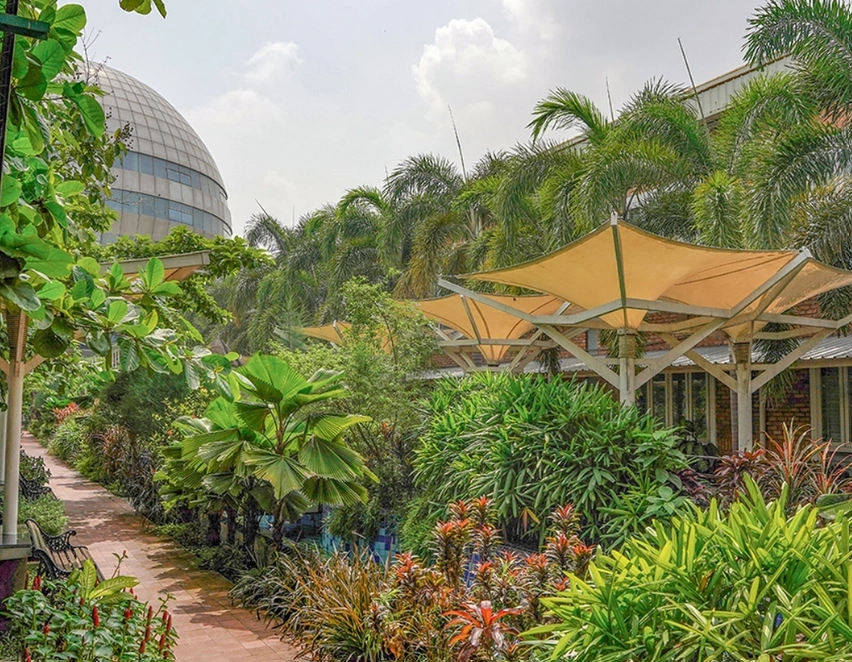
AIUB's permanent campus in Kuratoli, Dhaka, incorporates open architectural spaces and natural elements into its built environment [8]. The campus features several gardens and landscaped green areas, as well as an outdoor amphitheatre with seating capacity for more than 1,000 people, providing spaces for outdoor activities, recreation, and community gatherings [9].
The campus landscape also includes an extensive green field and paved pathways bordered by flowers, creating an inviting environment that integrates vegetation and open spaces within the urban setting of Dhaka [10]. AIUB incorporates these green areas into its environmental sustainability efforts, contributing to a greener campus and supporting initiatives aimed at reducing its carbon footprint [4].
Public Cultural Festivals and Community Engagement
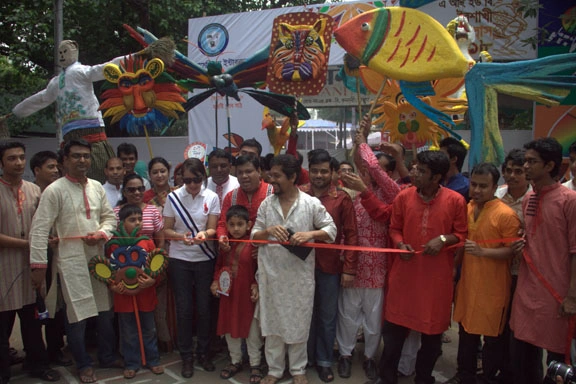
AIUB promotes cultural participation and community engagement by organizing celebrations that welcome people beyond its university community. One example is the university's Bengali New Year celebration, known as Boishakhi Mela, which features traditional food, cultural activities, and stalls offering locally made and traditional products. Students participate in organizing these activities, while members of the public are also welcome to attend [11].
By opening its cultural celebrations to the wider community, AIUB creates opportunities for social interaction, encourages the appreciation of Bengali cultural traditions, and strengthens connections between the university and the surrounding community [11].
Arts and Cultural Heritage
AIUB promotes the preservation and appreciation of Bangladesh's cultural heritage by integrating music, dance, drama, visual arts, and cultural celebrations into university life. These activities provide opportunities for students to engage with national traditions, explore artistic expression, and develop an appreciation of cultural diversity and intercultural understanding [12].
Celebrating and Promoting Bengali Culture
AIUB actively celebrates Bangladesh's cultural traditions by organizing events that showcase the country's artistic heritage and encourage student participation.
- Pohela Boishakh (Bengali New Year): On April 14, 2026, AIUB celebrated Pohela Boishakh 1433 with a campus-wide cultural programme. Students from the Department of Architecture and the AIUB Arts Club created cultural displays, street art, and decorations inspired by Bangladeshi traditions. The AIUB Performing Arts Club (APAC) contributed to the celebrations with musical and dance performances [13], [14]. This annual celebration represents an important university tradition, providing a platform for students to express their cultural identity and promote Bengali heritage [11], [15].
- Folk Music: AIUB supports the continuation of traditional Bengali music by encouraging students to participate in cultural performances and competitions. In 2024, members of APAC won the championship in the Lalon/Hasan singing category at Folk Fest, organized by Bangladesh University of Professionals. This achievement highlights the university's contribution to promoting traditional folk music and keeping Bangladesh's musical heritage alive among younger generations [16].
Documenting and Preserving Intangible Cultural Heritage
AIUB incorporates the documentation and study of traditional crafts and local histories into its students' academic experiences. An example is the Summer 2023 BLC Field School Bangladesh Chapter, during which students visited Jamdani Village in Bargaon, Sonargaon, to explore the cultural heritage and traditional weaving practices of the local community.
The fieldwork resulted in a documentation project entitled Story of Jamdani People and Place, Bargaon, focused on recording the history, cultural landscape, and traditional craftsmanship of the Jamdani weaving community. Jamdani, a traditional handwoven textile originating from the region, represents an important expression of Bangladesh's intangible cultural heritage. The project provided students with practical experience in documenting local histories and understanding the cultural significance of traditional crafts, while promoting awareness of the importance of preserving indigenous knowledge and artisanal practices [17] [18].
Heritage Education and Conservation of Historic Sites
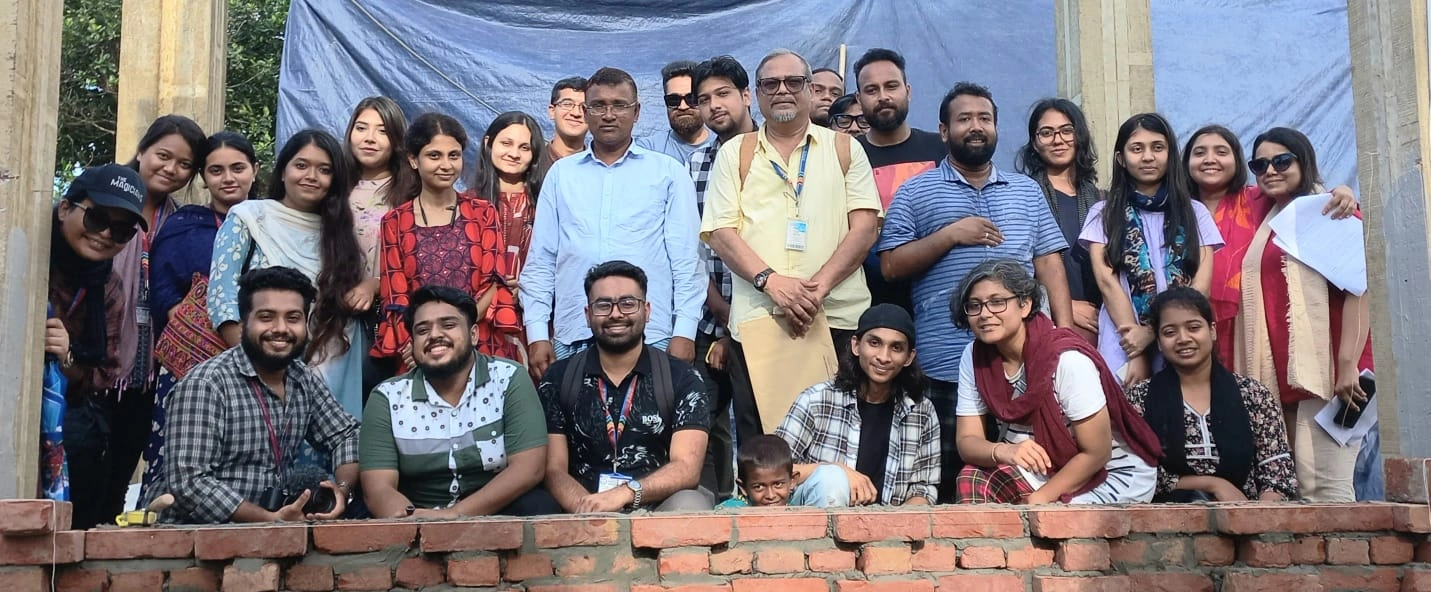
AIUB integrates visits to historically and culturally significant locations into architectural education, enabling students to explore the relationship between cultural heritage, the built environment, and conservation practices [4].
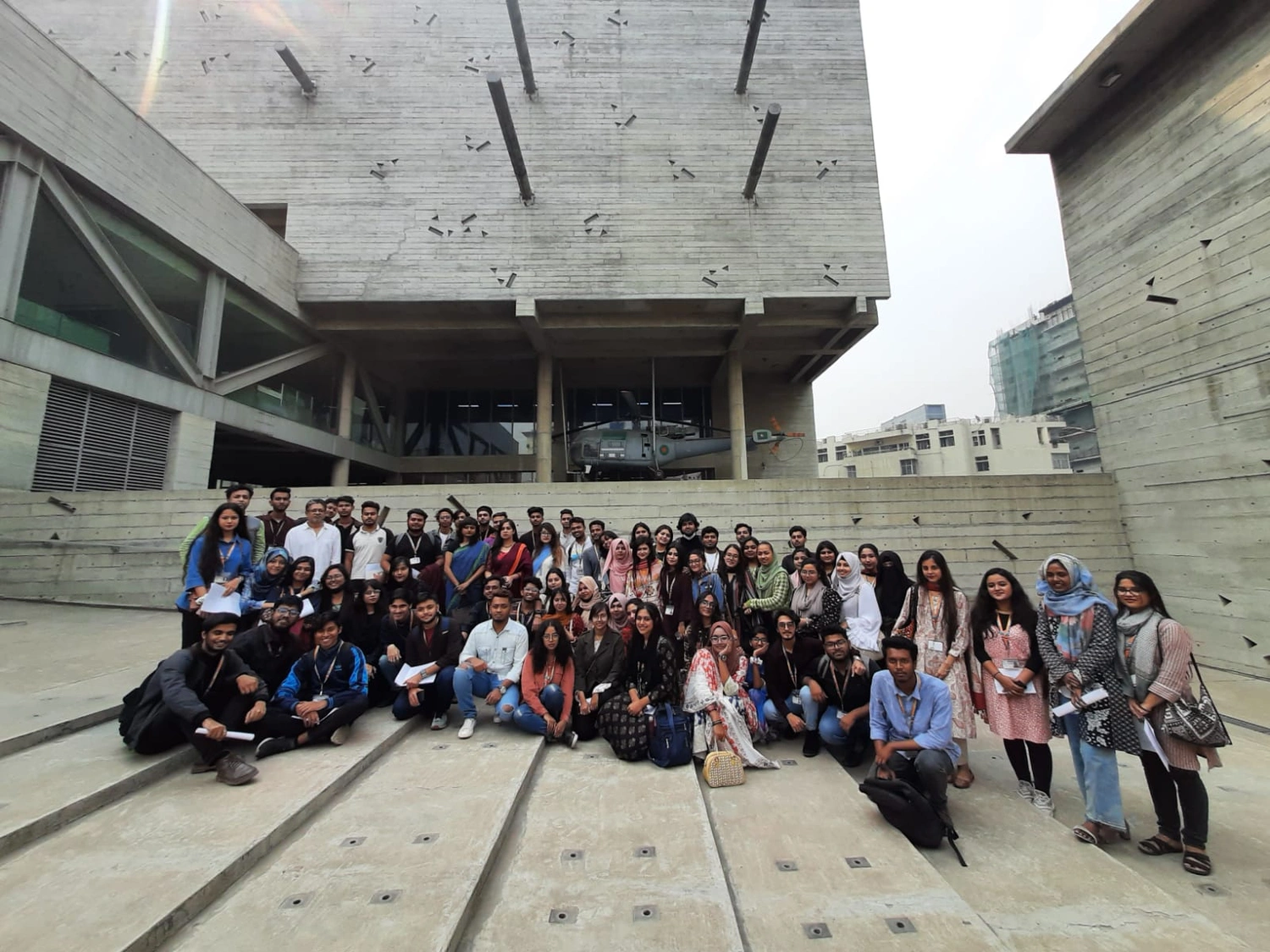
- Liberation War Museum, Dhaka: Architecture students visited the museum to learn about the historical events and cultural significance of Bangladesh's 1971 Liberation War. The museum preserves important historical records and materials associated with the country's independence, providing students with an opportunity to engage with national history and its preservation [19].
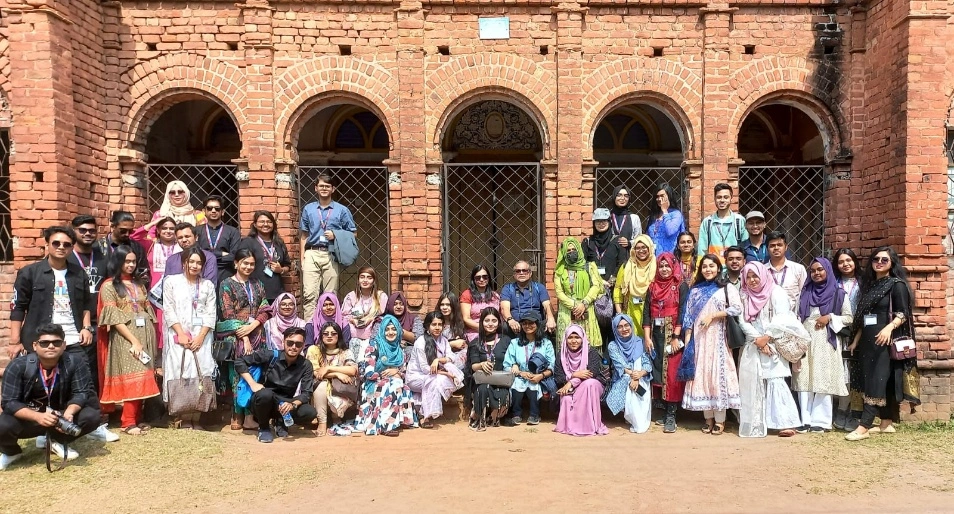
- Panam City, Sonargaon: AIUB organized an academic study tour to Panam City, a historic settlement characterized by its 19th-century merchant houses and distinctive architectural heritage. The visit introduced students to the historical, architectural, and cultural value of the site, strengthening their understanding of heritage conservation and the importance of preserving historic urban environments [20].
These educational activities connect architectural learning with the appreciation and conservation of Bangladesh's historical and cultural assets.
Artistic Expression and Cultural Exhibitions
AIUB provides students with opportunities to showcase their creative work and engage with artistic and cultural expression through exhibitions, design presentations, and photography initiatives.
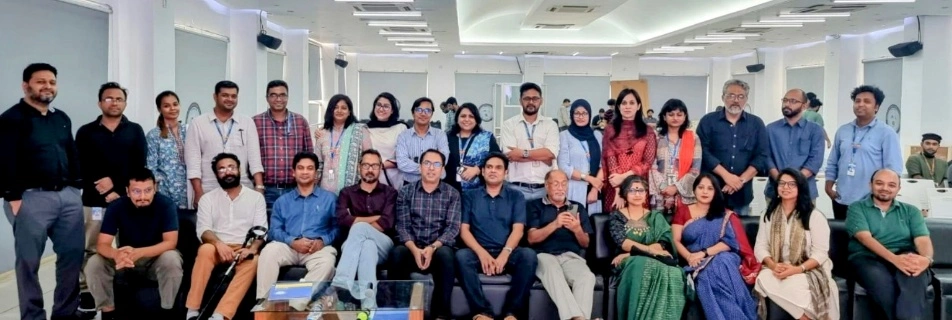
- Design Dialogue: The Department of Architecture organizes the Design Dialogue exhibition and jury, where students publicly present their final thesis projects. These presentations showcase architectural proposals that incorporate sustainable design principles and address contemporary challenges in urban development, creating opportunities for academic exchange and public engagement with innovative design solutions [4], [21].
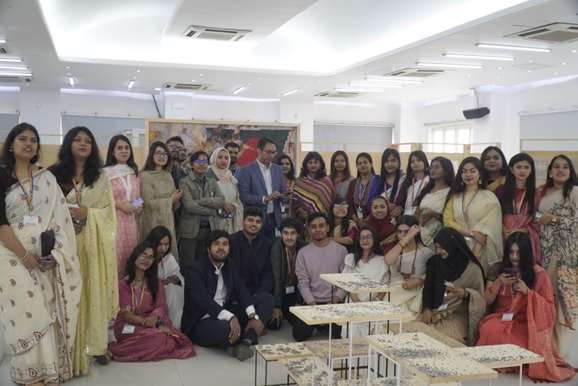
- Student Project Exhibitions: The Department of Architecture organizes exhibitions featuring students' architectural and creative projects, providing a platform for sharing artistic ideas, design approaches, and academic achievements with the university community [22].
- Photography and Urban Documentation: AIUB encourages visual storytelling and artistic documentation through photography activities. The AIUB Photography Club organizes workshops in collaboration with BCPA, while the Department of Architecture conducts student photography competitions that capture and document changes in the urban landscape. These initiatives promote visual arts and encourage students to explore the cultural, architectural, and social dimensions of their surroundings [23], [24].
Sustainable Campus Practices
Assessing the Campus Environmental Footprint
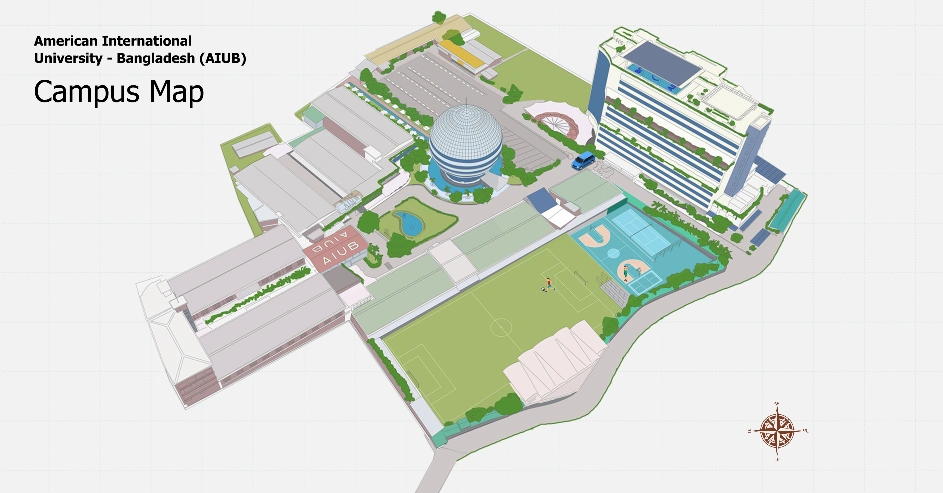
AIUB has undertaken an assessment of the physical footprint and greenhouse gas emissions of its permanent campus in Kuratoli, Dhaka. The campus covers 44,043.71 m², with a total building floor area of 55,043 m². This assessment provides an institutional basis for identifying environmental impacts and supporting initiatives focused on renewable energy adoption, energy efficiency, low-carbon infrastructure, and sustainable practices across the university community [25].
Institutional Commitment to Net-Zero Emissions
AIUB demonstrates its commitment to climate action by participating in the Race to Zero campaign for universities and colleges, a global initiative that encourages higher education institutions to pursue net-zero greenhouse gas emissions [26]. This commitment is reinforced by the university's AIUB Climate Action Plan, which establishes a framework for advancing institutional climate action [27].
AIUB also invests in renewable energy infrastructure, with more than 130 kW of solar power installed across its campus [9]. These initiatives contribute to reducing the environmental impact of university operations, promoting cleaner energy use, and supporting the transition toward more sustainable and climate-resilient urban environments.
Supporting Access to Affordable Student Accommodation
AIUB supports students' access to affordable accommodation in Dhaka through a memorandum of understanding with Super Hostel. Under this partnership, AIUB students are eligible for special accommodation discounts, providing financial support when securing housing during their studies. The initiative also benefits international students by facilitating access to accommodation in the city and supporting their transition into the local academic environment [28].
By facilitating access to discounted housing options, AIUB contributes to improving student accommodation opportunities and promoting a more inclusive university community.
Digital Access to Educational Resources
AIUB promotes digital access to educational resources by providing free campus-wide Wi-Fi and making learning materials and academic resources available online. These initiatives allow students and members of the wider community to access educational content and information beyond traditional classroom settings [7].
The availability of digital learning resources expands access to knowledge, supports flexible learning opportunities, and facilitates the dissemination of educational materials across the university community.
Community Engagement and Urban Resilience
Community-Based Disaster Response and Relief
AIUB actively engages its student community in humanitarian initiatives that support populations affected by natural disasters. In September 2024, following severe flooding across Bangladesh, several AIUB student groups organized relief activities in affected areas, including Chagolnaiya, Porshuram, Shonagazi, and Hajigonj [29].
The AIUB Social Welfare Club – Shomoy coordinated relief efforts that provided essential food and medical supplies to 1,200 families affected by the floods [30]. This initiative demonstrates the university's commitment to community solidarity and humanitarian assistance, while strengthening student participation in responding to emergencies and supporting vulnerable populations.
Established in 2009, Shomoy maintains a sustained commitment to community welfare through initiatives such as flood relief operations, blood donation campaigns, winter clothing distribution, and educational support for children from underprivileged backgrounds. The club also collaborates with various non-governmental organizations to extend the reach and impact of its community engagement activities [31].
Supporting Children from Underprivileged Communities
AIUB promotes social inclusion and community well-being by encouraging student participation in volunteer activities that support children from underprivileged backgrounds. Its students regularly engage with Kathpencil Pathshala, a non-profit organization dedicated to children's education and development.
On September 6, 2025, the AIUB Social Welfare Club – Shomoy organized Rongin Shomoy 2025, a day-long programme designed to provide children at Kathpencil Pathshala with opportunities for recreation, creative expression, and social interaction [32].
The organization's educational approach incorporates arts-based learning, crafts, theatre for sustainable development, and recreational activities, creating an environment that encourages children's creativity, participation, and holistic development [17]. Through these volunteer initiatives, AIUB strengthens connections with community organizations and promotes inclusive opportunities for children's learning and well-being.
Promoting Community Participation in Sustainable Development
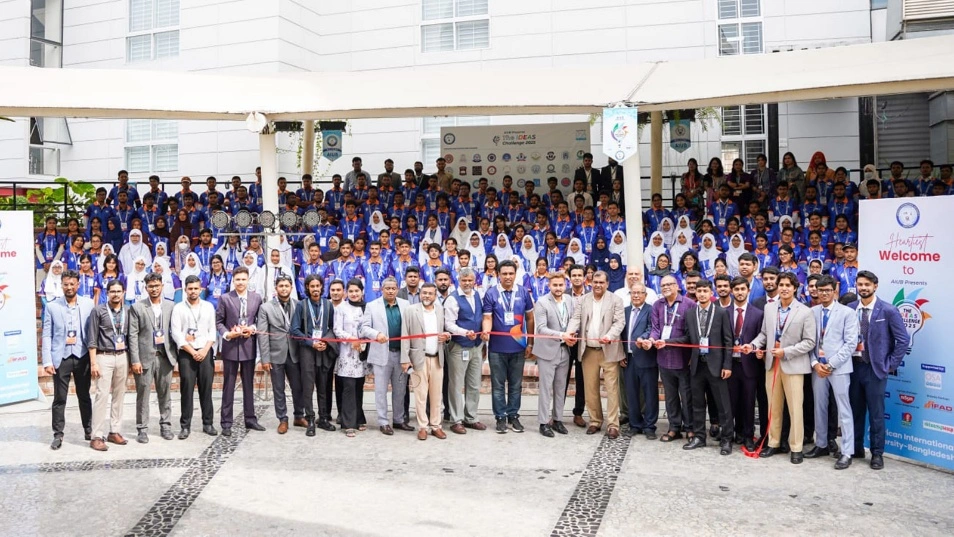
AIUB encourages students and community members to participate in identifying challenges and developing innovative solutions that contribute to sustainable development. An example is The Ideas Challenge, an initiative organized by the AIUB Social Welfare Club – Shomoy that invites participants to present creative and practical ideas addressing real-world problems [17].
The 2025 edition brought together representatives from 50 educational institutions across Bangladesh, providing a platform for exchanging ideas and presenting innovative projects aligned with the United Nations Sustainable Development Goals (SDGs) [33].
By bringing together participants from different educational institutions, The Ideas Challenge promotes collaboration, knowledge exchange, and community participation in addressing social and environmental challenges. The initiative also encourages young people to contribute actively to sustainable development through innovation and collective action [33].
Safe Infrastructure, Green Spaces and Sustainable Urban Development
Campus Safety and Emergency Preparedness
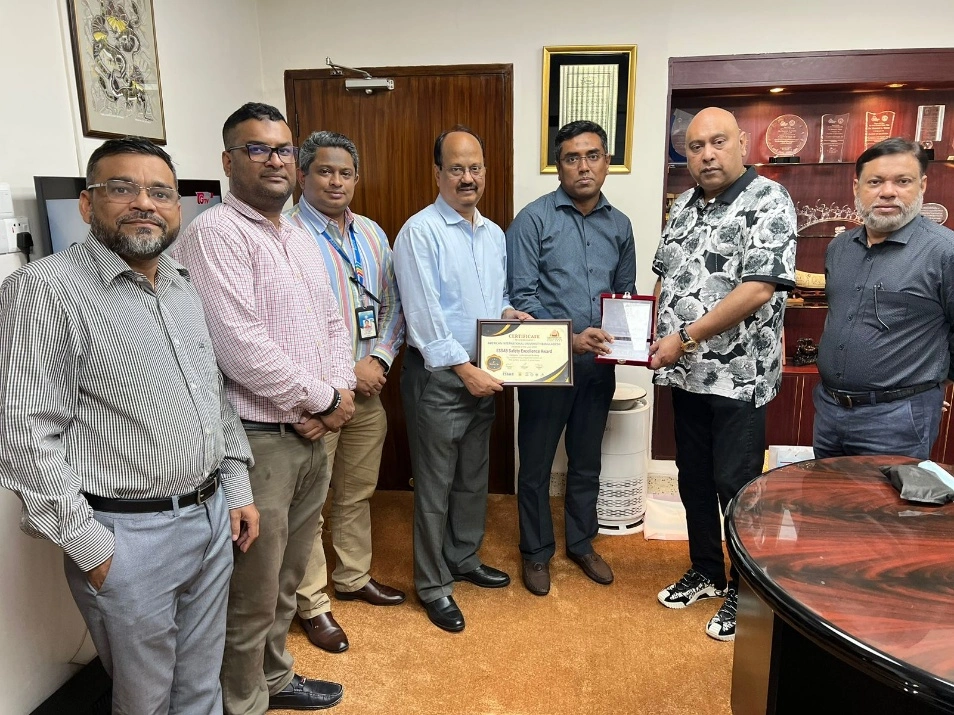
AIUB demonstrates its commitment to providing a safe and resilient built environment through comprehensive fire safety measures across its permanent campus. In 2022, the university received the ESSAB Safety Excellence Award from the Electronic Safety and Security Association of Bangladesh (ESSAB) at the 8th International Fire, Safety and Security Expo, becoming the only educational institution to receive this recognition at the event [34].
The award recognized AIUB's implementation of fire detection, protection, and emergency evacuation systems throughout its campus buildings. The university's main academic complex, D-Building, was constructed in accordance with Bangladesh's national building codes and incorporates fire and smoke detection systems, firefighting equipment, and emergency evacuation arrangements. Dedicated safety personnel and service engineers also supervise the operation and maintenance of these systems [34].
These measures reflect AIUB's institutional commitment to safe building environments, effective emergency preparedness, and the protection of its university community, contributing to the broader principles of safety and resilience promoted by SDG 11.
Expanding Urban Green Spaces Through Community Partnerships
AIUB extends its environmental sustainability initiatives beyond campus boundaries by promoting tree planting and environmental awareness in educational institutions and surrounding communities.
On September 10–11, 2025, the AIUB Environment Club, facilitated by the Office of Student Affairs, organized a two-day tree plantation campaign entitled Roots of Tomorrow 2025 – Plant Today, Grow Tomorrow. The initiative was implemented across selected schools and colleges in Dhaka and Gazipur, including Notre Dame College, Cambrian College, Dhaka Cantonment Public School and College, Assemblies of God Church School, Gazipur Cantonment Public School and College, and Safiuddin Sarkar Academy and College [35].
Students, teachers, environmental and science club members, and volunteers from the participating institutions collaborated in planting native and locally suitable tree species, including Neem, Rain Tree, Guava, Mango, and Krishnachura. The campaign also incorporated environmental awareness sessions highlighting the importance of protecting and expanding green spaces [35].
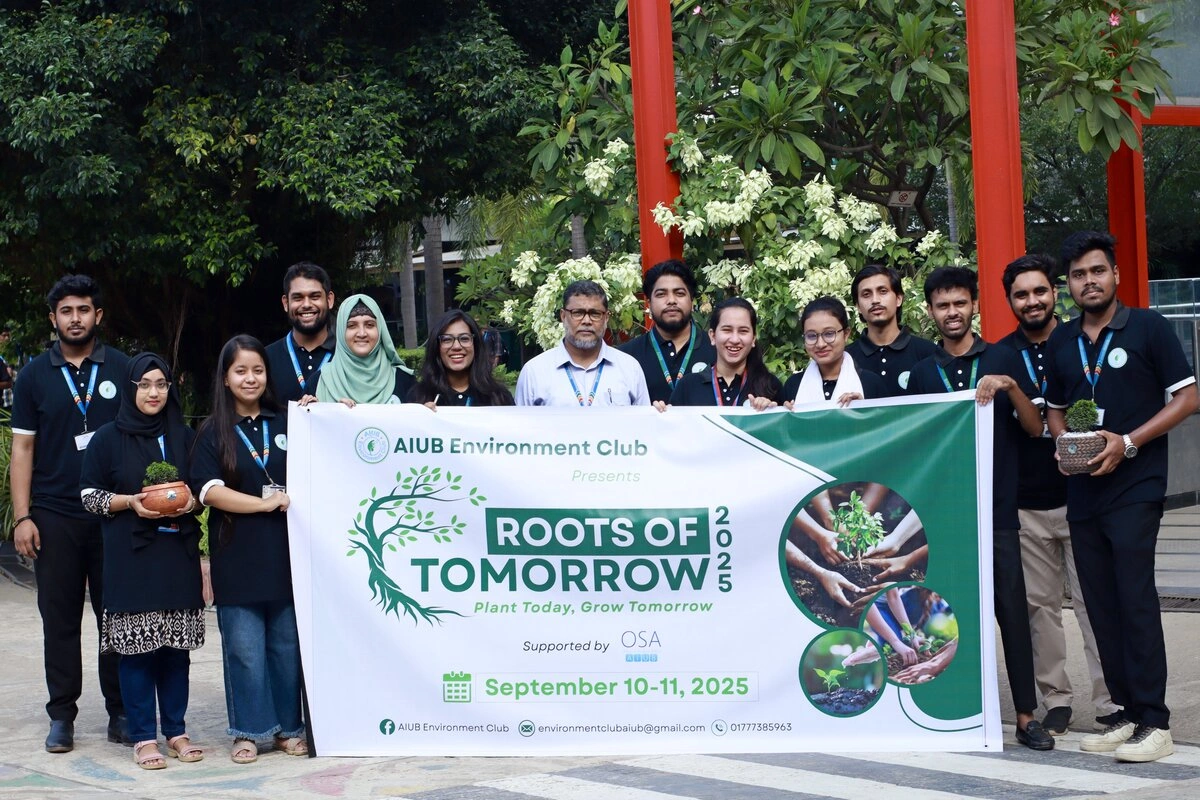
By engaging educational institutions and young volunteers in urban greening activities, AIUB promotes environmental stewardship, biodiversity awareness, and community participation in creating greener and healthier urban environments.
Institutional Partnerships for Sustainable Building and Construction
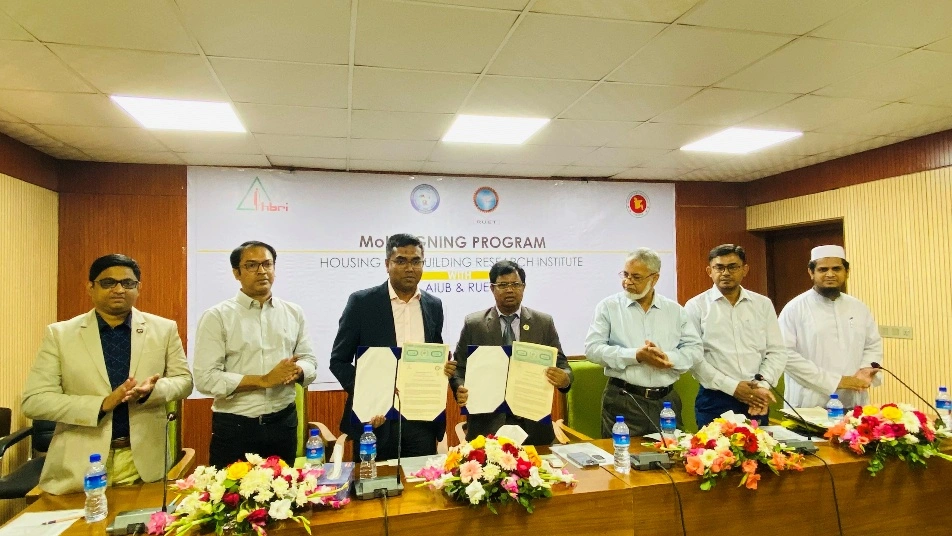
AIUB strengthens its contribution to sustainable urban development by establishing research and innovation partnerships with institutions specializing in architecture, engineering, and construction.
On March 14, 2023, AIUB signed a Memorandum of Understanding with the Housing and Building Research Institute (HBRI), alongside Rajshahi University of Engineering and Technology (RUET). The agreement established a collaborative framework for research and development in architecture, engineering, and construction, bringing together academic and specialized research institutions [36].
The partnership creates opportunities for exchanging technical knowledge, developing collaborative research initiatives, and promoting innovation in the built environment. By connecting university expertise with the specialized research capabilities of HBRI and RUET, AIUB contributes to advancing sustainable construction practices and strengthening institutional cooperation for more sustainable infrastructure and urban development [36].
Community Participation in Climate-Resilient Housing Solutions
AIUB promotes community participation in developing housing solutions that respond to climate-related challenges affecting vulnerable urban populations. In collaboration with Habitat for Humanity International Bangladesh, the Department of Architecture organized a workshop entitled Settlement for Low-Income People: Impact of Climate Change on December 17, 2018, as part of the research project Urban Innovation: Adaptive Solutions in Climate Resilient Dwelling for Slum Dwellers [37].
The workshop brought together AIUB architecture faculty members, representatives of Habitat for Humanity International Bangladesh, and residents of informal settlements. Its activities included presentations on the effects of climate change on low-income settlements, followed by interactive discussions and questionnaires that enabled residents to share their living conditions, experiences, and concerns regarding climate-related challenges [37].
This participatory approach connected architectural research with the experiences of vulnerable communities, encouraging dialogue on practical measures to improve housing conditions and strengthen resilience to climate impacts. The collaboration demonstrates AIUB's commitment to inclusive research, community engagement, and partnerships that support safer and more climate-resilient human settlements.
References
| [1] | A. V. Mannan, S. H. Tarik, A. Ibrahim, and A. N. Shoma, “Transforming slum dwellings into better livable units: An approach through minimum intervention,” [Online]. Available: https://ajse.aiub.edu/index.php/ajse/article/download/300/149. [Accessed 2026]. |
| [2] | AIUB DSpace, “Transforming Slum Dwellings into Better Livable Units: An Approach through Minimum Intervention,” [Online]. Available: https://dspace.aiub.edu/jspui/bitstream/123456789/2493/3/J1_DSpace_Publication_FE%20-%20Slum.docx. [Accessed 2026]. |
| [3] | Showcase, “Jelepolli – Low Cost Housing Community Development for Fishermen.,” [Online]. Available: https://www.showcase.com.bd/?p=3511. [Accessed 2026]. |
| [4] | American International University-Bangladesh, “AIUB SDG Activity Report 2023 – SDG 11: Sustainable Cities and Communities,” [Online]. Available: https://www.aiub.edu/iqac/sdgs/aiub-sdg-activity-report-2023/SDG11-AIUBActivityReportof2023. [Accessed 2026]. |
| [5] | American International University-Bangladesh, “AIUB SDG Activity Report 2022 | SDG 11: Sustainable Cities and Communities,” [Online]. Available: https://www.aiub.edu/iqac/sdgs/aiub-sdg-activity-report-2022/SDG11-AIUBActivityReportof2022. [Accessed 2026]. |
| [6] | American International University-Bangladesh, “Department of Architecture,” [Online]. Available: https://aiub.edu/faculties/engg/departments/arch. [Accessed 2026]. |
| [7] | American International University-Bangladesh, “Lifelong Learning: Public Resources,” [Online]. Available: https://aiub.edu/sustainability/sdg4/sdg4-initiative/lifelong-learning-public-resources. [Accessed 2026]. |
| [8] | American International University-Bangladesh, “Green Campus,” [Online]. Available: https://aiub.edu/oncampus/green-campus. [Accessed 2026]. |
| [9] | American International University-Bangladesh, “Why Study Here.,” [Online]. Available: https://www.aiub.edu/about/why-study-here. [Accessed 2026]. |
| [10] | Dhaka Tribune, “Where art meets architecture,” [Online]. Available: https://www.dhakatribune.com/magazine/weekend-tribune/139596/where-art-meets-architecture. [Accessed 2026]. |
| [11] | American International University-Bangladesh, “AIUB Boishakhi Ullash 1418,” [Online]. Available: https://www.aiub.edu/aiub-boishakhi-ullash-1418. [Accessed 2026]. |
| [12] | American International University-Bangladesh, “Arts & Culture,” [Online]. Available: https://aiub.edu/oncampus/arts--culture. [Accessed 2026]. |
| [13] | American International University-Bangladesh, “AIUB Celebrates Pohela Boishakh 1433 with Vibrance and Cultural Pride,” [Online]. Available: https://aiub.edu/aiub-celebrates-pohela-boishakh-1433-with-vibrance-and-cultural-pride. [Accessed 2026]. |
| [14] | “Spirit of Festivity and Artistic Expression Echoed by Architecture Department on Pohela Boishakh 1433,” American International University-Bangladesh. [Online]. Available: https://aiub.edu/spirit-of-festivity-and-artistic-expression-echoed-by-architecture-department-on-pohela-boishakh-1433. [Accessed 2026]. |
| [15] | American International University-Bangladesh, “AIUB Boishakhi Ullash 1425,” [Online]. Available: https://www.aiub.edu/aiub-boishakhi-ullash-1425--event. [Accessed 2026]. |
| [16] | American International University-Bangladesh, “APAC participates at BUP Folk Fest 2024,” [Online]. Available: https://www.aiub.edu/apac-participates-at-bup-folk-fest-2024. [Accessed 2026]. |
| [17] | American International University-Bangladesh, “Activities of AIUB in the wider community,” [Online]. Available: https://www.aiub.edu/iqac/sdgs/aiub-sdg-activity-report-2023/sdg17-aiubactivityreportof2023/sdg-initiative/activities-of-aiub-in-the-wider-community. [Accessed 2026]. |
| [18] | American International University-Bangladesh, “MMC students visited and participated in a community development project at Jamdani Village, Bargaon, Sonargaon,” [Online]. Available: https://www.aiub.edu/mmc-students-visited-and-participated-in-a-community-development-project-at-jamdani-village-bargaon-sonargaon. [Accessed 2026]. |
| [19] | American International University-Bangladesh, “Architecture students visit the Liberation War Museum,” [Online]. Available: https://www.aiub.edu/architecture-students-visit-the-liberation-war-museum. [Accessed 2026]. |
| [20] | American International University-Bangladesh, “Study tour to Panam City,” [Online]. Available: https://www.aiub.edu/study-tour-to-panam-city. [Accessed 2026]. |
| [21] | American International University-Bangladesh,, “Design Dialogue' [Spring 2022-23]: Thesis jury by architecture students,” [Online]. Available: https://www.aiub.edu/design-dialogue-spring-2022-23-thesis-jury-by-architecture-students. [Accessed 2026]. |
| [22] | American International University-Bangladesh, “Architecture Department organizes Student Project Exhibition,” [Online]. Available: https://www.aiub.edu/architecture-department-organizes-student-project-exhibition. [Accessed 2026]. |
| [23] | American International University-Bangladesh, “AIUB Photography Club (AIUBPC): Workshop in collaboration with BCPA,” [Online]. Available: https://www.aiub.edu/aiub-photography-club-aiubpc--workshop-in-collaboration-with-bcpa. [Accessed 2026]. |
| [24] | American International University-Bangladesh, “2nd Student Photography Competition: Organized successfully by Architecture Department of AIUB,” [Online]. Available: https://www.aiub.edu/2nd-student-photography-competition-organized-successfully-by-architecture-department-of-aiub. [Accessed 2026]. |
| [25] | American International University-Bangladesh, “Campus Building Footprint, CO₂ Emission and Race to Net Zero,” [Online]. Available: https://aiub.edu/sustainability/aiub-campus-footprint-co2-emission-and-race-to-net-zero. [Accessed 2026]. |
| [26] | American International University-Bangladesh, “AIUB's Commitment to Race to Zero: A Step Towards Environmental Sustainability,” [Online]. Available: https://www.aiub.edu/aiubs-commitment-to-race-to-zero-a-step-towards-environmental-sustainability. [Accessed 2026]. |
| [27] | American International University-Bangladesh, “AIUB Climate Action Plan,” [Online]. Available: https://www.aiub.edu/sustainability/aiub-climate-action-plan. [Accessed 2026]. |
| [28] | American International University-Bangladesh, “International Students,” [Online]. Available: https://aiub.edu/admission/international-students. [Accessed 2026]. |
| [29] | American International University-Bangladesh, “Students of AIUB: Standing with the Flood-Effected,” [Online]. Available: https://www.aiub.edu/students-of-aiub-standing-with-the-flood-effected. [Accessed 2026]. |
| [30] | American International University-Bangladesh, “Programmes for Services Access,” [Online]. Available: https://aiub.edu/sustainability/sdg1/initiative/programmes-for-services-access. [Accessed 2026]. |
| [31] | American International University-Bangladesh, “AIUB Social Welfare Club – SHOMOY,” [Online]. Available: https://www.aiub.edu/oncampus/clubs/aiub-social-welfare-club--shomoy. [Accessed 2026]. |
| [32] | The Daily Star, “AIUB Social Welfare Club–Shomoy organises 'Rongin Shomoy 2025' for underprivileged children at Kathpencil Pathshala,” [Online]. Available: https://online91.thedailystar.net/campus/noticeboard/news/aiub-social-welfare-club-shomoy-organises-rongin-shomoy-2025. [Accessed 2026]. |
| [33] | The Daily Star, “AIUB hosts 'The Ideas Challenge 2025' to inspire innovation and social impact,” [Online]. Available: https://www.thedailystar.net/business/organisation-news/press-releases/news/aiub-hosts-ideas-challenge-2025-inspire-innovation. [Accessed 2026]. |
| [34] | American International University-Bangladesh (AIUB), “AIUB wins ESSAB Safety Excellence Award 2022,” [Online]. Available: https://www.aiub.edu/aiub-wins-essab-safety-excellence-award-2022. [Accessed 2026]. |
| [35] | American International University-Bangladesh, “Tree Plantation Drive Across Schools & Colleges By AIUB Environment Club,” [Online]. Available: https://journalism.aiub.edu/tree-plantation-drive-across-schools--colleges-by-aiub-environment-club-. [Accessed 2026]. |
| [36] | American International University-Bangladesh, “AIUB & HBRI Sign MoU to Collaborate on Research and Development,” [Online]. Available: https://www.aiub.edu/aiub--hbri-sign-mou-to-collaborate-on-research-and-development. [Accessed 2026]. |
| [37] | American International University-Bangladesh, “Settlement for Low-Income People: Impact of Climate Change’ – Workshop Conducted by Department of Architecture,” [Online]. Available: https://www.aiub.edu/settlement-for-low-income-people-impact-of-climate-change-workshop-conducted-by-department-of-architecture. [Accessed 2026]. |