

SDG 11.4
Overview and sub-indicators for SDG 11.4
SDG 11.4.1

TABLE OF CONTENTS
Monitoring Transportation-Related Emissions: AIUB's Greenhouse Gas Inventory
Greenhouse Gas Inventory Framework
Greenhouse Gas Emissions: 2022–2024
Supporting Sustainable Transportation Planning
Institutional Targets and Commitments for Carbon Reduction
Advancing Towards Net-Zero Carbon
Reducing the University's Carbon Footprint
Implementing Climate Action Across the Campus
Climate Action Plan: Setting, Evaluating and Revising Targets
Campus Infrastructure Supporting Walking
SDG 11.4.1: Does your university as a body measure and set targets for more sustainable commuting (walking, cycling or other non-motorized transport, vanpools, carpools, shuttlebus or public transportation, motorcycle, scooter or moped, or electric vehicles)?
Monitoring Transportation-Related Emissions: AIUB's Greenhouse Gas Inventory
 |
 |
AIUB has implemented a strategic approach to assessing and monitoring its institutional carbon footprint, incorporating emissions associated with university operations and the daily commuting of students and staff [1]. This inventory provides a framework for identifying major emission sources, evaluating their environmental impact and informing the university's sustainability planning.
Greenhouse Gas Inventory Framework
AIUB's greenhouse gas inventory follows an internationally recognised framework that categorises emissions into three scopes, providing a comprehensive overview of the university's direct and indirect environmental impact [1].
| Scope | Emission sources covered by AIUB |
| Scope 1 | Direct emissions from university-owned or controlled sources, including institutional vehicles and fuel combustion [1]. |
| Scope 2 | Indirect emissions associated with purchased electricity [1]. |
| Scope 3 | Other indirect emissions, including student and staff commuting, waste generation and procurement activities [1]. |
Transportation is incorporated into the inventory through two categories: university-operated vehicles are included in Scope 1, while the daily commuting of students and staff is accounted for under Scope 3 [1]. Both institutional and private transportation are recognised as significant contributors to AIUB's overall greenhouse gas emissions.
Greenhouse Gas Emissions: 2022–2024
AIUB's inventory provides annual emissions assessments, covering the 2022 and 2023 reporting periods and including projections for 2024 [1]. The results are presented below:
| Year | Scope 1 (tCO₂e) | Scope 2 (tCO₂e) | Scope 3 (tCO₂e) | Total (tCO₂e) |
| 2022 | 241,826.41 | 1,702,655.32 | 523,134.68 | 2,467,616.40 |
| 2023 | 235,000.00 | 1,620,000.00 | 510,000.00 | 2,365,000.00 |
| 2024 (projected) | 228,000.00 | 1,580,000.00 | 495,000.00 | 2,303,000.00 |
The inventory indicates a projected reduction of approximately 5.4% in Scope 3 emissions between 2022 and 2024, alongside a projected 6.7% decrease in total greenhouse gas emissions. These figures demonstrate AIUB's systematic approach to monitoring its environmental footprint and tracking changes across its main emission categories [1].
Supporting Sustainable Transportation Planning
The inclusion of student and staff commuting in AIUB's greenhouse gas inventory establishes an institutional basis for understanding the environmental implications of daily transportation choices. By identifying commuting as part of its indirect emissions, AIUB incorporates transportation-related environmental impacts into its broader sustainability assessment [1].
This monitoring framework also provides valuable information to support the development and evaluation of sustainable transportation objectives, helping align campus mobility planning with the university's wider environmental commitments. AIUB further reports a reduction in its carbon emissions over the 2020–2024 period, reflecting its continued attention to institutional environmental performance [2].
Institutional Targets and Commitments for Carbon Reduction
AIUB has established institutional commitments to reduce its greenhouse gas emissions and advance towards carbon neutrality. These commitments provide a strategic framework for addressing the university's environmental footprint, including emissions associated with campus operations and student and staff commuting.
Race to Zero Commitment
AIUB has committed to the Race to Zero campaign, a global initiative that mobilises businesses, cities, regions and institutions, including educational organisations, to accelerate climate action [3].
The campaign encourages participating institutions to establish science-based interim targets, implement transparent action plans and reduce emissions across all scopes, with the collective ambition of halving global emissions by 2030 and achieving net-zero emissions [3].
By embracing this commitment, AIUB incorporates both direct and indirect emissions into its broader climate ambitions. This includes Scope 3 emissions associated with the daily commuting of students and staff, which are recognised and monitored as part of the university's greenhouse gas inventory [1], [3].
Advancing Towards Net-Zero Carbon
Achieving net-zero carbon is one of AIUB's key sustainability objectives [4]. The university has outlined strategies to progressively reduce the greenhouse gas emissions associated with its operations and advance towards a future carbon-neutral campus.
As part of this commitment, AIUB collaborates with Krishi Shwapno, a youth-led agri-tech and cleantech start-up, on climate action initiatives supporting its ambition to develop a carbon-neutral campus [4]. This collaboration reinforces the university's commitment to integrating environmental sustainability into its institutional development and climate strategy.
Reducing the University's Carbon Footprint
The reduction of the campus carbon footprint is among AIUB's recognised sustainability milestones [5]. This objective reflects the university's broader commitment to improving its environmental performance and progressively reducing the emissions associated with its activities.
AIUB's pursuit of net-zero carbon initiatives further strengthens this direction, positioning environmental responsibility and carbon reduction as important components of its institutional sustainability agenda [6]. The inclusion of commuting emissions in the university's greenhouse gas inventory also supports the assessment of transportation-related impacts within this broader commitment [1].
Implementing Climate Action Across the Campus
AIUB translates its environmental commitments into institutional action through its Climate Action Plan, campus infrastructure and community engagement. These initiatives support the university's broader efforts to reduce its environmental footprint and promote sustainable practices across its campus.
Climate Action Plan: Setting, Evaluating and Revising Targets
AIUB's Climate Action Plan places the development of a greener and more sustainable campus at the centre of its institutional environmental strategy [4]. The plan adopts a continuous improvement approach based on four main stages:
1. Establishing preliminary targets: defining initial goals for reducing greenhouse gas emissions [4].
2. Evaluating implemented measures: assessing the effectiveness of actions undertaken to achieve these goals [4].
3. Assessing financial implications: calculating the financial impact associated with each measure [4].
4. Reviewing and refining targets: adjusting objectives based on implementation results and feedback from students, faculty, staff and other stakeholders [4].
The plan is designed to evolve in response to technological developments and emerging best practices [4]. Its participatory and iterative approach supports the continuous assessment of AIUB's environmental initiatives and provides a framework for strengthening its sustainability commitments.
Combined with the university's greenhouse gas inventory, this planning framework supports the monitoring of emissions across different scopes, including those associated with student and staff commuting [1], [4].
Campus Infrastructure Supporting Walking
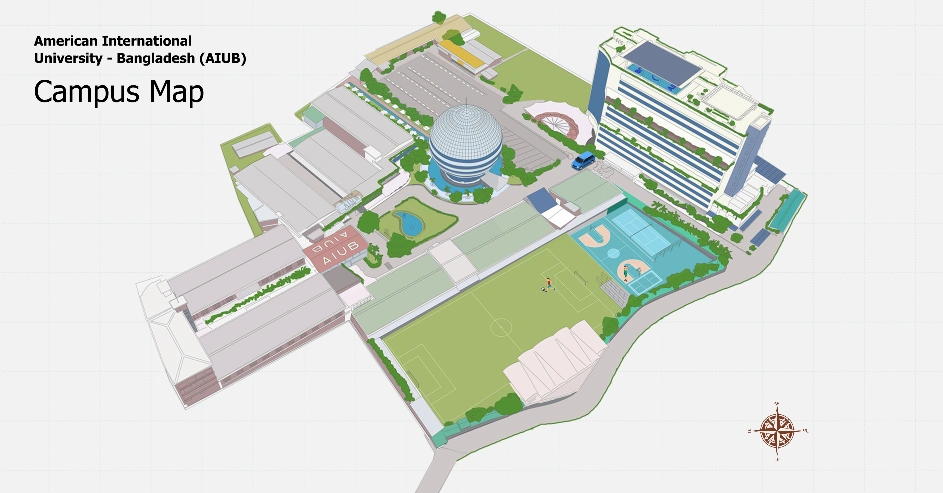
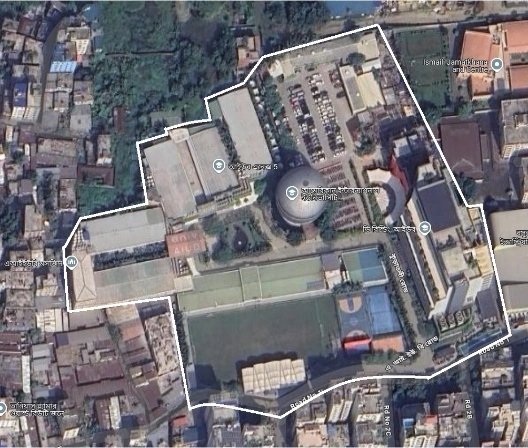
AIUB's permanent campus is located in Kuratoli, Kuril, Dhaka, providing a university setting connected to the surrounding urban environment [1]. Within the campus, paved pedestrian pathways lined with flowers connect academic buildings and open spaces, creating an accessible and pleasant environment for walking [7].
This pedestrian infrastructure facilitates movement between campus facilities on foot and contributes to a campus environment that supports active and environmentally friendly mobility.
Engaging the University Community in Climate Action
AIUB's Climate Action Plan promotes community participation as an essential component of its environmental strategy [4]. Its approach encompasses three complementary areas:
- Student climate leadership: student ambassadors receive training through university clubs to lead environmental awareness campaigns and promote sustainable initiatives within the university community [4].
- Collaborative partnerships: AIUB engages with local organisations, businesses, NGOs and government agencies to expand the reach and impact of its climate initiatives [4].
- Environmental outreach and education: workshops, seminars and public lectures disseminate environmental knowledge and encourage active participation in climate action [4].
The AIUB Environment Club further contributes to these efforts by organising environmental rallies, seminars and awareness campaigns for students and the wider community [8]. These activities strengthen environmental awareness, encourage collective responsibility and support the integration of sustainable practices into university life.
References
| [1] | American International University-Bangladesh, “Campus Building Footprint, CO2 Emission and Race to Net Zero.,” [Online]. Available: https://www.aiub.edu/sustainability/aiub-campus-footprint-co2-emission-and-race-to-net-zero. [Accessed 2026]. |
| [2] | American International University-Bangladesh, “SDG 13: Climate Action.,” [Online]. Available: https://www.aiub.edu/sustainability/sdg13. [Accessed 2026]. |
| [3] | American International University-Bangladesh, “AIUB's Commitment to Race to Zero: A Step Towards Environmental Sustainability,” [Online]. Available: https://www.aiub.edu/aiubs-commitment-to-race-to-zero-a-step-towards-environmental-sustainability. [Accessed 2026]. |
| [4] | American International University-Bangladesh, “AIUB Climate Action Plan,” [Online]. Available: https://www.aiub.edu/sustainability/aiub-climate-action-plan. [Accessed 2026]. |
| [5] | American International University-Bangladesh, “AIUB Sustainability Policy on Donation and Funding.,” [Online]. Available: https://aiub.edu/administration/institutional-policy/aiub-sustainability-policy-on-donation-and-funding-. [Accessed 2026]. |
| [6] | The Daily Star, “Pioneering innovation and sustainable academic growth,” [Online]. Available: https://www.thedailystar.net/supplements/universities-tomorrow/news/pioneering-innovation-and-sustainable-academic-growth-4233381. [Accessed 2026]. |
| [7] | Dhaka Tribune, “Where art meets architecture,” [Online]. Available: https://www.dhakatribune.com/magazine/weekend-tribune/139596/where-art-meets-architecture. [Accessed 2026]. |
| [8] | American International University-Bangladesh, “AIUB Environment Club.,” [Online]. Available: https://www.aiub.edu/oncampus/clubs/aiub-environment-club. [Accessed 2026]. |
SDG 11.4.2
TABLE OF CONTENTS
A Connected Campus Designed for Sustainable Mobility
An Urban Location with Strong Accessibility
A Pedestrian-Friendly Campus Environment
Research on Solar-Powered Electric Mobility
Reducing Travel Demand Through Digital Learning and Services
University-Wide Virtual Learning
VUES: Integrated Digital Infrastructure for University Services
Extending Online Education to the Wider Community
Digitalisation as a Strategy for Sustainable Commuting
Research, Innovation and Awareness for Sustainable Transport
Mass Transit: Assessing the Impact of Dhaka Metro Rail
Electric and Hybrid Vehicles as Low-Carbon Alternatives
Research on Sustainable Traffic Management and Urban Planning
SDG 11.4.2: Does your university as a body undertake actions to promote the % of more sustainable commuting?
A Connected Campus Designed for Sustainable Mobility
An Urban Location with Strong Accessibility
AIUB's permanent campus is located in Kuratoli, Kuril, Dhaka, within an urban environment that combines modern academic facilities with green open spaces [1]. Its location supports accessibility and connects the university with the surrounding urban area. The campus design incorporates accessibility and sustainability considerations, establishing an environment that supports more sustainable patterns of movement [1].
A Pedestrian-Friendly Campus Environment
AIUB's campus provides an environment that encourages walking as a convenient way to move between its facilities and open spaces. Paved pedestrian pathways, bordered by colourful flower beds, connect the entrance with the campus's large green field and other outdoor areas [2]. These landscaped spaces also provide welcoming places where students can read, exchange ideas and relax between academic activities [2]. By integrating pedestrian pathways with green areas, AIUB promotes a pleasant campus environment that supports walking and everyday interaction.
Research on Solar-Powered Electric Mobility
AIUB's commitment to sustainable mobility is also reflected in its research on electric transportation. In 2017, university researchers, in collaboration with international partners, presented the study "Eco-friendly Transportation System in Proposed Permanent Campus of American International University-Bangladesh" at the 6th International Conference on Clean Electrical Power (IEEE) [3].
The research explored the potential integration of electric vehicles (EVs) into AIUB's permanent campus mobility system, with particular emphasis on renewable energy integration. Its main contributions included:
- Electric vehicle integration: Examining the potential use of EVs for transportation within the proposed permanent campus [3].
- Solar-powered charging: Proposing photovoltaic (PV) systems as a renewable energy source to supply electricity for campus vehicles [3].
- Smart mobility scenarios: Developing scenarios for a more sustainable and intelligent campus transportation system, contributing to the broader vision of sustainable urban districts [3].
By combining electric mobility with solar energy, the proposed approach offers an alternative to conventional fossil-fuel-powered transportation. Electric vehicles can eliminate tailpipe emissions, while photovoltaic generation can further reduce the carbon footprint associated with vehicle charging, depending on the energy mix displaced [3].
This research demonstrates AIUB's proactive approach to sustainable campus planning, integrating clean transportation technologies and renewable energy into a forward-looking mobility framework.
Reducing Travel Demand Through Digital Learning and Services
Digital technologies enable universities to deliver academic activities and institutional services without requiring physical attendance for every interaction. AIUB has developed an extensive digital learning and management environment that supports students, faculty members and administrative staff in accessing educational resources, conducting meetings and performing university-related activities remotely.
University-Wide Virtual Learning
AIUB was recognised as the first university in Bangladesh to implement 100% virtual learning for its 13,000 students across more than 2,000 courses using Microsoft 365 Education [4]. Its digital learning environment integrates Microsoft Teams for online classes and collaboration, Microsoft Stream for video content, Microsoft Forms for quizzes, and digital Gradebook and Assignments functionalities for academic assessment and coursework [4].
The university also extends virtual collaboration beyond teaching activities. Board meetings, administrative meetings and council meetings are conducted using Microsoft Teams, allowing institutional coordination and decision-making to take place remotely [4]. This university-wide adoption of digital platforms provides an alternative to physical attendance for a broad range of academic and administrative activities.
VUES: Integrated Digital Infrastructure for University Services
AIUB's Virtual University Expert System (VUES) operates in conjunction with the University Management System and Microsoft Teams, providing an integrated digital environment for managing university records and supporting online academic activities [5].
The university's digital infrastructure includes a Virtual Desktop Infrastructure (VDI) supported by 25 high-performance servers operating on Citrix and Microsoft Hyper-V technologies [5]. This infrastructure strengthens the delivery and accessibility of digital university services. VUES also enables students to consult faculty members' counselling hours online, facilitating access to academic guidance and supporting student–faculty interaction without requiring an initial in-person visit [5].
By integrating digital learning, university management and academic support services, AIUB provides technological infrastructure that facilitates remote access to essential university activities.
Extending Online Education to the Wider Community
AIUB also uses digital learning platforms to extend educational opportunities beyond its enrolled student population, allowing external learners to participate in academic and professional development activities remotely.
Its initiatives include:
- Free online short courses: AIUB offers free courses for students who have recently completed their Higher Secondary Certificate (HSC) or A-level examinations. Topics include English for 21st Century Skills, Introduction to Animation, Programming in Python and Introduction to Cybersecurity [6].
- Public certificate courses: The Faculty of Business Administration organised online certificate courses from 28 to 31 August 2022, delivered through Microsoft Teams and open to members of the public [6].
These initiatives expand access to education by allowing participants to benefit from university-led learning opportunities without the need to travel to the campus.
Digitalisation as a Strategy for Sustainable Commuting
AIUB's digital learning and service infrastructure contributes to a more sustainable approach to campus mobility by providing alternatives to physical attendance for selected academic, administrative and educational activities. Online classes, virtual institutional meetings, digital academic resources and remotely accessible student services can reduce the need for journeys that would otherwise require commuting to campus.
By incorporating digital technologies into its academic and administrative operations, AIUB supports more flexible participation, improves access to university services and contributes to reducing transport-related demand associated with everyday university activities.
Research, Innovation and Awareness for Sustainable Transport
AIUB contributes to sustainable mobility beyond its campus by conducting research on transportation alternatives, urban traffic management and low-carbon technologies. These academic initiatives generate knowledge that supports more informed decisions among commuters, urban planners and policymakers, while promoting awareness of sustainable transportation solutions across Bangladesh.
Mass Transit: Assessing the Impact of Dhaka Metro Rail
In 2025, AIUB students, under the supervision of an Associate Professor from the Faculty of Science and Technology, conducted research examining the impact of MRT Line 6, Dhaka's first metro rail line [7]. The study was presented on 23 October 2025 at the 1st International Conference on Science and Humanities for Sustainable Development [7].
The research highlighted the contribution of mass transit to improving urban mobility, identifying significant changes in commuting patterns, travel times and public transport use. Its key findings included:
| Indicator | Research findings |
| Modal shift | Approximately 59.41% of passengers travelling between Uttara and Motijheel who previously relied on other public transport options shifted to MRT Line 6 [7]. |
| Travel time | Average daily commuting time decreased by 66.67%, from approximately two hours to around 40 minutes [7]. |
| Ridership | Daily ridership reached nearly 400,000 passengers in 2025 [7]. |
These findings demonstrate the potential of mass rapid transit to improve commuting efficiency and encourage the adoption of public transportation in densely populated urban environments. AIUB's research provides valuable insights into the role of metro rail systems in addressing Dhaka's mobility challenges.
Electric and Hybrid Vehicles as Low-Carbon Alternatives
AIUB also investigates the potential of electric and hybrid vehicles to support the transition towards cleaner transportation in Bangladesh. Its academic research addresses both the environmental benefits of these technologies and the factors influencing their adoption.
- "Role of Electric Vehicles in Low Carbon Transportation: Challenges and Solutions in Bangladesh" (2024): AIUB students examined the potential of electric vehicles to reduce transportation-related emissions, improve air quality and contribute to the Sustainable Development Goals. The study also analysed passenger perceptions and barriers to EV adoption using questionnaire-based research [8].
- "Towards Sustainable Transportation: Hybrid Car as a Sustainable Alternative to Traditional Fuel Only Vehicles": This student research explored public perceptions of hybrid vehicles through an online survey conducted across Bangladesh. Its findings indicated broad support among respondents for hybrid cars as a practical and sustainable alternative to conventional fuel-only vehicles. The research was presented at an IEOM conference hosted by AIUB [9].
Together, these studies contribute to understanding the environmental advantages, public acceptance and adoption challenges associated with low-carbon vehicle technologies in Bangladesh.
Research on Sustainable Traffic Management and Urban Planning
AIUB's research also addresses the challenges of urban congestion and the need for more efficient traffic management systems in Dhaka and other urban areas of Bangladesh.
Two relevant research initiatives illustrate this contribution:
- "Beyond the Gridlock": AIUB researchers conducted a comparative study of human-operated and automated traffic management systems, exploring alternative approaches to improving urban traffic operations. The study provides a roadmap for sustainable traffic solutions and offers insights relevant to policymakers, urban planners and traffic authorities in Dhaka [10].
- "Towards Sustainable Transportation: A Statistical Examination of Traffic Management and Planning in Bangladesh": This research examines the sustainability of transportation planning using data on traffic flows, road accidents, emissions and transport infrastructure. Its analytical approach contributes to a better understanding of the factors influencing sustainable transport development in Bangladesh [11].
By investigating intelligent traffic management and data-driven transportation planning, AIUB contributes academic perspectives that can inform more efficient, safer and environmentally responsible urban mobility strategies.
Climate Leadership and Community Awareness
AIUB complements its transportation research with institutional initiatives that encourage environmental awareness and community participation. Its Climate Action Plan engages student ambassadors through university clubs to lead awareness campaigns and sustainability initiatives [12].
The plan also encourages collaboration with local organisations, non-governmental organisations and government agencies, alongside workshops, seminars and public lectures that promote climate awareness and collective action [12].
These activities strengthen the role of students as sustainability advocates and extend environmental engagement beyond the university community. By fostering climate leadership and collaboration, AIUB supports the development of a community that is increasingly aware of the environmental implications of everyday decisions, including transportation choices.
References
| [1] | American International University-Bangladesh, “Campus Building Footprint, CO2 Emission and Race to Net Zero.,” [Online]. Available: https://www.aiub.edu/sustainability/aiub-campus-footprint-co2-emission-and-race-to-net-zero. [Accessed 2026]. |
| [2] | Dhaka Tribune, “Where art meets architecture,” [Online]. Available: https://www.dhakatribune.com/magazine/weekend-tribune/139596/where-art-meets-architecture. [Accessed 2026]. |
| [3] | N. Chowdhury, C. A. Hossain, S. R. Zishan, M. Brenna, and M. Longo, “Eco-friendly transportation system in proposed permanent campus of American International University-Bangladesh,” [Online]. Available: https://dspace.aiub.edu/jspui/bitstream/123456789/1501/1/18.pdf. [Accessed 2026]. |
| [4] | The Business Standard, “13,000 AIUB students get virtual classroom with Microsoft,” [Online]. Available: https://www.tbsnews.net/bangladesh/education/13000-aiub-students-get-virtual-classroom-microsoft-102727. [Accessed 2026]. |
| [5] | American International University-Bangladesh, “OnCampus – Accommodation Facilities for AIUB Students,” [Online]. Available: https://aiub.edu/oncampus. [Accessed 2026]. |
| [6] | American International University-Bangladesh, “AIUB's Public Executive Education and Vocational Training Offerings (2020–2025),” [Online]. Available: https://aiub.edu/Files/Uploads/read-more-about-lifelong-learning_vocational-training-events.pdf. [Accessed 2026]. |
| [7] | P. Roy, J. F. Ayshe, M. I. A. S. Arnob, and M. I. H. Bappy, “Impact of MRT Line 6 (Dhaka Metro Rail) on Commuter Modal Shift, Travel Time Reduction, and Future Expansion Prospects,” [Online]. Available: https://www.scribd.com/presentation/920262037/Final-Poster-Presentation. [Accessed 2026]. |
| [8] | S. A. Al Seum and T. Fairooz, “Role of Electric Vehicles in Low Carbon Transportation: Challenges and Solutions in Bangladesh,” [Online]. Available: https://aiub.edu/Files/student-research/Role_of_Electric_Vehicles_in_Low_Carbon_Transportation_Challenges_and_Solutions_in_Bangladesh. [Accessed 2026]. |
| [9] | A. Sarker, S. N. Sarker, M. I. A. Swad, and F. Meem, “Towards Sustainable Transportation: Hybrid Car as a Sustainable Alternative to Traditional Fuel Only Vehicles,” [Online]. Available: https://ieomsociety.org/proceedings/bangladesh2024/184.pdf. [Accessed 2026]. |
| [10] | I. Amin, I. Tahmid, F. Mahmood, and M. M. Ahmmed, “Beyond the Gridlock: A Comparative Study of HTMS and ATMS in Achieving Sustainable Traffic Solutions for Dhaka City,” [Online]. Available: https://dspace.aiub.edu/jspui/bitstream/123456789/2193/1/Dspace.docx. [Accessed 2026]. |
| [11] | M. M. Ahmmed, “Towards Sustainable Transportation: A Statistical Examination of Traffic Management and Planning in Bangladesh,” [Online]. Available: https://dspace.aiub.edu/jspui/handle/123456789/2197?mode=full. [Accessed 2026]. |
| [12] | American International University-Bangladesh, “AIUB Climate Action Plan,” [Online]. Available: https://www.aiub.edu/sustainability/aiub-climate-action-plan. [Accessed 2026]. |
SDG 11.4.3
TABLE OF CONTENTS
Digital Infrastructure Supporting Remote Work and Learning
VUES: The Virtual University Expert System
Microsoft 365: Digital Tools for the University Community
Training and Onboarding for Digital Work
Institutional Capacity for Remote Activities
Remote and Online Work in Practice
Online Make-up Classes Integrated into the Academic Calendar
Digital Governance and Administrative Meetings
International Cultural Events in Virtual Environments
Digital Services Reducing the Need for Campus Visits
Online Academic Administration and Student Support
Online Learning Opportunities for the Wider Community
SDG 11.4.3: Does your university as a body promote or allow telecommuting or remote working for employees as a matter of policy or standard practice, and/or offer a condensed working week to reduce employee commuting?
Digital Infrastructure Supporting Remote Work and Learning
AIUB provides a digital infrastructure that enables its academic and administrative community to access university systems, communicate and carry out institutional activities remotely. Its integrated platforms, virtual desktop environment and Microsoft 365 tools support online teaching, collaboration and the continuity of university operations beyond the physical campus.
VUES: The Virtual University Expert System
AIUB's VUES & IT Support office manages the Virtual University Expert System (VUES), which operates alongside the University Management System and Microsoft Teams to support digital database management and online classes [1].
The university also maintains a large-scale Virtual Desktop Infrastructure (VDI), comprising 25 high-performance servers operating on Citrix and Microsoft Hyper-V virtualisation technologies [1]. This infrastructure enables users to securely access university applications and work files from different locations, facilitating remote access to institutional resources and supporting flexible working arrangements.
Microsoft 365: Digital Tools for the University Community
AIUB provides access to Microsoft Teams as its platform for online classes, with every student receiving an account linked to their official university email address [2]. The university also uses a range of Microsoft 365 Education tools to facilitate remote teaching, communication, assessment and collaboration [3].
| Digital tool | Remote working and learning capabilities |
| VUES | Supports academic database management and online classes [1]. |
| Virtual Desktop Infrastructure (VDI) | Provides secure remote access to university systems, applications and work files [1]. |
| Microsoft Teams | Facilitates online teaching, video meetings, communication and collaboration [2], [3]. |
| Microsoft Stream | Supports the sharing of recorded educational content [3]. |
| Microsoft Forms | Enables online quizzes and assessments [3]. |
| Gradebook and Assignments | Support online grading, assignment management and academic assessment [3]. |
Together, these platforms provide digital resources for carrying out teaching, learning, communication and academic activities without requiring physical access to campus facilities.
Training and Onboarding for Digital Work
AIUB organised four orientation programmes to train and onboard faculty members and students in the use of Microsoft 365 Education [3]. Faculty members and administrative staff were onboarded alongside students within a few days, supporting the university community's transition to digital working and learning environments [3].
Additionally, students can communicate directly with university officials through Microsoft Teams using their official AIUB email accounts, allowing them to access institutional support and maintain communication without visiting campus [2].
Institutional Capacity for Remote Activities
AIUB demonstrated the scalability of its digital infrastructure when it transitioned to online classes on 20 March 2020. At that time, approximately 10,000 active student users and 650 faculty members used the university's digital platforms to participate in real-time lectures and team-based academic activities [4].
This implementation demonstrated AIUB's capacity to support large-scale remote academic operations, maintaining teaching activities and collaboration between students and faculty members through its digital infrastructure.
Remote and Online Work in Practice
AIUB applies its digital infrastructure to support remote academic, administrative and institutional activities. Online teaching, governance meetings, academic scheduling and large-scale cultural events demonstrate how the university integrates digital platforms into its operations, enabling members of its community to participate in institutional activities beyond the physical campus.
Online and Hybrid Teaching
AIUB became the first university in Bangladesh to enable 100% virtual learning for its 13,000 students across more than 2,000 courses using Microsoft 365 Education [3]. The university successfully completed an entire academic semester online, demonstrating its capacity to sustain teaching and learning activities through digital platforms [3].
Following this implementation, AIUB adopted a blended approach combining online and face-to-face classes [3]. This flexible model allows faculty members and students to participate in academic activities remotely, expanding the possibilities for teaching and learning beyond traditional classroom settings.
Online Make-up Classes Integrated into the Academic Calendar
AIUB incorporates online teaching into its regular academic scheduling, using virtual classes to facilitate academic continuity and accommodate make-up sessions. During the Spring 2024–2025 semester, the university scheduled online make-up classes on four dates [5]:
| Date | Online session |
| 15 March 2025 | Make-up for Sunday classes [5] |
| 22 March 2025 | Make-up for Monday classes [5] |
| 17 May 2025 | Make-up for Tuesday classes [5] |
| 24 May 2025 | Make-up for Wednesday classes [5] |
By incorporating these sessions into the academic calendar, AIUB provides faculty members and students with additional opportunities to fulfil their academic commitments remotely, without requiring physical attendance on campus.
Digital Governance and Administrative Meetings
AIUB extends remote working practices to its institutional governance and administrative operations. Board meetings, administrative meetings and council meetings are conducted using Microsoft Teams, enabling university representatives and personnel to coordinate institutional matters through digital communication platforms [3].
An example of this practice was the AIUB General Meeting held online via Microsoft Teams on 28 June 2020 [6]. This implementation demonstrates the university's use of digital platforms to maintain institutional communication, decision-making and administrative coordination beyond its physical facilities.
International Cultural Events in Virtual Environments
AIUB also applies its remote collaboration capabilities to the organisation of large-scale cultural and international events. Its Folklore celebrations demonstrate how digital platforms can connect performers, institutions and audiences across geographical boundaries.
- Folklore 2021 (21 February 2021): AIUB organised a virtual international celebration of folk music featuring approximately 30 performances by 17 institutions from 10 countries, hosted on Zoom [7].
- Folklore 2022 (21 February 2022): The online event featured approximately 39 performances by students from 19 institutions across nine countries and reached nearly 10,000 people [8].
These virtual celebrations enabled organisers, performers and audiences to participate remotely, demonstrating AIUB's ability to coordinate international cultural activities through digital platforms while expanding access to its events beyond geographical boundaries.
Digital Services Reducing the Need for Campus Visits
AIUB extends its digital transformation beyond teaching and institutional meetings by providing online academic administration, student support and educational opportunities for the wider community. These services allow users to complete administrative procedures, communicate with university offices and access educational activities remotely, reducing the need for physical visits to campus.
Online Academic Administration and Student Support
AIUB provides digital channels for several academic and administrative processes, allowing students to access essential university services remotely.
- Online student onboarding: Newly admitted students receive their VUES login credentials through the online admission portal, while their Microsoft Teams credentials are provided through VUES. Freshman orientation can also be conducted online using Microsoft Teams, facilitating the transition into university life without requiring initial physical attendance [2].
- Online course registration changes: Students can complete all course add-and-drop procedures online, making academic registration more accessible and convenient [9].
- Direct communication with university offices: Students can contact university officials directly through Microsoft Teams using their official AIUB email accounts. This digital communication channel facilitates access to institutional assistance and administrative support without requiring in-person visits [2].
These services integrate digital access into everyday academic administration, enabling students to manage important university procedures and maintain communication with institutional offices remotely.
Online Learning Opportunities for the Wider Community
AIUB also extends its digital educational services beyond its enrolled student population by offering online learning opportunities to members of the wider community.
- Free online short courses: AIUB offers free short courses for students who have recently completed their Higher Secondary Certificate (HSC) or A-level examinations. The programmes cover subjects such as English for 21st Century Skills, Introduction to Animation, Programming in Python and Introduction to Cybersecurity, among others [10].
- Online certificate courses for the public: The Faculty of Business Administration organised certificate courses delivered through Microsoft Teams from 28 to 31 August 2022. Participants could also complete their registration online, facilitating access to professional learning opportunities remotely [10].
By combining online registration and digital course delivery, AIUB expands access to educational activities beyond its campus and enables participants to develop new skills regardless of their physical location.
Digital Services and Their Contribution to Reduced Travel
AIUB's online services provide practical alternatives to in-person administrative procedures and educational activities. The following table summarises how these arrangements facilitate remote access and reduce the need for campus visits.
| Digital service | Beneficiaries | Contribution to reduced travel |
| Online student onboarding | Newly admitted students and administrative staff | Enables access to initial credentials and freshman orientation remotely [2]. |
| Online add-and-drop procedures | Students and academic administration | Allows course registration changes without visiting university offices [9]. |
| Microsoft Teams communication | Students and university officials | Facilitates direct communication and access to institutional assistance remotely [2]. |
| Free online short courses | HSC and A-level graduates | Provides access to educational opportunities without requiring attendance at campus [10]. |
| Online certificate courses | Members of the public | Enables remote registration and participation in professional training activities [10]. |
Together, these initiatives demonstrate AIUB's commitment to integrating digital services into its academic and administrative operations, making university resources and educational opportunities more accessible while reducing dependence on physical campus attendance.
References
| [1] | American International University-Bangladesh, “OnCampus – Accommodation Facilities for AIUB Students,” [Online]. Available: https://aiub.edu/oncampus. [Accessed 2026]. |
| [2] | American International University-Bangladesh, “Notice – Newly Enrolled Freshman Students of Spring 2021-22: First Day of Class and Other Instructions,” [Online]. Available: https://www.aiub.edu/notice---newly-enrolled-freshman-students-of-spring-2021-22-first-day-of-class-and-other-instructions. [Accessed 2026]. |
| [3] | The Business Standard, “13,000 AIUB students get virtual classroom with Microsoft,” [Online]. Available: https://www.tbsnews.net/bangladesh/education/13000-aiub-students-get-virtual-classroom-microsoft-102727. [Accessed 2026]. |
| [4] | The Daily Star, “A paradigm shift: The case of AIUB,” [Online]. Available: https://www.thedailystar.net/shout/news/paradigm-shift-the-case-aiub-1891033. [Accessed 2026]. |
| [5] | American International University-Bangladesh, “Academic Calendar Spring 2024-25,” [Online]. Available: https://www.aiub.edu/academic-calendar-spring-2024-25. [Accessed 2026]. |
| [6] | The Daily Star, “AIUB holds General Meeting online,” [Online]. Available: https://www.thedailystar.net/shout/news/aiub-holds-general-meeting-online-1924945. [Accessed 2026]. |
| [7] | The Daily Star, “AIUB organized 'Folklore 2021 – Symphony of the World' to celebrate International Mother Language Day 2021,” [Online]. Available: https://www.thedailystar.net/node/2049237. [Accessed 2026]. |
| [8] | The Daily Star, “AIUB organises 'Folklore 2022',” [Online]. Available: https://www.dhakatribune.com/bangladesh/education/264314/aiub-holds-%E2%80%98folklore-2022%E2%80%99-marking-international. [Accessed 2026]. |
| [9] | American International University-Bangladesh, “Adding Dropping Notice for Spring 2024-25,” [Online]. Available: https://www.aiub.edu/adding-dropping-notice-for-spring-2024-25. [Accessed 2026]. |
| [10] | American International University-Bangladesh, “AIUB's Public Executive Education and Vocational Training Offerings (2020–2025),” [Online]. Available: https://aiub.edu/Files/Uploads/read-more-about-lifelong-learning_vocational-training-events.pdf. [Accessed 2026]. |
SDG 11.4.4
TABLE OF CONTENTS
SDG 11.4.4: Does your university as a body provide affordable housing for employees?
Housing Support: The House Rent Benefit
Housing Assistance as Part of Employee Benefits
Coverage Across Academic Faculties
Contributing to Employees' Housing Needs
Additional Financial Assistance for Employees
Educational Financial Assistance for Employees and Their Families
Fair Compensation and Long-Term Financial Security
Compensation at or Above the Living Wage
Long-Term Financial Security and Employee Benefits
SDG 11.4.4: Does your university as a body provide affordable housing for employees?
Housing Support: The House Rent Benefit
AIUB supports its academic employees with housing-related financial assistance as part of its standard compensation package. The house rent benefit is included among the fringe benefits offered to faculty members, demonstrating the university's commitment to supporting their accommodation needs.
Housing Assistance as Part of Employee Benefits
AIUB provides faculty members with a comprehensive salary package that includes a house rent benefit, medical allowance, provident fund, group insurance, gratuity and two festival bonuses annually, in accordance with university policy [1]. These benefits are also outlined in the university's faculty recruitment announcements, including the January 2026 recruitment for Professors, Associate Professors, Assistant Professors and Lecturers [1].
Coverage Across Academic Faculties
The January 2026 recruitment announcement extended these employment benefits to academic positions across three faculties, covering a range of disciplines [1]:
| Faculty | Disciplines |
| Faculty of Arts and Social Sciences | Economics |
| Faculty of Science and Technology | Computer Science, Data Science, Computer Network and Cyber Security |
| Faculty of Engineering | Electrical and Electronic Engineering, Industrial and Production Engineering |
The house rent benefit is included in the fringe benefits offered across all advertised academic ranks, from Lecturer to Professor [1]. This demonstrates the university's approach to extending housing-related financial support across different levels of its academic workforce.
Contributing to Employees' Housing Needs
By incorporating a house rent benefit into its faculty compensation package, AIUB provides financial assistance that contributes to employees' accommodation expenses. This employment benefit forms part of the university's broader commitment to employee welfare and provides a practical form of housing-related support, aligning with the financial assistance dimension of SDG 11.4.4 [2], [1].
Additional Financial Assistance for Employees
In addition to housing-related benefits included in its compensation package, AIUB provides financial assistance to employees through institutional loan schemes and educational benefits. These initiatives contribute to employees' financial well-being by helping them manage unexpected expenses and reduce household expenditure [3].
Interest-Free Emergency Loans
AIUB provides interest-free emergency loans to full-time employees facing urgent financial needs. The amount of assistance is determined based on the employee's years of service [3]. By offering access to interest-free financial support, the university helps employees address unforeseen expenses without incurring additional borrowing costs.
Educational Financial Assistance for Employees and Their Families
AIUB also supports employees' educational development and helps reduce the financial responsibilities associated with higher education through the following benefits [3]:
| Benefit | Eligible recipients | Financial support |
| Study Loan | Full-time employees pursuing graduate or postgraduate studies | Interest-free educational loans |
| Tuition Fee Waiver | Full-time academic and administrative employees and their first-degree relatives | Tuition fee exemptions for graduate studies undertaken by employees and undergraduate or graduate studies pursued by eligible relatives |
The tuition fee waiver extends educational support to employees' immediate families, helping reduce household education expenses. Together, these initiatives complement AIUB's employee welfare provisions by providing additional financial assistance to staff members and their families [3].
Fair Compensation and Long-Term Financial Security
AIUB promotes employees' financial well-being through fair compensation and long-term employment benefits. Its remuneration policies and financial security provisions help employees maintain a stable income, build savings and manage their financial responsibilities, including housing expenses [3], [4].
Compensation at or Above the Living Wage
AIUB ensures that its employees, including academic and administrative staff, receive salaries at or above the local living wage [4]. A living wage represents the income required to maintain a basic but decent standard of living, covering essential needs such as housing, food, healthcare and other household expenses.
The university's structured compensation system also provides remuneration and benefits above the minimum wage levels established by the Government of Bangladesh for different employment sectors [4], [5]. This approach reinforces employees' financial capacity to meet their essential living expenses and maintain adequate housing conditions.
Long-Term Financial Security and Employee Benefits
AIUB complements its salary structure with additional benefits that support employees' financial stability throughout their careers [1], [3]:
| Benefit | Description |
| Contributory Provident Fund | Available to employees since 1 July 2008, supporting long-term savings [3] |
| Gratuity | Provided to employees since 1 January 2016 as an additional employment benefit [3] |
| Festival Bonuses | Two festival bonuses are provided annually [1] |
| Health Insurance | Health insurance coverage for employees, including women and employees from under-represented groups [3] |
| Maternity Leave | Paid maternity leave for permanent female employees [3] |
| Paternity Leave | Paid paternity leave for permanent male employees to support their spouses and newborn children [3] |
The contributory provident fund and gratuity scheme strengthen employees' long-term financial security by providing additional financial resources accumulated during their employment. Combined with regular festival bonuses, these benefits complement employees' income and support their ability to plan for major financial commitments, including future housing needs [1], [3].
A Commitment to Equal Employee Treatment
AIUB promotes an inclusive working environment through comprehensive non-discrimination policies and the establishment of a Diversity and Equality Committee. The university also provides services and employment benefits designed to promote equal treatment and support across its workforce [5].
References
| [1] | American International University-Bangladesh, “Faculty Search (All),” [Online]. Available: https://www.aiub.edu/Files/Uploads/faculty-search-(all)_24-january_2026.pdf. [Accessed 2026]. |
| [2] | Mindanao State University – General Santos, “SDG 11: Sustainable Cities and Communities – 11.4.4 Affordable housing for employees (THE Impact Rankings 2024 indicator),” [Online]. Available: https://msugensan.edu.ph/sustainable-development-goals/goal-11-sustainable-cities-and-communities/. [Accessed 2026]. |
| [3] | American International University-Bangladesh, “Employee Benefits & Policies,” [Online]. Available: https://aiub.edu/offices/hrd/employee-benefits. [Accessed 2026]. |
| [4] | American International University-Bangladesh, “SDG 8: Decent Work and Economic Growth – AIUB Activity Report of 2023,” [Online]. Available: https://www.aiub.edu/iqac/sdgs/aiub-sdg-activity-report-2023/sdg8-aiubactivityreportof2023. [Accessed 2026]. |
| [5] | American International University-Bangladesh, “Employment Policies and Practices,” [Online]. Available: https://aiub.edu/sustainability/sdg8/sdg8-initiative/employment-policies-and-practices. [Accessed 2026]. |
SDG 11.4.5
TABLE OF CONTENTS
SDG 11.4.5: Does your university as a body provide affordable housing for students?
Student Accommodation Facilitated by AIUB
Supervised Dormitories Near the Campus
Formal Accommodation Partnership with Super Hostel
Housing Assistance for International Students
Financial Support for Affordable Student Living
Comprehensive Scholarships and Financial Aid Programmes
Full Scholarships for a Guaranteed Proportion of Students
On-Campus Employment and Student Income Opportunities
Free and Subsidised Services That Reduce Student Living Expenses
SDG 11.4.5: Does your university as a body provide affordable housing for students?
Student Accommodation Facilitated by AIUB
AIUB facilitates access to student accommodation through supervised residential facilities near the campus, a formal partnership with an external hostel provider, and dedicated housing assistance for international students. These arrangements help students secure suitable accommodation while benefiting from institutional guidance, convenient locations and financial advantages.
Supervised Dormitories Near the Campus
AIUB facilitates student accommodation through outsourced residential premises located in areas close to the university campus [1]. Separate dormitories for male and female students are available, featuring modern facilities and supervised residential arrangements that support students' safety and well-being [1].
Students interested in securing accommodation can apply through AIUB's Office of Public Relations, which serves as their institutional point of contact for accessing these facilities [1].
This arrangement offers students several advantages:
- Safety and supervision: Separate residential facilities for male and female students, supported by supervised accommodation arrangements.
- Convenient location: Accommodation in areas close to the university, allowing students to remain near academic facilities and campus activities.
- Institutional assistance: A designated university office facilitates the accommodation application process.
Formal Accommodation Partnership with Super Hostel
AIUB has established a formal partnership with Super Hostel through a Memorandum of Understanding (MoU), providing AIUB students with access to special accommodation discounts [2], [3]. This collaboration expands the university's accommodation support network and offers male and female students additional residential options with financial benefits.
The partnership includes the following arrangements:
| Feature | Details |
| Agreement | Formal Memorandum of Understanding between AIUB and Super Hostel [2], [3] |
| Eligible students | Male and female AIUB students [3] |
| Financial benefit | Special percentage-based accommodation discount for AIUB students [2] |
| Partnership objective | Facilitating access to safe, accessible and affordable accommodation [3] |
This collaboration strengthens AIUB's commitment to supporting students' accommodation needs by connecting them with external residential services under preferential conditions.
Housing Assistance for International Students
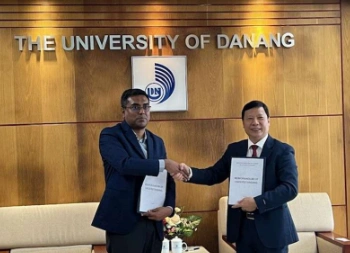
AIUB supports international students by providing housing assistance whenever required [2]. The university's International Support Center includes accommodation guidance among its services, helping international students, particularly those arriving from low- and lower-middle-income countries, find suitable housing and adapt to their new academic environment in Bangladesh [4].
In addition to housing assistance, the center provides visa and immigration guidance, orientation programmes, cultural adaptation support, and information about scholarships and financial aid [4]. These services contribute to a supportive transition for international students, helping them establish their living arrangements and focus on their academic experience at AIUB.
Financial Support for Affordable Student Living
AIUB promotes financial accessibility by offering scholarships, tuition fee waivers and income-generating opportunities that help students manage the costs associated with university life. By reducing tuition expenses and providing opportunities to earn additional income, these initiatives allow students and their families to allocate more financial resources to essential living expenses, including accommodation, food and transportation [3].
Comprehensive Scholarships and Financial Aid Programmes
AIUB's Scholarship and Financial Aid Policy encompasses a diverse range of financial support mechanisms designed to recognise academic achievement, promote inclusion and assist students facing financial constraints [5].
The main categories of support include:
| Type of financial support | Examples |
| Academic scholarships | Merit-based scholarships for freshmen, academic scholarships for regular students and National Talent scholarships [5] |
| Named full scholarships | The Dr. Anwarul Abedin Scholarship, covering 100% of tuition fees for eligible high-achieving female undergraduate students [5] |
| Inclusion scholarships | Financial support for students with disabilities and students from under-represented groups [5] |
| Extracurricular activity scholarships | Sports and club scholarships for students who demonstrate financial need [5] |
| Need-based financial aid | Tuition fee waivers based on students' financial circumstances [5] |
| Special tuition fee waivers | Benefits for freedom fighters' families, July Injured individuals, alumni, corporate-sponsored students, siblings, and university employees and their dependants [5] |
This comprehensive framework enables AIUB to address different student circumstances while promoting equal access to higher education and reducing the financial pressures associated with university attendance.
Full Scholarships for a Guaranteed Proportion of Students
In accordance with the Private University Act, AIUB ensures that at least 6% of its students receive full scholarships. This allocation includes 3% of students from freedom fighter families and another 3% from other eligible categories [5].
AIUB also provides specialised scholarship opportunities for female students, students with disabilities and other groups, reinforcing its commitment to inclusive education. These initiatives include full-tuition scholarships for eligible students who meet the established academic and character requirements [6].
By maintaining these scholarship provisions, AIUB strengthens financial accessibility and helps students pursue their education with reduced tuition-related financial burdens.
On-Campus Employment and Student Income Opportunities
AIUB provides temporary part-time employment opportunities on campus, enabling students to earn additional income while pursuing their academic programmes [3], [5]. These opportunities offer practical financial support and help students manage personal expenses alongside their studies.
Additionally, under the university's Volunteer Scheme, selected student volunteers receive nominal daily allowances for participating in certain university events [3]. This arrangement provides supplementary financial benefits while encouraging student engagement in institutional activities.
Free and Subsidised Services That Reduce Student Living Expenses
AIUB complements its accommodation and financial aid initiatives with essential services provided free of charge or at subsidised rates. These services help students manage everyday expenses, access essential support and maintain their well-being throughout their academic journey [3].
The university's student support services include:
| Service | Benefits for Students |
| Medical Center | Free medical consultations, healthcare services and emergency assistance for all students [3]. |
| Mental Health Support (wEvolve) | Free or subsidised counselling, psychoeducation and workshops addressing stress management, examination anxiety and emotional well-being [3]. |
| Food Assistance | Institutionalised food assistance programmes that support students' access to essential nutritional resources [3]. |
| Affordable Accommodation | Access to affordable residential options facilitated by AIUB's partnership with Super Hostel [3]. |
Together, these services form an integrated student support framework that addresses essential aspects of daily living, including healthcare, mental well-being, food access and accommodation. By facilitating access to these services at no cost or reduced rates, AIUB helps ease students' financial responsibilities, particularly those from economically disadvantaged backgrounds, and supports their continued participation in higher education [3].
References
| [1] | American International University-Bangladesh, “OnCampus – Accommodation Facilities for AIUB Students,” [Online]. Available: https://aiub.edu/oncampus. [Accessed 2026]. |
| [2] | American International University-Bangladesh, “International Students,” [Online]. Available: https://aiub.edu/admission/international-students. [Accessed 2026]. |
| [3] | American International University-Bangladesh, “Low-income Student Support,” [Online]. Available: https://aiub.edu/sustainability/sdg1/initiative/low-income-student-support. [Accessed 2026]. |
| [4] | American International University-Bangladesh, “Low or Lower-middle Income Countries Student Support,” [Online]. Available: https://aiub.edu/sustainability/sdg1/initiative/low-or-lower-middle-income-countries-student-support. [Accessed 2026]. |
| [5] | American International University-Bangladesh, “Scholarship (tuition fee waiver only) and Financial Aid Policy,” [Online]. Available: https://www.aiub.edu/admission/scholarships. [Accessed 2026]. |
| [6] | American International University-Bangladesh, “Financial Support for Students at AIUB,” [Online]. Available: https://www.aiub.edu/iqac/sdgs/aiub-sdg-activity-report-2023/sdg1-aiubactivityreportof2023/sdg-initiative/financial-support-for-students-at-aiub. [Accessed 2026]. |
SDG 11.4.6
TABLE OF CONTENTS
SDG 11.4.6: Does your university as a body prioritise pedestrian access on campus?
A Campus Designed for Pedestrian Mobility and Social Interaction
Open Architecture Integrated with Nature
Pedestrian Walkways Integrated with Green Spaces
Open Spaces for Social Interaction and Community Activities
Organized Vehicle Parking and Controlled Campus Access
Two-Storey Automated Underground Parking Facility
Dedicated Outdoor Parking Facilities
RFID-Based Vehicle Access Management
Safe, Secure and Inclusive Campus Access
Secure Pedestrian Entrances and Campus Monitoring
Institutional Support for People with Disabilities
SDG 11.4.6: Does your university as a body prioritise pedestrian access on campus?
A Campus Designed for Pedestrian Mobility and Social Interaction
Open Architecture Integrated with Nature
The American International University-Bangladesh (AIUB) campus features an open architectural design integrated with natural elements, creating a green environment that supports creativity, innovation and wellbeing [1]. Located in Kuratoli, Kuril, Dhaka, the campus combines contemporary academic facilities with landscaped outdoor areas and green open spaces [2]. Its design incorporates accessibility and sustainability as important considerations in the campus environment [2].
Pedestrian Walkways Integrated with Green Spaces
AIUB's campus landscape incorporates paved pedestrian pathways that connect its buildings, landscaped gardens and outdoor recreational areas [3]. These walkways extend across green spaces and are bordered by colourful flowering plants, providing an attractive environment for walking and movement between different campus facilities.
Additional landscape features enhance the campus environment and contribute to its recreational appeal [3], including:
- Landscaped fountain: An illuminated fountain with changing colours that enhances the visual appeal of the outdoor environment, particularly in the evening.
- Campus lake: A landscaped water feature with ornamental fish that contributes to the natural character of the campus.
The integration of pedestrian pathways, vegetation and water features creates an outdoor environment that encourages members of the university community to move around the campus on foot while enjoying its landscaped surroundings.
Open Spaces for Social Interaction and Community Activities
AIUB provides a variety of outdoor and shared spaces that encourage students to walk around the campus, interact with one another and participate in social and cultural activities [4]. These facilities include:
| Space | Description |
| Open-air Amphitheater | A venue with seating capacity for approximately 1,000 people, hosting cultural programmes, including stage performances and concerts [4]. |
| Student Zone | A shared area featuring lounge spaces, a cafeteria and food carts, providing convenient places for students to gather and socialize [4]. |
| Student Lounges | Designated lounges and social rooms distributed across the campus, offering spaces for relaxation and informal interaction [4]. |
Students regularly use the campus's outdoor and shared spaces for reading, brainstorming, socializing and relaxation [3]. The combination of interconnected walkways, landscaped areas and communal facilities supports a pedestrian-friendly campus environment where walking is part of everyday university life and outdoor spaces serve as important settings for social interaction.
Organized Vehicle Parking and Controlled Campus Access
AIUB supports pedestrian-oriented campus mobility by providing designated parking facilities and implementing a controlled vehicle access system. This approach organizes vehicle circulation and helps preserve outdoor areas for pedestrian movement, green spaces and community activities.
Two-Storey Automated Underground Parking Facility
AIUB provides a two-storey automated underground parking facility with a capacity of 160 vehicles [4]. By locating a substantial portion of campus parking underground, the university makes more effective use of its land while preserving surface areas for pedestrian pathways, landscaped spaces and outdoor activities.
Dedicated Outdoor Parking Facilities
In addition to its underground infrastructure, AIUB provides a designated outdoor parking area with capacity for another 210 vehicles [4]. The availability of specific parking facilities helps organize vehicle accommodation within the campus and supports the separation of parking areas from spaces used for pedestrian circulation.
Together, these facilities provide parking capacity for 370 vehicles:
| Parking facility | Capacity |
| Automated underground parking (two storeys) | 160 vehicles [4] |
| Designated outdoor parking area | 210 vehicles [4] |
| Total parking capacity | 370 vehicles |
RFID-Based Vehicle Access Management
AIUB uses an RFID-based automated system to manage vehicle entry and exit on campus [4]. The system identifies and regulates vehicle access, allowing only authorised vehicles to use the parking facilities [4].
This access management mechanism complements the university's designated parking infrastructure by supporting the orderly circulation of authorised vehicles. Combined with underground and designated outdoor parking, it contributes to a more organized campus environment and helps maintain outdoor spaces for pedestrian movement and university activities.
Safe, Secure and Inclusive Campus Access
Secure Pedestrian Entrances and Campus Monitoring
AIUB implements automated pedestrian access control to provide a secure and well-managed campus environment. Students, faculty members and university officials enter through automated flap gates and turnstile barriers equipped with facial recognition technology [4]. This contactless system enables identity verification and real-time synchronization across access control devices [4].
Campus security operates 24 hours a day, seven days a week, supported by CCTV surveillance, archway scanners, metal detectors and luggage screening systems [4]. These integrated security measures contribute to a controlled campus environment, supporting the safe movement of students, employees and visitors throughout university facilities.
Institutional Support for People with Disabilities
AIUB promotes an inclusive university environment by providing dedicated support services for students and employees with disabilities [4]. Students can coordinate their support requirements through the Office of Student Affairs, while employees receive assistance through the Office of Human Resources [4].
The university also has a dedicated Admission Policy for Students with Disability, establishing an institutional framework for facilitating access to higher education and supporting the participation of students with disabilities in university life [5]. These initiatives reflect AIUB's commitment to inclusion and equal opportunities within its academic and professional community.
Overview of Pedestrian-Oriented Campus Features
AIUB combines pedestrian-friendly outdoor spaces, designated vehicle parking, automated access management and institutional inclusion measures to support an organized and people-oriented campus environment.
| Feature | Contribution to the Campus Environment |
| Open architectural design and green spaces | Integrates academic facilities with landscaped outdoor areas and spaces for community activities [1], [2]. |
| Paved pedestrian walkways | Connects campus buildings and outdoor areas through landscaped walking routes [3]. |
| Underground parking (160 vehicles) | Accommodates vehicles below ground, making more effective use of surface areas [4]. |
| Dedicated outdoor parking (210 vehicles) | Concentrates vehicle parking in a designated area [4]. |
| RFID-based vehicle access control | Regulates vehicle entry and exit, restricting parking access to authorised vehicles [4]. |
| Facial-recognition pedestrian gates and 24/7 security | Combines automated identity verification and continuous security monitoring to support controlled campus access [4]. |
| Disability support services and dedicated admission policy | Establishes institutional support mechanisms for the inclusion and participation of people with disabilities [4], [5]. |
References
| [1] | American International University-Bangladesh, “Green Campus,” [Online]. Available: https://aiub.edu/oncampus/green-campus. [Accessed 2026]. |
| [2] | American International University-Bangladesh, “Campus Building Footprint, CO2 Emission and Race to Net Zero.,” [Online]. Available: https://www.aiub.edu/sustainability/aiub-campus-footprint-co2-emission-and-race-to-net-zero. [Accessed 2026]. |
| [3] | Dhaka Tribune, “Where art meets architecture,” [Online]. Available: https://www.dhakatribune.com/magazine/weekend-tribune/139596/where-art-meets-architecture. [Accessed 2026]. |
| [4] | American International University-Bangladesh, “OnCampus – Accommodation Facilities for AIUB Students,” [Online]. Available: https://aiub.edu/oncampus. [Accessed 2026]. |
| [5] | American International University-Bangladesh, “Admission Policy for Students with Disability,” [Online]. Available: https://www.aiub.edu/admission/admission-policy/aiub-admission-policy-for-students-with-disability. [Accessed 2026]. |
SDG 11.4.7
TABLE OF CONTENTS
Partnerships with Public Bodies on Housing and Urban Development
MoU with the Housing and Building Research Institute (HBRI)
Collaboration with National Higher Education and Accreditation Authorities
Institutional Commitment to Cooperation with Government and Local Organisations
Affordable Housing and Community Development: The Korail Project
Project Background and Objectives
Research and Knowledge Exchange on Affordable Housing
Community-Based Activities and Student Participation
National Recognition and Contribution to the SDGs
Research and Student Contributions to Sustainable Urban Planning
Research on Sustainable Urban Mobility and Traffic Management
SDG 11.4.7: Does your university as a body work with local authorities to address planning issues/development, including ensuring that local residents are able to access affordable housing?
Partnerships with Public Bodies on Housing and Urban Development
MoU with the Housing and Building Research Institute (HBRI)
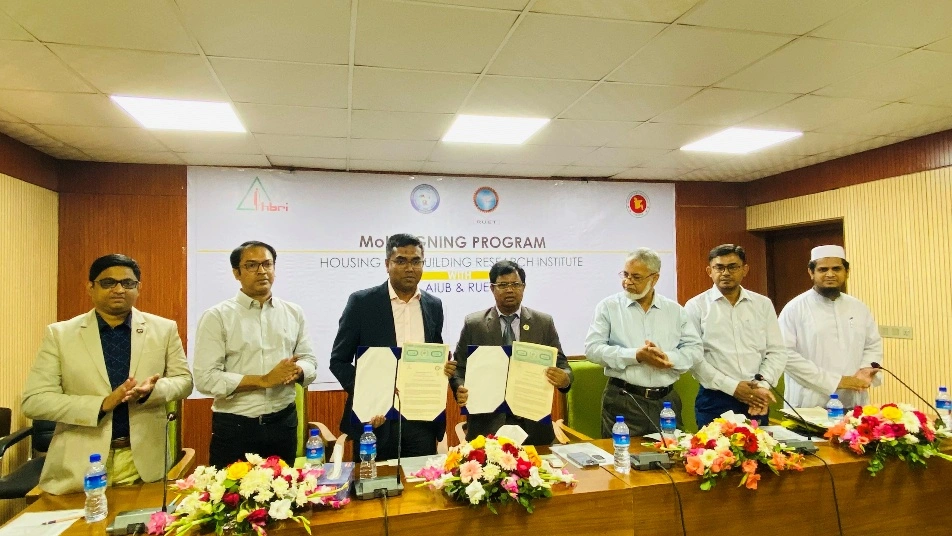
On 14 March 2023, AIUB signed a Memorandum of Understanding (MoU) with the Housing and Building Research Institute (HBRI), Bangladesh's national institution for housing and building research, at HBRI's premises [1]. The signing ceremony brought together AIUB's Pro-Vice Chancellor and Head of the Department of Architecture, alongside HBRI's Director General and senior researchers [1].
The agreement establishes a framework for long-term institutional cooperation in the following areas [1]:
- Research and development in architecture, engineering and construction.
- Exchange of information, resources and facilities.
- Implementation of joint projects and academic programmes.
Following the signing ceremony, architecture students from AIUB's Design Studios VIII and IX visited HBRI's laboratories, model houses and factory. During the visit, HBRI researchers introduced the students to the institute's innovations and ongoing work in housing and building technologies [1]. This collaboration strengthens the connection between architectural education, applied research and national expertise in housing development, while providing students with practical exposure to innovative construction solutions.
Collaboration with National Higher Education and Accreditation Authorities
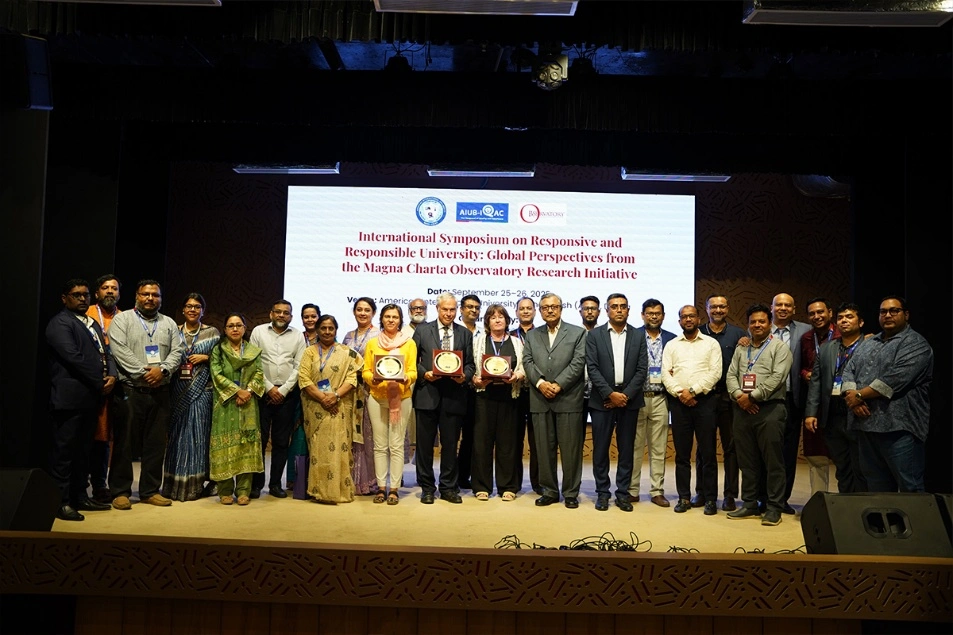
On 25 and 26 September 2025, AIUB hosted the International Symposium on Responsive and Responsible Universities in collaboration with the Magna Charta Observatory [2], [3]. The event brought together more than 150 participants and featured contributions from Bangladesh's University Grants Commission (UGC) and Bangladesh Accreditation Council (BAC), addressing the role of universities in strengthening their engagement with communities [3].
As part of the symposium, AIUB presented its community engagement project in Dhaka's Korail settlement, showcasing its institutional contribution to addressing community needs through university-led initiatives [2]. The event provided a platform for dialogue and knowledge exchange between AIUB, national higher education authorities and the wider academic community on the social responsibilities of universities and their contributions to local development.
Institutional Commitment to Cooperation with Government and Local Organisations
AIUB's Climate Action Plan establishes an institutional commitment to collaborate with local organisations, businesses, non-governmental organisations (NGOs) and government agencies to expand and strengthen its climate action initiatives [4]. The plan also promotes knowledge sharing and public engagement through workshops, seminars and public lectures, encouraging community participation in climate-related activities [4].
This commitment provides a framework for cooperation between AIUB and public and community stakeholders, supporting collective action and the exchange of knowledge to address environmental challenges and contribute to more sustainable communities.
Affordable Housing and Community Development: The Korail Project
AIUB contributes to affordable housing and community development through its engagement in Korail, an informal settlement in Dhaka. The initiative combines research, interdisciplinary student participation and community-based activities to support the social and economic development of women, children and other underserved residents.
Project Background and Objectives
AIUB is a signatory of the Magna Charta Universitatum 2020, a global declaration outlining the fundamental values and responsibilities of universities [5]. Under the Magna Charta Observatory's Responsive and Responsible University initiative, AIUB partnered with Mykolas Romeris University in Lithuania to implement a community development project in Korail. The initiative focuses on improving the social and economic conditions of women, children and underprivileged communities [5].
Recognising the challenges associated with population density and limited access to essential services in Korail, the project addresses several interconnected development priorities [5]. These include low-cost and sustainable housing, women's empowerment and educational opportunities for underprivileged children. By integrating housing-related activities with broader social development initiatives, AIUB adopts a community-oriented approach to improving living conditions.
Research and Knowledge Exchange on Affordable Housing
AIUB integrates academic research and international knowledge exchange into its community engagement activities. In June 2024, AIUB faculty members participated in the Magna Charta Observatory's Research Workshop II, presenting research on university-community engagement. The work included housing solutions for low-income groups and free educational opportunities for underprivileged children, using Korail as the research setting [6].
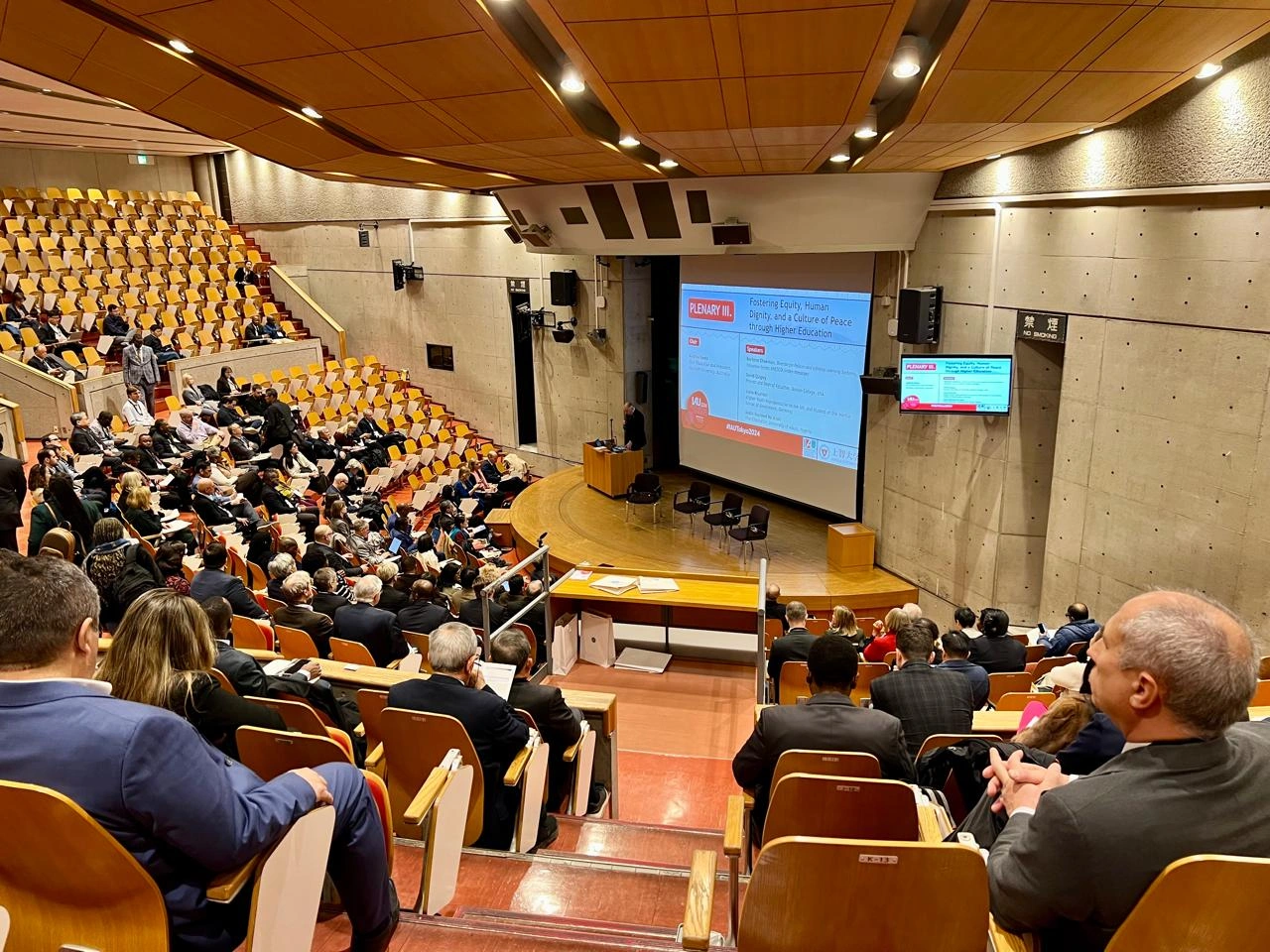
In November 2024, AIUB further presented its Korail case study at the International Association of Universities (IAU) 2024 Conference. The presentation addressed low-cost housing, women's empowerment, education and youth entrepreneurship as interconnected areas of community development [7].
These academic contributions strengthen AIUB's engagement with international university networks and promote the exchange of knowledge and experiences on affordable housing and inclusive community development.
Community-Based Activities and Student Participation
AIUB translates its research and institutional commitments into community-based activities through interdisciplinary student participation. The Korail initiative implemented several activities involving local residents, including [8]:
- Low-cost housing improvements: activities aimed at supporting more affordable and sustainable housing conditions.
- Adolescent health campaigns: community awareness activities addressing health and well-being.
- Creative moral education sessions: educational activities for children and young people.
- Women's economic empowerment: vocational training and peer-led microfinance support to encourage economic participation and entrepreneurship.
Approximately 40 AIUB students from the Departments of Architecture, Business Administration and Public Health participated in the initiative, alongside members of the Shomoy Club [8]. This interdisciplinary collaboration brought together academic knowledge and student engagement to address different dimensions of community development. The direct involvement of local residents also encouraged community participation in identifying and addressing their needs [8].
National Recognition and Contribution to the SDGs
In 2025, AIUB received the Best Sustainable Initiative – University award at the SDG Brand Champion Awards, organised by the Bangladesh Brand Forum, in recognition of its Korail project [8]. The initiative contributes to several Sustainable Development Goals, particularly SDG 11 (Sustainable Cities and Communities), by addressing affordable housing and supporting the development of underserved urban communities [8].
The project's progress and institutional recognition are reflected in the following milestones:
| Milestone | Date |
| Announcement of the Korail project and AIUB's Magna Charta Universitatum signatory status | April 2024 [5] |
| Presentation of research at the Magna Charta Observatory Research Workshop II | June 2024 [6] |
| Presentation of the Korail case study at the IAU 2024 Conference | November 2024 [7] |
| Recognition with the Best Sustainable Initiative – University award | 2025 [8] |
| Presentation of the project at the International Symposium in Dhaka | September 2025 [2] |
Research and Student Contributions to Sustainable Urban Planning
AIUB contributes to sustainable urban planning through academic research and student-led initiatives that address urban mobility, traffic management and the documentation of local communities and cultural heritage. These activities generate knowledge and practical insights relevant to policymakers, urban planners and other stakeholders involved in Dhaka's development.
Research on Sustainable Urban Mobility and Traffic Management
AIUB supports research on urban transportation challenges and sustainable mobility solutions through student-led academic studies.
- Dhaka Metro Rail (2025): AIUB students investigated the impact of MRT Line 6 on commuting patterns between Uttara and Motijheel. The study found that approximately 59.41% of passengers who previously relied on other forms of public transportation had shifted to the metro. It also reported a 66.67% reduction in average commuting time among the passengers studied [9]. The research highlights the contribution of mass rapid transit to improving urban mobility and provides insights relevant to the planning and development of Dhaka's public transportation network.
- Traffic management research: AIUB's study, Beyond the Gridlock, examines human-operated and automated traffic management systems in Dhaka through a comparative analysis. The research proposes a roadmap for sustainable traffic management solutions, providing insights for policymakers, urban planners and traffic management authorities working to address urban congestion [10].
Documentation of Local Communities and Built Heritage
AIUB promotes the documentation of local environments and cultural heritage as part of its academic engagement with communities.
On 15 July 2023, AIUB Media and Mass Communication students participated in a community development project in Jamdani Village, Bargaon, Sonargaon [12]. Working alongside architecture students from Bangladesh University of Engineering and Technology (BUET) and other professionals, they documented the village's built environment, cultural landscape and the stories of its traditional Jamdani weaving community [12].
This interdisciplinary initiative combined media documentation, architectural perspectives and community engagement to record the village's distinctive cultural and physical characteristics. The resulting documentation provides valuable knowledge for understanding local settlement patterns, preserving cultural identity and informing community-sensitive approaches to development and heritage conservation.
References
| [1] | American International University-Bangladesh, “AIUB & HBRI Sign MoU to Collaborate on Research and Development,” [Online]. Available: https://www.aiub.edu/aiub--hbri-sign-mou-to-collaborate-on-research-and-development. [Accessed 2026]. |
| [2] | American International University-Bangladesh, “AIUB Hosts International Symposium on Responsive and Responsible Universities in Collaboration with Magna Charta Observatory,” [Online]. Available: https://www.aiub.edu/aiub-hosts-international-symposium-on-responsive-and-responsible-universities-in-collaboration-with-magna-charta-observatory. [Accessed 2026]. |
| [3] | The Daily Star, “AIUB hosts International Symposium on Responsive and Responsible Universities in collaboration with Magna Charta Observatory,” [Online]. Available: https://epfs.thedailystar.net/TDS/2025/10/02/Bangladesh/CAM/5_06/81a6ca31fdf31d24_06.pdf. [Accessed 2026]. |
| [4] | American International University-Bangladesh, “AIUB Climate Action Plan,” [Online]. Available: https://www.aiub.edu/sustainability/aiub-climate-action-plan. [Accessed 2026]. |
| [5] | American International University-Bangladesh, “AIUB is a signatory of Magna Charta Universitatum (MCU),” [Online]. Available: https://aiub.edu/aiub-is-a-signatory-of-magna-charta-universitatum-mcu. [Accessed 2026]. |
| [6] | American International University-Bangladesh, “AIUB faculty members participated in Magna Charta Observatory Research Workshop II,” [Online]. Available: https://www.aiub.edu/aiub-faculty-members-participated-in-magna-charta-observatory-research-workshop-ii. [Accessed 2026]. |
| [7] | American International University-Bangladesh, “MCO project 'Responsible and Responsive Universities – A case study of AIUB' presented at IAU 2024 conference,” [Online]. Available: https://www.aiub.edu/mco-project-responsible-and-responsive-universities--a-case-study-of-aiub-presented-at-iau-2024-conference. [Accessed 2026]. |
| [8] | Dhaka Tribune , “AIUB wins 'Best Sustainable Initiative–University' at SDG Brand Champion Awards 2025,” [Online]. Available: https://www.dhakatribune.com/bangladesh/event/386478/aiub-wins-best-sustainable-initiative%E2%80%93university. [Accessed 2026]. |
| [9] | P. Roy, J. F. Ayshe, M. I. A. S. Arnob, and M. I. H. Bappy, “Impact of MRT Line 6 (Dhaka Metro Rail) on Commuter Modal Shift, Travel Time Reduction, and Future Expansion Prospects,” [Online]. Available: https://www.scribd.com/presentation/920262037/Final-Poster-Presentation. [Accessed 2026]. |
| [10] | The Business Standard, “AIUB students participates in community development project,” [Online]. Available: https://www.tbsnews.net/node/668526. [Accessed 2026]. |
SDG 11.4.8
TABLE OF CONTENTS
SDG 11.4.8: Does your university as a body build new buildings to sustainable standards?
Sustainable Design and Development of AIUB's Permanent Campus
Integrating Renewable Energy into Campus Planning
Renewable Energy Infrastructure and Operational Efficiency
Integration of Green Spaces into Campus Development
Campus Development and Sustainability Features
Institutional Standards for Sustainable Campus Development
Institutional Development of the Climate Action Plan
Environmental Standards for Buildings and Campus Infrastructure
Commitment to a Carbon-Neutral Campus
Environmental Monitoring, Climate Commitments and Sustainable Building Research
Monitoring the Campus Carbon Footprint
Commitment to the Race to Zero Campaign
Research Collaboration with the Housing and Building Research Institute
Sustainable Construction Research and Technical Collaboration
Collaboration with the Housing and Building Research Institute
Integrating Research and Innovation into Sustainable Campus Development
SDG 11.4.8: Does your university as a body build new buildings to sustainable standards?
Sustainable Design and Development of AIUB's Permanent Campus
A Green Campus by Design
AIUB's permanent campus was designed to integrate modern academic infrastructure with environmental sustainability and natural surroundings. Recognised as one of the country's picturesque green campuses, it combines state-of-the-art technology with extensive green spaces [1]. Its open architectural design establishes a close connection with nature, creating an environment that supports creativity, innovation and wellbeing [2]. The campus reflects AIUB's commitment to combining contemporary architectural design with environmentally conscious development [3].
Integrating Renewable Energy into Campus Planning
AIUB incorporated renewable energy considerations into the early planning of its permanent campus, exploring opportunities to integrate clean energy technologies and sustainable mobility into its infrastructure:
- 2013 – Renewable Energy Planning: A study presented at the International Conference on Engineering Research, Innovation and Education 2013 assessed the energy requirements of AIUB's proposed permanent campus, estimating an expected load of approximately 621 kW. The study evaluated solar, wind and biogas as potential renewable energy sources and compared available technologies to identify efficient and cost-effective solutions [4].
- 2017 – Solar-Powered Electric Mobility: AIUB researchers, in collaboration with international partners, investigated the potential use of electric vehicles at the proposed permanent campus, supported by photovoltaic energy systems. The research explored opportunities to promote smart mobility and sustainable campus development [5].
These initiatives demonstrate AIUB's consideration of renewable energy integration and environmentally responsible infrastructure during the planning and development of its permanent campus.
Renewable Energy Infrastructure and Operational Efficiency
AIUB continues to advance the environmental performance of its permanent campus by incorporating renewable energy and energy-efficiency measures. The campus generates more than 130 kW of solar energy capacity, contributing to the use of clean energy and the reduction of its carbon footprint [6], [7]. Additional initiatives focus on transitioning towards renewable and low-emission energy sources and implementing energy-efficient infrastructure across the campus [8].
Integration of Green Spaces into Campus Development
The permanent campus incorporates multiple gardens and diverse natural features throughout its grounds, integrating green spaces into the academic environment [6]. Its urban setting combines contemporary educational facilities with landscaped open areas, supporting an accessible and environmentally conscious campus environment [8].
Campus Development and Sustainability Features
| Feature | Detail |
| Total campus area | 44,043.71 m² [8] |
| Total building floor area | 55,043 m² [8] |
| Solar energy capacity | More than 130 kW [6] |
| Green infrastructure | Multiple gardens and diverse natural features across the campus [6] |
Institutional Standards for Sustainable Campus Development
AIUB's Climate Action Plan establishes an institutional framework for integrating environmental sustainability into campus infrastructure, resource management and long-term development. The plan identifies key priorities for improving building efficiency, conserving natural resources and incorporating environmentally responsible practices into campus development [9].
Institutional Development of the Climate Action Plan
Developed at the request of AIUB's Board of Trustees, the Climate Action Plan reflects the university's institutional commitment to coordinated climate action [9]. AIUB established a Climate Action Task Force comprising faculty members, staff and students to evaluate potential measures, engage the university community and formulate recommendations [9]. The planning process incorporates preliminary targets, assessments of proposed actions, financial considerations and periodic target revisions, providing a structured approach to implementing sustainability initiatives [9].
Environmental Standards for Buildings and Campus Infrastructure
The Climate Action Plan establishes environmental priorities that guide AIUB's approach to campus infrastructure, including energy efficiency, water conservation, sustainable construction materials and green infrastructure [9].
| Area | Institutional sustainability guidelines |
| Energy efficiency | Prioritise energy-efficient appliances, lighting, heating and cooling systems, alongside investments in renewable energy technologies such as solar panels [9]. |
| Water conservation | Incorporate water-efficient fixtures, monitor consumption and encourage responsible water use across campus facilities [9]. |
| Sustainable construction materials and green infrastructure | Promote environmentally friendly construction materials, develop green spaces and plant diverse tree species to enhance campus biodiversity [9]. |
| Waste management | Encourage recycling and composting programmes while reducing the use of single-use plastics [9]. |
The emphasis on environmentally responsible construction materials and energy-efficient infrastructure establishes sustainability considerations as part of AIUB's institutional approach to campus development. Water conservation and green infrastructure further support the integration of environmental considerations into the planning and management of university facilities [9].
Commitment to a Carbon-Neutral Campus
AIUB advances its long-term climate objectives through collaboration with Krishi Shwapno, a youth-led agri-tech and cleantech start-up, on initiatives supporting the development of a future carbon-neutral campus [9]. This commitment aligns with AIUB's participation in the Race to Zero initiative and its long-term objective of progressively achieving net-zero carbon emissions [9].
Environmental Monitoring, Climate Commitments and Sustainable Building Research
Monitoring the Campus Carbon Footprint
AIUB has undertaken a strategic initiative to assess, monitor and reduce its institutional carbon footprint [8]. The assessment examines emissions from 2022 and includes projections for 2024, supporting the university's efforts to evaluate its environmental performance and align campus sustainability initiatives with Bangladesh's national environmental objectives and the Sustainable Development Goals [8]. This monitoring framework provides valuable information for assessing the environmental impact of campus infrastructure and identifying opportunities to improve the energy and resource efficiency of university facilities.
Commitment to the Race to Zero Campaign
AIUB has joined the Race to Zero global campaign, reinforcing its institutional commitment to accelerating climate action and achieving net-zero carbon emissions [10]. The campaign promotes science-based near-term emissions reduction targets, transparent climate action plans and comprehensive reductions across emission scopes [10]. This commitment strengthens AIUB's long-term approach to environmental sustainability and the progressive reduction of emissions associated with its institutional activities.
Research Collaboration with the Housing and Building Research Institute
In March 2023, AIUB signed a Memorandum of Understanding (MoU) with the Housing and Building Research Institute (HBRI) to establish long-term cooperation in research and development across architecture, engineering and construction [11]. The agreement promotes the exchange of technical information and resources, as well as the development of collaborative research projects [11].
As part of this collaboration, AIUB architecture students visited HBRI's laboratories, model houses and manufacturing facilities, gaining exposure to building technologies, construction innovations and applied research [11]. This partnership strengthens the connection between AIUB's academic programmes and Bangladesh's national expertise in housing and building research, providing opportunities to explore innovative and environmentally responsible construction practices.
Sustainable Construction Research and Technical Collaboration
AIUB strengthens its institutional approach to sustainable campus development by fostering collaboration between academic programmes and specialised research institutions. These partnerships create opportunities to explore environmentally responsible construction technologies, innovative building materials and sustainable architectural practices.
Collaboration with the Housing and Building Research Institute
AIUB's Memorandum of Understanding (MoU) with the Housing and Building Research Institute (HBRI), signed in March 2023, establishes a framework for long-term cooperation in architecture, engineering and construction research and development [11]. The partnership promotes technical knowledge exchange, access to research resources and the development of joint projects addressing building technologies and construction innovation [11].
AIUB architecture students have also visited HBRI's laboratories, model houses and manufacturing facilities, gaining practical exposure to construction technologies and applied building research [11]. These academic activities strengthen students' understanding of building innovation and provide opportunities to engage with research relevant to sustainable construction practices.
Integrating Research and Innovation into Sustainable Campus Development
AIUB's collaboration with HBRI complements the environmental priorities established in its Climate Action Plan, particularly the promotion of environmentally friendly construction materials, energy-efficient infrastructure and green campus development [9], [11]. By connecting architectural education and construction research with its institutional sustainability objectives, AIUB supports the development of knowledge and technical capabilities relevant to more environmentally responsible building practices.
References
| [1] | American International University-Bangladesh, “Sustainability at AIUB,” [Online]. Available: https://www.aiub.edu/sustainability. [Accessed 2026]. |
| [2] | American International University-Bangladesh, “Green Campus,” [Online]. Available: https://aiub.edu/oncampus/green-campus. [Accessed 2026]. |
| [3] | The Daily Star, “Pioneering innovation and sustainable academic growth,” [Online]. Available: https://www.thedailystar.net/supplements/universities-tomorrow/news/pioneering-innovation-and-sustainable-academic-growth-4233381. [Accessed 2026]. |
| [4] | in Proc. Int. Conf. Engineering Research, Innovation and Education (ICERIE), , “Planning with Combo-Renewable Resources: A Study on AIUB's Future Campus,” [Online]. Available: https://unten.academia.edu/SharjilRafa. [Accessed 2026]. |
| [5] | N. Chowdhury, C. A. Hossain, S. R. Zishan, M. Brenna, and M. Longo, “Eco-friendly transportation system in proposed permanent campus of American International University-Bangladesh,” [Online]. Available: https://dspace.aiub.edu/jspui/bitstream/123456789/1501/1/18.pdf. [Accessed 2026]. |
| [6] | American International University-Bangladesh, “Why Study Here,” [Online]. Available: https://aiub.edu/about/Why-Study-Here. [Accessed 2026]. |
| [7] | American International University-Bangladesh, “SDG 7: Affordable and Clean Energy,” [Online]. Available: https://www.aiub.edu/sustainability/sdg7. [Accessed 2026]. |
| [8] | American International University-Bangladesh, “Campus Building Footprint, CO2 Emission and Race to Net Zero.,” [Online]. Available: https://www.aiub.edu/sustainability/aiub-campus-footprint-co2-emission-and-race-to-net-zero. [Accessed 2026]. |
| [9] | American International University-Bangladesh, “AIUB Climate Action Plan,” [Online]. Available: https://www.aiub.edu/sustainability/aiub-climate-action-plan. [Accessed 2026]. |
| [10] | American International University-Bangladesh, “AIUB's Commitment to Race to Zero: A Step Towards Environmental Sustainability,” [Online]. Available: https://www.aiub.edu/aiubs-commitment-to-race-to-zero-a-step-towards-environmental-sustainability. [Accessed 2026]. |
| [11] | American International University-Bangladesh, “AIUB & HBRI Sign MoU to Collaborate on Research and Development,” [Online]. Available: https://www.aiub.edu/aiub--hbri-sign-mou-to-collaborate-on-research-and-development. [Accessed 2026]. |
SDG 11.4.9
TABLE OF CONTENTS
Efficient Use of Developed Urban Land
Early Development within Existing Urban Buildings
Permanent Campus Integrated into Dhaka's Urban Fabric
Compact and Vertical Campus Development
Environmental Planning and Green Campus Development
Environmental and Social Impact Assessments
Green Infrastructure and Nature-Integrated Campus Design
Environmental Standards under the Climate Action Plan
Research, Institutional Partnerships and Environmental Monitoring
Research on Sustainable Campus Transportation
Institutional Partnership with the Housing and Building Research Institute
SDG 11.4.9: Does your university as a body build on brownfield sites, where possible (brownfield sites are those where there has been previous, recent building)?
Efficient Use of Developed Urban Land
AIUB's campus development reflects an approach to making effective use of land within Dhaka's established urban environment. From its initial facilities in Mohakhali and Banani to its permanent campus in Kuril, the university has developed its academic infrastructure within the city's urban fabric, combining vertical construction with the strategic use of available space.
Early Development within Existing Urban Buildings
AIUB initially operated in Mohakhali before relocating to Banani, where regular academic classes commenced in 1995 [1]. For more than two decades, the university conducted its academic activities in a group of campus buildings along Kemal Ataturk Avenue in Banani, accommodating approximately 5,000 students [2].
This initial development enabled AIUB to establish and expand its academic operations within an already developed urban area, making use of existing buildings and the surrounding city infrastructure.
Permanent Campus Integrated into Dhaka's Urban Fabric
The foundation stone of AIUB's permanent campus at Kuril was laid by the Minister of Education on 27 March 2012 [3]. The university subsequently relocated to its permanent campus on Kuratoli Road, Kuril, Khilkhet, Dhaka, in 2017 [1].
Located in Kuratoli mouza, within Dhaka North and adjacent to the established Bashundhara residential area, the campus forms part of a developed urban setting [4]. Its location connects the university with the surrounding residential community and benefits from the existing urban road network and infrastructure.
Compact and Vertical Campus Development
AIUB's permanent campus was planned on approximately 22 bigha (7.26 acres) of land [4]. The development incorporates four principal buildings: the Academic, Library, Administrative and Laboratory complexes, interconnected by internal roads [4].
A key feature of this design is the 11-storey Academic Building, which also incorporates two basement parking levels [4]. The vertical configuration makes efficient use of the available urban land by accommodating academic facilities across multiple floors, while underground parking provides additional functional space without requiring equivalent surface-level development.
This spatial arrangement supports the university's ability to accommodate diverse academic and administrative functions within a compact urban site, while preserving opportunities for landscaped and green areas.
Key Characteristics of AIUB's Permanent Campus
| Feature | Details |
| Location | Kuratoli, Kuril, Dhaka North, adjacent to the Bashundhara residential area [4] |
| Urban setting | Established urban area [1] |
| Planned land area | Approximately 22 bigha (7.26 acres) [4] |
| Main buildings | Academic, Library, Administrative and Laboratory complexes [4] |
| Tallest building | 11-storey Academic Building with two basement parking floors [4] |
| Foundation stone laid | 27 March 2012 [3] |
| Relocation to permanent campus | 2017 [1] |
Environmental Planning and Green Campus Development
AIUB incorporates environmental considerations into its campus planning and development, combining environmental and social assessments, green infrastructure and institutional sustainability standards. These initiatives support the responsible use of urban land while creating a healthy and environmentally conscious academic environment.
Environmental and Social Impact Assessments
On 16 March 2014, AIUB signed an agreement with the Center for Environmental and Geographic Information Services (CEGIS) to conduct a needs assessment, an Environmental Impact Assessment (EIA) and a Social Impact Assessment (SIA) for its permanent campus development [4].
These assessments addressed the environmental and social implications of the campus project, incorporating considerations related to the surrounding land, natural resources and neighbouring communities into the development process. This approach reflects AIUB's commitment to integrating environmental protection and community considerations into campus planning.
The campus development plan also incorporates tree belts along the site boundaries, creating green buffer zones between the university complex and its surrounding areas [4]. These vegetated areas contribute to the integration of natural elements into the campus layout while providing a transition between the university facilities and the neighbouring urban environment.
Green Infrastructure and Nature-Integrated Campus Design
AIUB's permanent campus combines modern academic infrastructure with extensive green spaces and natural features [5]. Its open architectural design integrates nature into the university environment, providing students, faculty and staff with surroundings that support creativity, innovation and wellbeing [6].
The campus incorporates several landscaped and natural features, including a large green field, flower-lined pedestrian pathways, a fountain and a campus lake [7]. These elements contribute to a greener campus environment and demonstrate how urban institutional land can accommodate academic facilities alongside landscaped areas and natural features.
By integrating green infrastructure into its campus design, AIUB promotes a more sustainable and welcoming urban learning environment.
Environmental Standards under the Climate Action Plan
AIUB's Climate Action Plan establishes sustainability principles that guide campus development, infrastructure management and environmental performance [8]. These principles include:
- Environmentally friendly construction materials: prioritising sustainable materials in building and infrastructure projects [8].
- Green space development: incorporating and maintaining green areas across the campus [8].
- Biodiversity enhancement: planting diverse tree species to strengthen campus vegetation and support local biodiversity [8].
- Energy-efficient infrastructure: promoting efficient appliances, lighting and cooling systems, alongside renewable energy solutions such as solar panels [8].
These institutional guidelines connect responsible land management with broader environmental objectives. Combined with campus greening initiatives and the university's net-zero carbon commitments, they reinforce AIUB's approach to developing and managing its urban campus in an environmentally responsible manner [9].
Research, Institutional Partnerships and Environmental Monitoring
AIUB complements its campus development and environmental management initiatives with research, institutional collaborations and monitoring activities. These efforts strengthen the university's capacity to promote sustainable approaches to infrastructure planning, construction and building management.
Research on Sustainable Campus Transportation
AIUB researchers conducted a study on an eco-friendly transportation system for the proposed permanent campus, exploring the integration of electric vehicles with solar energy [10]. The research addressed sustainable mobility solutions for the university's urban environment, highlighting opportunities to combine renewable energy technologies with lower-emission transportation systems.
This research reflects AIUB's commitment to incorporating environmental considerations into campus planning and exploring innovative approaches to reducing the environmental impact of university operations.
Institutional Partnership with the Housing and Building Research Institute
In March 2023, AIUB signed a Memorandum of Understanding (MoU) with the Housing and Building Research Institute (HBRI), establishing a framework for long-term cooperation in research and development across architecture, engineering and construction [11].
As part of this collaboration, AIUB architecture students visited HBRI's laboratories, model houses and factory, gaining direct exposure to innovative building technologies, construction practices and research applications [11].
The partnership strengthens the connection between academic education and applied research in the built environment, providing opportunities to explore innovative approaches to architecture, construction and sustainable infrastructure development.
Monitoring the Environmental Footprint of Campus Buildings
AIUB has undertaken an initiative to assess, monitor and reduce the carbon footprint associated with its campus buildings [12]. This initiative supports the systematic evaluation of building-related emissions and provides an institutional basis for identifying opportunities to improve environmental performance.
By monitoring the environmental footprint of its infrastructure, AIUB reinforces its commitment to responsible building management, energy efficiency and the continuous improvement of campus sustainability.
References
| [1] | Wikipedia, “American International University-Bangladesh,” [Online]. Available: https://en.wikipedia.org/wiki/American_International_University-Bangladesh. [Accessed 2026]. |
| [2] | University Admission, “American International University,” [Online]. Available: https://univarsityadmission.blogspot.com/2008/10/american-international-university.html. [Accessed 2026]. |
| [3] | The Daily Star, “Permanent campus of AIUB,” [Online]. Available: https://www.thedailystar.net/node/915145. [Accessed 2026]. |
| [4] | Center for Environmental and Geographic Information Services (CEGIS), “CEGIS to conduct EIA/SIA for AIUB,” [Online]. Available: https://www.cegisbd.com/. [Accessed 2026]. |
| [5] | American International University-Bangladesh, “SDGs,” [Online]. Available: https://www.aiub.edu/iqac/sdgs. [Accessed 2026]. |
| [6] | American International University-Bangladesh, “Green Campus,” [Online]. Available: https://aiub.edu/oncampus/green-campus. [Accessed 2026]. |
| [7] | Dhaka Tribune, “Where art meets architecture,” [Online]. Available: https://www.dhakatribune.com/magazine/weekend-tribune/139596/where-art-meets-architecture. [Accessed 2026]. |
| [8] | American International University-Bangladesh, “AIUB Climate Action Plan,” [Online]. Available: https://www.aiub.edu/sustainability/aiub-climate-action-plan. [Accessed 2026]. |
| [9] | The Daily Star, “Pioneering innovation and sustainable academic growth,” [Online]. Available: https://www.thedailystar.net/supplements/universities-tomorrow/news/pioneering-innovation-and-sustainable-academic-growth-4233381. [Accessed 2026]. |
| [10] | N. Chowdhury, C. A. Hossain, S. R. Zishan, M. Brenna, and M. Longo, “Eco-friendly transportation system in proposed permanent campus of American International University-Bangladesh,” [Online]. Available: https://dspace.aiub.edu/jspui/bitstream/123456789/1501/1/18.pdf. [Accessed 2026]. |
| [11] | American International University-Bangladesh, “AIUB & HBRI Sign MoU to Collaborate on Research and Development,” [Online]. Available: https://www.aiub.edu/aiub--hbri-sign-mou-to-collaborate-on-research-and-development. [Accessed 2026]. |
| [12] | American International University-Bangladesh, “Campus Building Footprint, CO2 Emission and Race to Net Zero.,” [Online]. Available: https://www.aiub.edu/sustainability/aiub-campus-footprint-co2-emission-and-race-to-net-zero. [Accessed 2026]. |