


TABLE OF CONTENTS
Monitoring Transportation-Related Emissions: AIUB's Greenhouse Gas Inventory
Greenhouse Gas Inventory Framework
Greenhouse Gas Emissions: 2022–2024
Supporting Sustainable Transportation Planning
Institutional Targets and Commitments for Carbon Reduction
Advancing Towards Net-Zero Carbon
Reducing the University's Carbon Footprint
Implementing Climate Action Across the Campus
Climate Action Plan: Setting, Evaluating and Revising Targets
Campus Infrastructure Supporting Walking
SDG 11.4.1: Does your university as a body measure and set targets for more sustainable commuting (walking, cycling or other non-motorized transport, vanpools, carpools, shuttlebus or public transportation, motorcycle, scooter or moped, or electric vehicles)?
Monitoring Transportation-Related Emissions: AIUB's Greenhouse Gas Inventory
 |
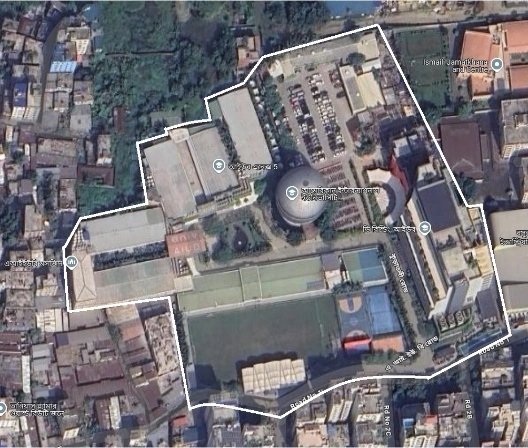 |
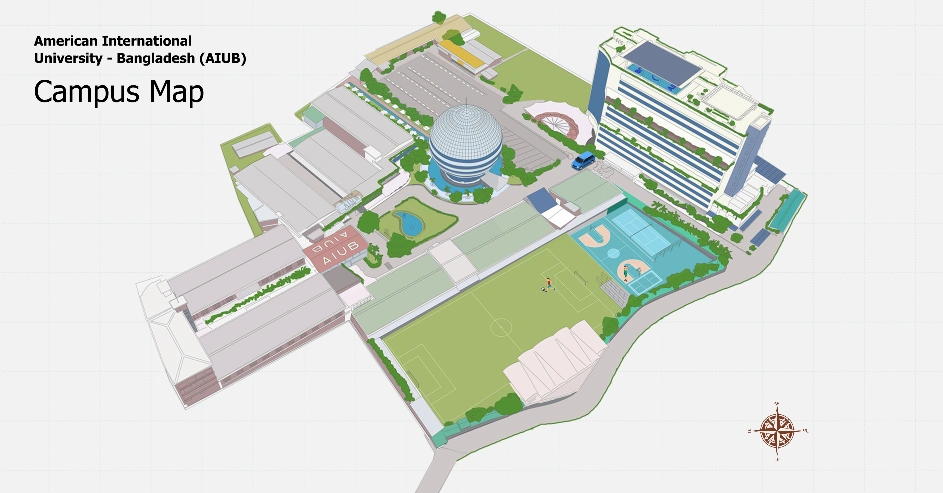
AIUB has implemented a strategic approach to assessing and monitoring its institutional carbon footprint, incorporating emissions associated with university operations and the daily commuting of students and staff [1]. This inventory provides a framework for identifying major emission sources, evaluating their environmental impact and informing the university's sustainability planning.
Greenhouse Gas Inventory Framework
AIUB's greenhouse gas inventory follows an internationally recognised framework that categorises emissions into three scopes, providing a comprehensive overview of the university's direct and indirect environmental impact [1].
| Scope | Emission sources covered by AIUB |
| Scope 1 | Direct emissions from university-owned or controlled sources, including institutional vehicles and fuel combustion [1]. |
| Scope 2 | Indirect emissions associated with purchased electricity [1]. |
| Scope 3 | Other indirect emissions, including student and staff commuting, waste generation and procurement activities [1]. |
Transportation is incorporated into the inventory through two categories: university-operated vehicles are included in Scope 1, while the daily commuting of students and staff is accounted for under Scope 3 [1]. Both institutional and private transportation are recognised as significant contributors to AIUB's overall greenhouse gas emissions.
Greenhouse Gas Emissions: 2022–2024
AIUB's inventory provides annual emissions assessments, covering the 2022 and 2023 reporting periods and including projections for 2024 [1]. The results are presented below:
| Year | Scope 1 (tCO₂e) | Scope 2 (tCO₂e) | Scope 3 (tCO₂e) | Total (tCO₂e) |
| 2022 | 241,826.41 | 1,702,655.32 | 523,134.68 | 2,467,616.40 |
| 2023 | 235,000.00 | 1,620,000.00 | 510,000.00 | 2,365,000.00 |
| 2024 (projected) | 228,000.00 | 1,580,000.00 | 495,000.00 | 2,303,000.00 |
The inventory indicates a projected reduction of approximately 5.4% in Scope 3 emissions between 2022 and 2024, alongside a projected 6.7% decrease in total greenhouse gas emissions. These figures demonstrate AIUB's systematic approach to monitoring its environmental footprint and tracking changes across its main emission categories [1].
Supporting Sustainable Transportation Planning
The inclusion of student and staff commuting in AIUB's greenhouse gas inventory establishes an institutional basis for understanding the environmental implications of daily transportation choices. By identifying commuting as part of its indirect emissions, AIUB incorporates transportation-related environmental impacts into its broader sustainability assessment [1].
This monitoring framework also provides valuable information to support the development and evaluation of sustainable transportation objectives, helping align campus mobility planning with the university's wider environmental commitments. AIUB further reports a reduction in its carbon emissions over the 2020–2024 period, reflecting its continued attention to institutional environmental performance [2].
Institutional Targets and Commitments for Carbon Reduction
AIUB has established institutional commitments to reduce its greenhouse gas emissions and advance towards carbon neutrality. These commitments provide a strategic framework for addressing the university's environmental footprint, including emissions associated with campus operations and student and staff commuting.
Race to Zero Commitment
AIUB has committed to the Race to Zero campaign, a global initiative that mobilises businesses, cities, regions and institutions, including educational organisations, to accelerate climate action [3].
The campaign encourages participating institutions to establish science-based interim targets, implement transparent action plans and reduce emissions across all scopes, with the collective ambition of halving global emissions by 2030 and achieving net-zero emissions [3].
By embracing this commitment, AIUB incorporates both direct and indirect emissions into its broader climate ambitions. This includes Scope 3 emissions associated with the daily commuting of students and staff, which are recognised and monitored as part of the university's greenhouse gas inventory [1], [3].
Advancing Towards Net-Zero Carbon
Achieving net-zero carbon is one of AIUB's key sustainability objectives [4]. The university has outlined strategies to progressively reduce the greenhouse gas emissions associated with its operations and advance towards a future carbon-neutral campus.
As part of this commitment, AIUB collaborates with Krishi Shwapno, a youth-led agri-tech and cleantech start-up, on climate action initiatives supporting its ambition to develop a carbon-neutral campus [4]. This collaboration reinforces the university's commitment to integrating environmental sustainability into its institutional development and climate strategy.
Reducing the University's Carbon Footprint
The reduction of the campus carbon footprint is among AIUB's recognised sustainability milestones [5]. This objective reflects the university's broader commitment to improving its environmental performance and progressively reducing the emissions associated with its activities.
AIUB's pursuit of net-zero carbon initiatives further strengthens this direction, positioning environmental responsibility and carbon reduction as important components of its institutional sustainability agenda [6]. The inclusion of commuting emissions in the university's greenhouse gas inventory also supports the assessment of transportation-related impacts within this broader commitment [1].
Implementing Climate Action Across the Campus
AIUB translates its environmental commitments into institutional action through its Climate Action Plan, campus infrastructure and community engagement. These initiatives support the university's broader efforts to reduce its environmental footprint and promote sustainable practices across its campus.
Climate Action Plan: Setting, Evaluating and Revising Targets
AIUB's Climate Action Plan places the development of a greener and more sustainable campus at the centre of its institutional environmental strategy [4]. The plan adopts a continuous improvement approach based on four main stages:
1. Establishing preliminary targets: defining initial goals for reducing greenhouse gas emissions [4].
2. Evaluating implemented measures: assessing the effectiveness of actions undertaken to achieve these goals [4].
3. Assessing financial implications: calculating the financial impact associated with each measure [4].
4. Reviewing and refining targets: adjusting objectives based on implementation results and feedback from students, faculty, staff and other stakeholders [4].
The plan is designed to evolve in response to technological developments and emerging best practices [4]. Its participatory and iterative approach supports the continuous assessment of AIUB's environmental initiatives and provides a framework for strengthening its sustainability commitments.
Combined with the university's greenhouse gas inventory, this planning framework supports the monitoring of emissions across different scopes, including those associated with student and staff commuting [1], [4].
Campus Infrastructure Supporting Walking
AIUB's permanent campus is located in Kuratoli, Kuril, Dhaka, providing a university setting connected to the surrounding urban environment [1]. Within the campus, paved pedestrian pathways lined with flowers connect academic buildings and open spaces, creating an accessible and pleasant environment for walking [7].
This pedestrian infrastructure facilitates movement between campus facilities on foot and contributes to a campus environment that supports active and environmentally friendly mobility.
Engaging the University Community in Climate Action
AIUB's Climate Action Plan promotes community participation as an essential component of its environmental strategy [4]. Its approach encompasses three complementary areas:
- Student climate leadership: student ambassadors receive training through university clubs to lead environmental awareness campaigns and promote sustainable initiatives within the university community [4].
- Collaborative partnerships: AIUB engages with local organisations, businesses, NGOs and government agencies to expand the reach and impact of its climate initiatives [4].
- Environmental outreach and education: workshops, seminars and public lectures disseminate environmental knowledge and encourage active participation in climate action [4].
The AIUB Environment Club further contributes to these efforts by organising environmental rallies, seminars and awareness campaigns for students and the wider community [8]. These activities strengthen environmental awareness, encourage collective responsibility and support the integration of sustainable practices into university life.
References
| [1] | American International University-Bangladesh, “Campus Building Footprint, CO2 Emission and Race to Net Zero.,” [Online]. Available: https://www.aiub.edu/sustainability/aiub-campus-footprint-co2-emission-and-race-to-net-zero. [Accessed 2026]. |
| [2] | American International University-Bangladesh, “SDG 13: Climate Action.,” [Online]. Available: https://www.aiub.edu/sustainability/sdg13. [Accessed 2026]. |
| [3] | American International University-Bangladesh, “AIUB's Commitment to Race to Zero: A Step Towards Environmental Sustainability,” [Online]. Available: https://www.aiub.edu/aiubs-commitment-to-race-to-zero-a-step-towards-environmental-sustainability. [Accessed 2026]. |
| [4] | American International University-Bangladesh, “AIUB Climate Action Plan,” [Online]. Available: https://www.aiub.edu/sustainability/aiub-climate-action-plan. [Accessed 2026]. |
| [5] | American International University-Bangladesh, “AIUB Sustainability Policy on Donation and Funding.,” [Online]. Available: https://aiub.edu/administration/institutional-policy/aiub-sustainability-policy-on-donation-and-funding-. [Accessed 2026]. |
| [6] | The Daily Star, “Pioneering innovation and sustainable academic growth,” [Online]. Available: https://www.thedailystar.net/supplements/universities-tomorrow/news/pioneering-innovation-and-sustainable-academic-growth-4233381. [Accessed 2026]. |
| [7] | Dhaka Tribune, “Where art meets architecture,” [Online]. Available: https://www.dhakatribune.com/magazine/weekend-tribune/139596/where-art-meets-architecture. [Accessed 2026]. |
| [8] | American International University-Bangladesh, “AIUB Environment Club.,” [Online]. Available: https://www.aiub.edu/oncampus/clubs/aiub-environment-club. [Accessed 2026]. |