


TABLE OF CONTENTS
Recognition of Freedom of Association and Collective Bargaining
Institutional Recognition of Employees' Rights
Inclusion of Women and International Employees
Protection Through Non-Discriminatory Employment Practices
Legal Framework Supporting Employees' Rights
Constitutional Protection of Freedom of Association
International Labour Organization (ILO) Conventions
Institutional Platforms for Employee Association and Representation
AIUB Network of Excellence (ANOE)
Women in the Power Sector Professional Network (WePOWER)
Diversity and Equality Committee
Equality, Diversity and Inclusion (EDI) Center
Employee Grievance, Consultation and Protection Mechanisms
Employment Practice Appeal Process
Complaint Committee and Protection Against Sexual Harassment
SDG 8.2.2: Does your university as a body recognise unions & labour rights (freedom of association & collective bargaining) for all, including women & international staff?
Recognition of Freedom of Association and Collective Bargaining
Institutional Recognition of Employees' Rights
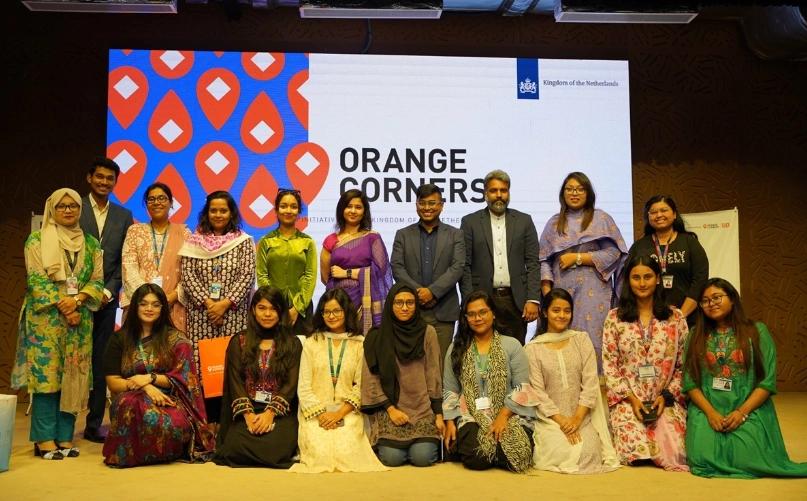
AIUB recognises and supports the rights of all employees, including women and international staff, to freely associate and engage in collective bargaining [1]. This commitment is also reflected in the University's SDG activities, which reaffirm its support for employees' freedom to form associations and participate in collective bargaining [2].
By recognising these rights, AIUB provides an institutional framework in which faculty and staff can organise around their professional interests, express shared concerns and engage in collective representation. This commitment reinforces employees' participation and promotes an inclusive working environment.
Inclusion of Women and International Employees
AIUB extends its commitment to freedom of association to women and international employees, ensuring that these groups are explicitly recognised within its institutional framework [1].
Women. All women at AIUB, including students, faculty members and administrative employees, are members of the AIUB Women Forum. The Forum provides a platform for women's representation, advocacy and participation in institutional decision-making [1].
International employees. AIUB welcomes both Bangladeshi and international professionals, providing employment opportunities to citizens and foreign nationals in accordance with the principles established in the Charter of the United Nations and the Constitution of Bangladesh [3]. This inclusive employment framework complements the University's commitment to recognising the rights of its international workforce.
Protection Through Non-Discriminatory Employment Practices
AIUB reinforces its commitment to employees' rights through its Non-Discriminatory Employment Policy. The policy establishes merit-based recruitment and equal employment rights regardless of age, gender, sexual orientation, race, disability, religion or ethnic origin. These protections also extend to employees engaged through outsourcing arrangements [3].
By promoting equal treatment across its workforce, AIUB fosters an environment in which employees can exercise their rights and participate in institutional associations without discrimination.
Legal Framework Supporting Employees' Rights
AIUB's commitment to freedom of association and collective bargaining is supported by Bangladesh's constitutional provisions, national labour legislation and ratified international labour standards. These legal instruments establish the framework within which the University recognises and promotes employees' labour rights.
Constitutional Protection of Freedom of Association
Article 38 of the Constitution of the People's Republic of Bangladesh guarantees citizens the right to form associations and unions, subject to reasonable restrictions established by law in the interests of morality or public order [4]. This constitutional provision establishes an important foundation for freedom of association and reinforces the principles recognised in AIUB's institutional commitment to employees' rights.
International Labour Organization (ILO) Conventions
Bangladesh has ratified the two fundamental International Labour Organization (ILO) conventions addressing freedom of association and collective bargaining. These conventions provide internationally recognised standards for protecting workers' rights.
| ILO Convention | Main protection | Ratification by Bangladesh |
| Freedom of Association and Protection of the Right to Organise Convention, 1948 (No. 87) | Protects workers' right to establish and join organisations of their own choosing. | 1972 [5] |
| Right to Organise and Collective Bargaining Convention, 1949 (No. 98) | Protects workers against anti-union discrimination and promotes voluntary collective bargaining between workers' organisations and employers. | 1972 [6] |
AIUB's recognition of employees' freedom to associate and engage in collective bargaining reflects the principles established by these international labour standards, reinforcing its commitment to an inclusive and rights-based working environment.
National Labour Legislation
The Bangladesh Labour Act, 2006 establishes the national regulatory framework for employment relations, including provisions on trade union formation, workers' representation and industrial relations under Chapter XIII [7]. AIUB's commitment to employees' rights is situated within this national framework and is complemented by institutional initiatives that support employee representation and participation.
Institutional Platforms for Employee Association and Representation
AIUB supports employees' freedom of association and participation through institutional forums, professional networks and representative committees. These platforms enable faculty and staff to organise around shared interests, contribute to institutional initiatives and participate in discussions concerning professional development, equality and workplace policies.
AIUB Women Forum (AWF)
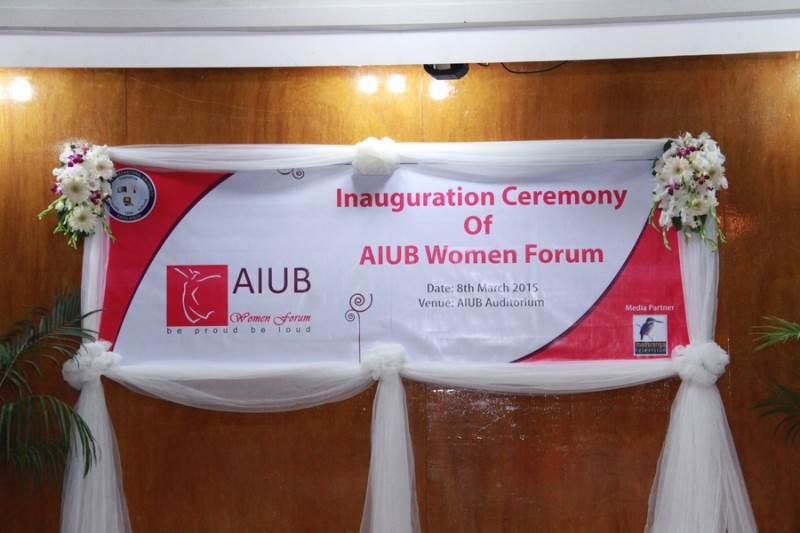
The AIUB Women Forum (AWF) was inaugurated on 8 March 2015, in celebration of International Women's Day, at the AIUB Auditorium [8]. The Forum promotes women's empowerment at all levels of decision-making, with a focus on education, entrepreneurship and leadership. It also connects women's rights advocates, NGOs, women's organisations and women entrepreneurs [1], [8].
Membership and representation
All women at AIUB, including students, faculty members and administrative employees, are members of the Forum [9]. This university-wide membership structure provides women employees with an institutional platform to connect, express shared interests and participate in initiatives promoting women's rights and empowerment.
Activities and engagement
The AWF advocates for women's rights and addresses issues affecting women's participation in education, industry and leadership. Its activities include awareness programmes on women's empowerment, women's health, gender-based violence and equal opportunities [1], [9], [10]. Notable initiatives include:
- "Your Story Matters" (22 March 2023). An International Women's Day panel discussion addressing women's mental well-being and the support services available to AIUB students, faculty members and officials [11].
- International Women's Day celebration (9 March 2025). An event organised jointly by the AIUB Women Forum, faculty members and university directors, strengthening institutional engagement with women's empowerment [12].
AIUB Network of Excellence (ANOE)
The AIUB Network of Excellence (ANOE) is a professional association that brings together researchers from across the University's interdisciplinary research community [1]. It promotes the exchange of knowledge and resources, collaboration in research funding opportunities, ethical research practices and innovation. ANOE also advocates for the research interests and professional needs of AIUB staff [1].
By providing an organised platform for researchers to collaborate and represent shared professional interests, ANOE strengthens academic association and collective engagement within the University.
Women in the Power Sector Professional Network (WePOWER)
AIUB became the first educational institution to join the South Asia Women in Power Sector Professional Network (WePOWER) as an institutional member [13]. WePOWER is a voluntary regional network comprising 50 public and private energy utilities across eight South Asian countries, dedicated to increasing women's participation in the energy workforce and promoting their representation in science, technology, engineering and mathematics (STEM) fields [13].
AIUB joined the network as an institutional partner in July 2024 and is the only educational institution among WePOWER's partners in Bangladesh [14]. This partnership connects AIUB's women faculty and staff with a broader professional community, expanding opportunities for networking, knowledge exchange and career development.
In September 2024, AIUB and the WePOWER Bangladesh Chapter jointly organised the seminar "Female Students Career-Building Opportunities in Power Sector", promoting awareness of professional opportunities and women's participation in the power sector [13].
Diversity and Equality Committee
AIUB's Diversity and Equality Committee provides a formal institutional mechanism for employee representation and participation in matters concerning equality, diversity and human rights. Chaired by the Vice Chancellor, the Committee includes representatives of academic and administrative employees, alongside members from different university offices and the student community [15], [16].
Its membership includes representatives from each faculty, the Office of the Registrar, the Office of Human Resources, the Office of Student Affairs, the Institutional Quality Assurance Cell (IQAC) and the Office of Administration [16].
The Committee's responsibilities include:
1. Periodically reviewing institutional policies on diversity, equality, inclusion and human rights, and recommending improvements [16].
2. Monitoring the implementation of these policies across the University [16].
3. Encouraging and supporting students, faculty members and employees in participating in diversity and equality initiatives [15].
4. Organising capacity-building activities on diversity and equality for students, faculty and employees [15].
This representative structure enables academic and administrative employees to contribute to institutional discussions and initiatives concerning their working environment and equal treatment.
Equality, Diversity and Inclusion (EDI) Center
The Equality, Diversity and Inclusion (EDI) Center provides institutional support, resources and advocacy for minority employees, students and communities [17]. It offers an inclusive and welcoming environment where individuals from minority groups can connect, build supportive networks and participate in the university community [17].
The Center also promotes institutional equity through policy advocacy and provides resources for addressing diversity-related conflicts through mediation and support services [17]. These activities complement AIUB's representative structures by strengthening inclusion, mutual support and employee engagement across the University.
Employee Grievance, Consultation and Protection Mechanisms
AIUB provides institutional channels that enable employees to communicate concerns, submit complaints and seek the review of employment-related decisions. These mechanisms promote transparency, accountability and fair treatment, complementing the University's commitment to freedom of association and employee representation.
Office of Human Resources
The Human Resource Department (HRD) supports academic and non-academic employees throughout their employment, with responsibilities that include regulatory compliance and staff retention [18].
AIUB provides employees with multiple channels for submitting complaints and suggestions to the Office of Human Resources. Faculty and staff can raise concerns individually or collectively through dedicated forms, email and complaint and suggestion boxes. The University maintains the confidentiality of individuals and the information submitted through these channels, encouraging employees to communicate workplace concerns in a secure environment [18].
Employment Practice Appeal Process
AIUB maintains a formal appeal process that enables employees to raise concerns regarding employment practices, including matters related to their rights, remuneration and workplace conduct [19].
This mechanism provides employees with an institutional avenue to request the review of decisions affecting their employment and seek fair and transparent treatment. By establishing a structured process for addressing employment-related concerns, AIUB reinforces accountability and supports the protection of employees' rights.
Complaint Committee and Protection Against Sexual Harassment
AIUB has established a dedicated Complaint Committee to address sexual harassment cases in accordance with the guidelines issued by the High Court Division of the Supreme Court of Bangladesh [2].
The Committee provides an institutional mechanism for addressing harassment complaints and supports the protection of employees' dignity, safety and equal participation in the workplace. This mechanism is particularly relevant to fostering an environment in which women can participate confidently in professional activities, institutional forums and university associations.
Institutional Channels and Their Functions
AIUB's grievance, representation and support mechanisms operate across different areas of employee engagement and institutional governance.
| Institutional mechanism | Main function | Contribution to employees |
| Office of Human Resources [18] | Receives individual and collective complaints and suggestions through confidential channels. | Facilitates communication and the expression of workplace concerns. |
| Employment Practice Appeal Process [19] | Reviews concerns regarding employment rights, remuneration and workplace conduct. | Provides a formal avenue for seeking review of employment-related decisions. |
| Complaint Committee [2] | Addresses sexual harassment complaints under the applicable judicial guidelines. | Supports employees' safety, dignity and protection from harassment. |
| Diversity and Equality Committee [15], [16] | Reviews institutional policies and monitors their implementation. | Promotes employee representation and participation in equality-related matters. |
| EDI Center [17] | Provides advocacy, support and mediation concerning diversity and inclusion. | Strengthens inclusion and access to institutional support. |
References
| [1] | American International University-Bangladesh, “Forums and Networks at AIUB,” [Online]. Available: https://aiub.edu/sustainability/sdg8/sdg8-initiative/forums-and-networks-at-aiub. [Accessed 2026]. |
| [2] | American International University-Bangladesh, “SDG 8: Decent Work and Economic Growth – AIUB Activity Report of 2023,” [Online]. Available: https://www.aiub.edu/iqac/sdgs/aiub-sdg-activity-report-2023/sdg8-aiubactivityreportof2023. [Accessed 2026]. |
| [3] | American International University-Bangladesh, “AIUB Non-Discriminatory Employment Policy,” [Online]. Available: https://aiub.edu/offices/hrd/aiub-non-discriminatory-employment-policy. [Accessed 2026]. |
| [4] | Legislative and Parliamentary Affairs Division, Government of Bangladesh , “The Constitution of the People's Republic of Bangladesh, Article 38: Freedom of association,” [Online]. Available: https://bdlaws.minlaw.gov.bd/act-print-367/section-print-24586.html. [Accessed 2026]. |
| [5] | International Labour Organization, “Factsheet No. 2: Freedom of Association and the Right to Organize,” [Online]. Available: https://tradefordecentwork.ilo.org/wp-content/uploads/2024/09/Factsheet-No.-2-on-Technical-Note.pdf. [Accessed 2026]. |
| [6] | International Labour Organization, “Factsheet No. 4: The Right to Organise and Collective Bargaining,” [Online]. Available: https://tradefordecentwork.ilo.org/wp-content/uploads/2024/09/Factsheet-No.-4-on-Technical-Note.pdf. . [Accessed 2026]. |
| [7] | The Daily Star, “Rights Advocacy: trade unions under the Bangladesh Labour Act, 2006,” [Online]. Available: https://www.thedailystar.net/law-our-rights/rights-advocacy/news/trade-union-the-collective-voice-against-workers-predicament-3136926. [Accessed 2026]. |
| [8] | American International University-Bangladesh, “The Launching of the AIUB Women Forum,” [Online]. Available: https://www.aiub.edu/the-launching-of-the-aiub-women-forum. [Accessed 2026]. |
| [9] | American International University-Bangladesh, IQAC, “AIUB Women Forum (AWF),” [Online]. Available: https://www.aiub.edu/iqac/women-development/aiub-women-forum-awf. [Accessed 2026]. |
| [10] | American International University-Bangladesh, “AIUB's Contributions to Gender Equity and Women Empowerment,” [Online]. Available: https://dspace.aiub.edu/jspui/bitstream/123456789/226/1/AIUB%e2%80%99s%20Contributions%20to%20Gender%20Equity%20and%20Women%20Empower.pdf. [Accessed 2026]. |
| [11] | American International University-Bangladesh, “Your Story Matters’ – International Women's Day (IWD) 2023 Celebration,” [Online]. Available: https://www.aiub.edu/your-story-matters---international-womens-day-iwd-2023-celebration. [Accessed 2026]. |
| [12] | American International University-Bangladesh, “International Women's Day Celebration at AIUB,” [Online]. Available: https://www.aiub.edu/international-womens-day-celebration-at-aiub. [Accessed 2026]. |
| [13] | American International University-Bangladesh, “AIUB Is an Institutional Partner of WePOWER,” [Online]. Available: https://www.aiub.edu/aiub-is-an-institutional-partner-of-wepower. [Accessed 2026]. |
| [14] | American International University-Bangladesh, “AIUB at the Regional Business Meeting of WePOWER,” [Online]. Available: https://www.aiub.edu/aiub-at-the-regional-business-meeting-of-wepower. [Accessed 2026]. |
| [15] | American International University-Bangladesh, “Diversity and Equality Committee,” [Online]. Available: https://aiub.edu/administration/institutional-policy/diversity-and-equality-committee. [Accessed 2026]. |
| [16] | American International University-Bangladesh, “Student representation at American International University-Bangladesh (AIUB),” [Online]. Available: https://aiub.edu/sustainability/student-representation-at-american-international-university-bangladesh-aiub. [Accessed 2026]. |
| [17] | American International University-Bangladesh, “Equality, Diversity and Inclusion (EDI) Center.,” [Online]. Available: https://aiub.edu/oncampus/equality-diversity-and-inclusion-edi-center. [Accessed 2026]. |
| [18] | American International University-Bangladesh, “Office of Human Resources,” [Online]. Available: https://www.aiub.edu/offices/hrd. [Accessed 2026]. |
| [19] | American International University-Bangladesh, “Employment Practice Appeal Process,” [Online]. Available: https://aiub.edu/sustainability/sdg8/sdg8-initiative/employment-practice-appeal-process. [Accessed 2026]. |