


TABLE OF CONTENTS
AIUB's Employment Practice Appeal Process
Institutional Bodies Responsible for Handling Complaints
Connection with AIUB's Employment Policies
How Employees Submit and Appeal Employment-Related Concerns
Step-by-Step Complaint Submission Process
Employee Suggestions and Institutional Feedback
Overview of Employee Complaint and Feedback Channels
Specialised Complaint Procedures and Equality Mechanisms
Policy Regarding Discrimination Complaints for Employees
Policy Regarding Sexual Harassment Complaints for Employees
Equality Governance and Institutional Oversight
Protections for Employees Using Complaint and Appeal Mechanisms
Protection Against Employment-Related Disadvantages
Equal Rights Across Employment Arrangements
Legal Framework and Awareness of Employee Rights
National Legal Framework Supporting Employee Rights
SDG 8.2.8: Does your university as a body have a process for employees to appeal on employee rights and/or pay?
AIUB's Employment Practice Appeal Process
AIUB provides institutional channels through which employees can raise concerns and seek the review of employment-related matters, including employee rights, remuneration and workplace conduct. This appeal framework supports transparency, accountability and the consistent application of the University's employment policies [1].
Scope of the Appeal Process
AIUB's appeal process addresses employee concerns across three principal areas [1]:
| Area | Examples of concerns |
| Employee rights | Unequal treatment, access to employment benefits and leave entitlements, and terms and conditions of employment. |
| Pay and remuneration | Salary, employment grade, placement on the pay scale and pay equity. |
| Workplace conduct | Discrimination, harassment and other forms of inappropriate behaviour affecting employees in the workplace. |
By explicitly addressing employee rights and remuneration, the process provides employees with a formal channel to raise concerns about the application of employment conditions and compensation practices.
Institutional Bodies Responsible for Handling Complaints
AIUB assigns complaint-handling responsibilities to designated institutional offices and committees:
- Office of Human Resources. The Office of Human Resources receives and handles employee inquiries and complaints [1], [2]. Its responsibilities include human resources compliance, performance appraisal and employee retention, supporting the administration and oversight of employment-related matters [3].
- Complaint Committee. AIUB maintains a designated Complaint Committee, established in accordance with the guidelines of the High Court Division of the Supreme Court of Bangladesh, to address complaints of sexual harassment [1].
These institutional mechanisms provide employees with designated channels for raising workplace concerns and support the University's commitment to fair and accountable employment practices.
Connection with AIUB's Employment Policies
The appeal process complements AIUB's broader employment policy framework, which includes a uniform pay scale without gender-based salary differences, a living wage commitment, non-discrimination, equal rights for outsourced workers and the prohibition of forced labour [4].
Together, these policies and complaint-handling mechanisms reinforce AIUB's institutional commitment to equitable employment conditions, fair remuneration and the protection of employee rights. They also provide an organizational framework for addressing concerns related to the implementation of these commitments.
How Employees Submit and Appeal Employment-Related Concerns
AIUB provides employees with accessible formal channels for submitting employment-related complaints and concerns. The University's procedures combine designated institutional contacts, standardized complaint forms and physical and electronic submission options, supporting an organized and confidential process for addressing workplace issues.
Step-by-Step Complaint Submission Process
AIUB establishes the following procedure for employees wishing to raise employment-related concerns [1], [2]:
1. Select the appropriate channel. Employees can direct concerns involving employment rights, remuneration, discrimination and workplace conduct to the Office of Human Resources. Complaints concerning sexual harassment are handled by the designated Complaint Committee [1].
2. Complete the complaint form. AIUB provides a downloadable complaint form that allows employees to document their concerns and formally communicate the matter to the relevant institutional body [2].
3. Submit the complaint. Employees can submit the completed form electronically by emailing hr@aiub.edu or physically by placing it in the complaint box located in Annex 1 [2].
4. Confidential handling. AIUB protects the confidentiality of the complainant and the information provided during the complaint submission process [2].
5. Review and resolution. AIUB's complaint and grievance procedures establish mechanisms for addressing complaints involving alleged violations of the University's non-discrimination commitments, supporting the institutional review and resolution of employment-related concerns [5].
Employee Suggestions and Institutional Feedback
In addition to formal complaint procedures, AIUB provides employees with a dedicated suggestion mechanism to communicate ideas and propose improvements to institutional policies and practices. Employees can complete a downloadable suggestion form and submit it by email to hr@aiub.edu or use the suggestion boxes available in different campus buildings [2].
This mechanism encourages employee participation in institutional improvement and provides an additional channel for communicating feedback on workplace policies and practices.
Overview of Employee Complaint and Feedback Channels
| Channel | Submission method | Responsible body |
| Complaint form – Email | Submit the completed form to hr@aiub.edu [2]. | Office of Human Resources |
| Complaint box | Place the completed complaint form in the designated box in Annex 1 [2]. | Office of Human Resources |
| Suggestion form | Email the completed form to hr@aiub.edu or place it in a suggestion box located in campus buildings [2]. | Office of Human Resources |
| Sexual harassment complaint | Submit the complaint to the designated committee [1]. | Complaint Committee |
Specialised Complaint Procedures and Equality Mechanisms
In addition to its general employment appeal process, AIUB maintains specialised policies and institutional mechanisms to address discrimination, sexual harassment and other workplace concerns. These arrangements reinforce the University's commitment to protecting employee rights, promoting equal treatment and maintaining a respectful working environment.
Policy Regarding Discrimination Complaints for Employees
AIUB's Policy Regarding Discrimination Complaints for Employees establishes the University's commitment to preventing discrimination and harassment in the workplace. The policy prohibits discrimination or harassment against employees on the basis of religion, race, colour, age, disability, nationality, marital status or sexual orientation, including gender identity [2].
The Office of Human Resources is responsible for handling employee inquiries and complaints submitted under this policy [2]. This arrangement provides employees with an institutional channel for raising concerns about unequal treatment in employment conditions, including remuneration, access to benefits and other employment-related rights.
By explicitly addressing protected characteristics and assigning responsibility for complaint handling, the policy reinforces AIUB's commitment to non-discrimination and equitable employment practices.
Policy Regarding Sexual Harassment Complaints for Employees
AIUB maintains a zero-tolerance approach to sexual misconduct in the workplace. Its complaint and grievance procedures establish mechanisms for addressing sexual harassment complaints and supporting the protection of employees [6].
A designated Complaint Committee is constituted in accordance with the guidelines issued by the High Court Division of the Supreme Court of Bangladesh [1]. These guidelines originate from a 2009 High Court judgment requiring public and private workplaces and educational institutions to establish committees responsible for receiving complaints, conducting investigations and making recommendations [7].
AIUB's specialised committee provides an institutional mechanism for handling sexual harassment complaints in accordance with this national judicial framework.
Equality Governance and Institutional Oversight
AIUB's commitment to equality is also supported by its Diversity and Equality Committee, chaired by the Vice Chancellor and comprising representatives from academic and administrative staff [8].
The Committee works continuously to address discrimination and equality-related matters across the University community. Its responsibilities include periodically reviewing equality and human rights policies and monitoring their implementation [9].
This governance structure strengthens institutional oversight of employee rights and equality commitments, complementing AIUB's formal complaint and appeal procedures.
Protections for Employees Using Complaint and Appeal Mechanisms
AIUB reinforces its employee complaint and appeal procedures with safeguards that promote confidentiality, fair treatment and protection against discrimination. These measures support an environment in which employees can raise employment-related concerns, including matters involving remuneration and workplace rights.
Confidentiality
AIUB protects the confidentiality of employees submitting complaints and the information provided during the complaint process [2], [6]. This safeguard supports employees in raising concerns about employment conditions, remuneration and workplace conduct while ensuring that their personal information and submitted complaints receive confidential treatment.
Fair and Equitable Treatment
AIUB's appeal framework is guided by the principles of fair treatment and confidentiality in handling employee complaints [1]. These principles support the consistent administration of grievance procedures and reinforce the University's commitment to addressing employment-related concerns through established institutional channels.
Protection Against Employment-Related Disadvantages
AIUB maintains a policy protecting individuals who report discrimination against educational or employment-related disadvantages [10]. This protection reinforces the University's commitment to ensuring that employees can raise concerns about discriminatory practices without being subjected to adverse treatment for reporting them.
By incorporating this safeguard into its institutional policy framework, AIUB strengthens the protection of employee rights and supports the use of formal complaint mechanisms.
Equal Rights Across Employment Arrangements
AIUB extends its commitment to equal employment rights to workers engaged through outsourced services, establishing equal rights for employees across different forms of outsourcing [4].
This commitment reinforces the University's broader approach to equitable employment conditions and the protection of workers' rights, complementing its institutional framework for addressing workplace concerns.
Legal Framework and Awareness of Employee Rights
AIUB's employment policies and complaint-handling mechanisms operate within a broader legal and institutional framework that promotes equal treatment, fair remuneration and the protection of workplace rights in Bangladesh. The University also supports awareness of these principles through academic activities addressing labour rights, gender equality and employment-related legal protections.
National Legal Framework Supporting Employee Rights
AIUB's employment practices and complaint procedures are aligned with key legal provisions governing workers' rights and workplace protections in Bangladesh.
- Bangladesh Labour Act, 2006. This legislation establishes provisions governing wages, working conditions and dispute resolution. Section 345 specifically requires equal wages for work of equal nature or standard [11], [12]. This principle reinforces the importance of equitable remuneration and provides a legal foundation for addressing concerns involving unequal pay and employment conditions.
- High Court Directive on Sexual Harassment (2009). The directive issued by the High Court Division of the Supreme Court of Bangladesh requires workplaces and educational institutions to establish committees responsible for receiving complaints, conducting investigations and making recommendations in cases of sexual harassment [7]. AIUB's designated Complaint Committee is constituted in accordance with these guidelines, providing an institutional mechanism for addressing such complaints [1].
Together, these legal provisions reinforce the framework supporting employee rights, equal remuneration and appropriate institutional responses to workplace grievances.
Academic Activities Promoting Awareness of Workers' Rights
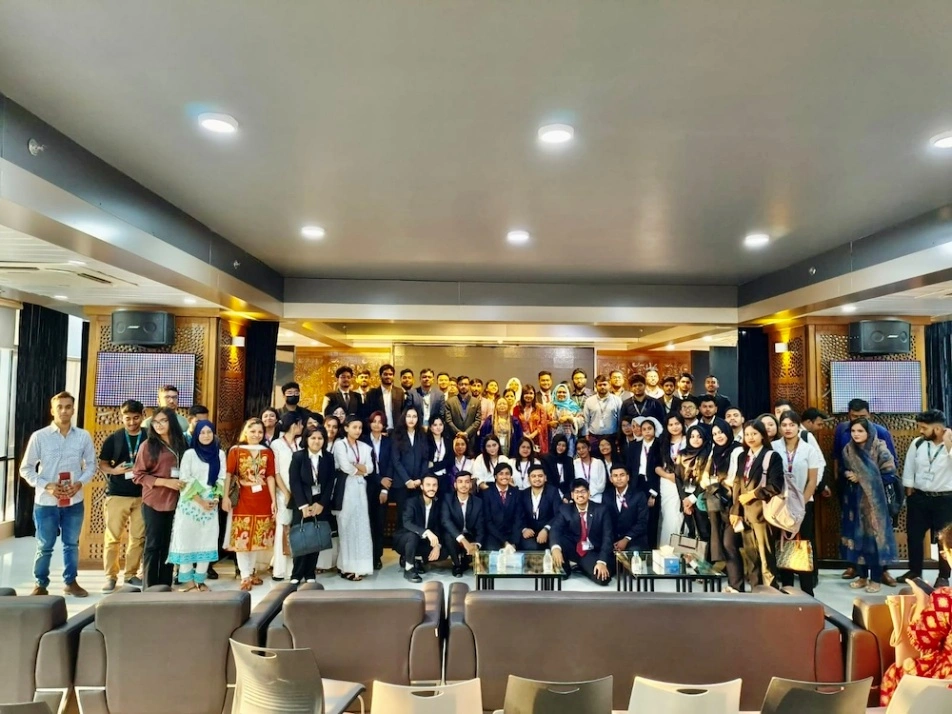
AIUB promotes awareness of employment rights and gender equality through academic initiatives that engage students, researchers and members of the university community in discussions on relevant legal and social issues.
- Seminar on Women's Workers' Rights (25 October 2023). The Department of Law organised a seminar examining recent legal reforms concerning maternity benefits and the prevention of gender-based violence. The event brought together Law students and BBA students majoring in Human Resource Management, strengthening their understanding of workers' rights and the legal responsibilities associated with employment practices [13].
- Second Virtual International Conference on Women's Rights in Emerging Societies (17 February 2024). AIUB co-organised this international academic conference in collaboration with Jus Corpus Law Journal, Symbiosis Law School and Shri Ramswaroop Memorial University. The event featured eight technical sessions and included eight participants from AIUB, providing a platform for academic exchange on women's rights and emerging legal and social challenges [14].
These activities contribute to a broader institutional environment that promotes knowledge of workers' rights, gender equality and the legal principles underpinning fair employment practices.
References
| [1] | American International University-Bangladesh, “Employment Practice Appeal Process,” [Online]. Available: https://aiub.edu/sustainability/sdg8/sdg8-initiative/employment-practice-appeal-process. [Accessed 2026]. |
| [2] | American International University-Bangladesh, “Policy Regarding Discrimination Complaints for Employees,” [Online]. Available: https://aiub.edu/offices/hrd/policy-regarding-discrimination-complaints-for-employees. [Accessed 2026]. |
| [3] | American International University-Bangladesh, “Office of Human Resources,” [Online]. Available: https://www.aiub.edu/offices/hrd. [Accessed 2026]. |
| [4] | American International University-Bangladesh, “Employment Policies and Practices,” [Online]. Available: https://aiub.edu/sustainability/sdg8/sdg8-initiative/employment-policies-and-practices. [Accessed 2026]. |
| [5] | American International University-Bangladesh, “AIUB Non-discrimination Policy,” [Online]. Available: https://aiub.edu/administration/institutional-policy/aiub-non-discrimination-policy. [Accessed 2026]. |
| [6] | American International University-Bangladesh, “Policy Regarding Sexual Harassment Complaints for Employees,” [Online]. Available: https://aiub.edu/offices/hrd/policy-regarding-sexual-harassment-complaints-for-employees. [Accessed 2026]. |
| [7] | Prothom Alo, “High Court directive on preventing sexual harassment in workplaces and educational institutions,” [Online]. Available: https://en.prothomalo.com/amp/story/bangladesh/6e7pdlx9oz. . [Accessed 2026]. |
| [8] | American International University-Bangladesh, “Diversity and Equality Committee,” [Online]. Available: https://aiub.edu/administration/institutional-policy/diversity-and-equality-committee. [Accessed 2026]. |
| [9] | American International University-Bangladesh, “Student representation at American International University-Bangladesh (AIUB),” [Online]. Available: https://aiub.edu/sustainability/student-representation-at-american-international-university-bangladesh-aiub-. [Accessed 2026]. |
| [10] | American International University-Bangladesh, “Policy at AIUB that Protects Those Reporting Discrimination from Educational or Employment Disadvantages,” [Online]. Available: https://aiub.edu/sustainability/sdg5/sdg5-initiative/policy-at-aiub-that-protects-those-reporting-discrimination-from-educational-or-employment-disadvantages. [Accessed 2026]. |
| [11] | Global Law Experts, “Employment Law Bangladesh 2026: Labour Amendment Act, employer duties and provident fund,” [Online]. Available: https://globallawexperts.com/employment-law-bangladesh-2026-labour-amendment-act-employer-duties-provident-fund/. [Accessed 2026]. |
| [12] | Worksuite, “Labour Act, Section 345 (Law Prohibiting Discrimination or Harassment),” [Online]. Available: https://worksuite.com/glossary/labour-act-bangladesh-law-prohibiting-discrimination-or-harassment. [Accessed 2026]. |
| [13] | American International University-Bangladesh, “A Seminar on ‘Recent Legal Reforms on Maternity Benefit and the Prevention of Gender Based Violence’ Organized by the Department of Law,” [Online]. Available: https://www.aiub.edu/a-seminar-on-recent-legal-reforms-on-maternity-benefit-and-the-prevention-of-gender-based-violence-organized-by-the-department-of-law. [Accessed 2026]. |
| [14] | American International University-Bangladesh, “The Second Virtual International Conference on Women's Rights in Emerging Societies,” [Online]. Available: https://www.aiub.edu/the-second-virtual-international-conference-on-womens-rights-in-emerging-societies. [Accessed 2026]. |