


TABLE OF CONTENTS
AIUB's Pay Scale Equity Policy
A Uniform Pay Scale for Faculty and Staff
Equal Remuneration Regardless of Gender
Equality and Non-Discrimination in Employment and Remuneration
Commitment to Monitoring and Addressing Gender Pay Gaps
Measuring and Addressing Gender Pay Gaps
Continuous Monitoring of Pay Equity
A Structured Framework for Assessing Pay Equity
Institutional Oversight and Action on Equality
National and International Framework for Equal Pay
The Constitution of Bangladesh
International Labour Standards
Alignment Between Legal Standards and AIUB's Institutional Practices
Institutional Measures Supporting Gender Pay Equity
Equal Access to Employee Benefits
Supporting Career Continuity and Work-Family Balance
Equal Opportunities for Professional Development
Women's Empowerment, Voice and Leadership
Institutional Governance and Employee Complaint Mechanisms
Diversity and Equality Committee
SDG 8.2.6: Does your university as a body have a policy on pay scale equity including a commitment to measurement and elimination of gender pay gaps?
AIUB's Pay Scale Equity Policy
AIUB establishes its commitment to fair and equitable remuneration through its Non-Discriminatory Employment Policy, issued by the Office of Human Resources [1]. The policy incorporates a structured pay scale framework and principles of equal treatment, ensuring that compensation practices align with the University's commitment to equality of opportunity and non-discrimination.
A Uniform Pay Scale for Faculty and Staff
AIUB maintains a dedicated and uniform pay scale structure for its academic and administrative employees, in accordance with the Government of Bangladesh (GOB) wage policy [1]. This framework promotes consistency and transparency in remuneration across the University through three key principles:
1. Position-based remuneration. Salaries are determined according to established positions and corresponding grades within the pay scale, providing a consistent basis for compensation.
2. Consistent application across employee categories. The same structured framework applies to faculty members and administrative staff, supporting equitable remuneration practices across academic departments and administrative offices.
3. Transparent salary progression. Clearly defined grades and steps establish a structured basis for salary progression, allowing employees to understand how remuneration develops throughout their careers under consistent institutional criteria.
Equal Remuneration Regardless of Gender
AIUB's uniform pay scale supports the principle of equal pay for equal work, ensuring that remuneration is governed by established salary grades rather than gender-based considerations [1], [2]. This approach reinforces the University's commitment to gender equality in the workplace and promotes fair compensation practices for women and men across academic and administrative positions.
Equality and Non-Discrimination in Employment and Remuneration
AIUB's commitment to fair compensation forms part of its broader institutional principles of respect for human dignity, equality of opportunity and academic freedom [1]. These principles are embedded in the University's internal and external policies, including those governing employee remuneration.
The Non-Discriminatory Employment Policy prohibits discrimination based on age, gender, gender identity, sexual orientation, race, disability, colour, religion, and national or ethnic origin. It also ensures that employees have equal access to the rights, privileges, programmes and activities available within the University [1]. By extending these principles across employment conditions, AIUB reinforces an inclusive working environment in which compensation and professional opportunities are guided by equality and non-discrimination.
Commitment to Monitoring and Addressing Gender Pay Gaps
AIUB further reinforces its commitment to pay equity by actively measuring and addressing gender pay gaps as part of its institutional approach to fair compensation [3]. This commitment extends the University's equal remuneration principles beyond the establishment of a uniform pay scale, incorporating ongoing attention to salary equity and the identification of potential disparities.
The University's approach to measuring and addressing gender pay gaps is further detailed in Section 3.
Measuring and Addressing Gender Pay Gaps
Continuous Monitoring of Pay Equity
AIUB incorporates the continuous measurement and monitoring of gender pay gaps into its institutional approach to fair compensation. Tracking pay scales for gender equity is an established practice at the University, supporting its commitment to ensuring fair remuneration and fostering balanced, respectful and inclusive working conditions across its operations [3].
This ongoing attention to pay equity reinforces the University's commitment to identifying potential salary disparities and promoting equitable compensation for women and men throughout its workforce.
A Structured Framework for Assessing Pay Equity
AIUB's uniform pay scale provides a consistent framework for promoting and assessing remuneration equity across academic and administrative positions [1]. The established salary grades and corresponding pay structures offer a common basis for considering compensation practices and reinforcing equal treatment regardless of gender.
This framework supports pay equity in three complementary dimensions:
1. Consistency within salary grades. The application of a common pay scale establishes consistent remuneration criteria for employees occupying positions within the same salary grade.
2. Equitable access to career progression. The structured grading system provides a common framework for professional advancement, supporting equal opportunities for women and men to progress within the University's academic and administrative workforce.
3. Continuity in remuneration practices. The established salary structure provides a consistent basis for maintaining equitable compensation as employees join the University and advance in their professional careers.
Institutional Oversight and Action on Equality
AIUB complements its pay equity commitments with institutional mechanisms that promote the implementation and continuous review of equality and inclusion policies.
The University's Diversity and Equality Committee, chaired by the Vice Chancellor, periodically reviews policies concerning diversity, equality, inclusion and human rights, recommends appropriate policy changes, and monitors their implementation [4] [5]. This governance structure reinforces institutional accountability and supports the integration of equality principles into the University's employment practices.
The Committee's work complements AIUB's commitment to measuring and addressing gender pay gaps, contributing to an institutional environment guided by fairness, equal opportunity and respect for all employees.
AIUB's Approach to Pay Equity
AIUB's approach combines a structured remuneration framework, continuous monitoring and institutional oversight to promote gender pay equity.
| Key component | Institutional approach |
| Establish | A uniform pay scale aligned with the Government of Bangladesh wage policy provides a consistent remuneration framework for faculty and staff [1]. |
| Measure | Gender equity in pay scales is continuously monitored as part of the University's fair compensation commitment [3]. |
| Address | AIUB commits to addressing gender pay gaps to promote equitable remuneration [3]. |
| Review | The Diversity and Equality Committee periodically reviews equality policies and monitors their implementation [4], [5]. |
National and International Framework for Equal Pay
AIUB's commitment to gender pay equity is aligned with the national legal framework of Bangladesh and internationally recognised labour standards. These frameworks establish fundamental principles of equal remuneration, non-discrimination and equality of opportunity, reinforcing the University's institutional commitment to fair employment and compensation practices.
Bangladesh Labour Act, 2006
Section 345 of the Bangladesh Labour Act, 2006 establishes the principle of equal remuneration for male, female and workers with disabilities performing work of the same nature or standard [6] [7]. This provision reinforces the importance of fair compensation and non-discriminatory wage practices.
AIUB's uniform pay scale reflects these principles by establishing a consistent remuneration framework for academic and administrative employees, supporting equitable compensation regardless of gender [1].
The Constitution of Bangladesh
Article 29 of the Constitution of Bangladesh establishes the principle of equality of opportunity in public employment [8]. This constitutional commitment forms part of the country's broader framework for promoting equal treatment and access to employment opportunities.
In alignment with these principles, AIUB incorporates equality and non-discrimination into its institutional employment policies, ensuring that employees have equal access to employment-related rights, privileges and opportunities regardless of gender [1].
International Labour Standards
AIUB's approach to pay equity is also consistent with internationally recognised labour standards established by the International Labour Organization (ILO).
The Equal Remuneration Convention, 1951 (No. 100) establishes the principle of equal remuneration for men and women for work of equal value [9]. Bangladesh ratified this convention in 1998, reinforcing its commitment to international standards on gender equality in compensation [10].
Similarly, the Discrimination (Employment and Occupation) Convention, 1958 (No. 111) promotes equality of opportunity and treatment in employment and occupation, addressing discrimination across various grounds, including sex. Bangladesh ratified this convention in 1972 [10].
By incorporating non-discrimination and equal remuneration principles into its employment framework, AIUB reinforces its alignment with these internationally recognised standards [1].
Alignment Between Legal Standards and AIUB's Institutional Practices
| Legal or international instrument | Key principle | Alignment with AIUB's practices |
| Bangladesh Labour Act, 2006 – Section 345 | Equal remuneration for men, women and workers with disabilities performing work of the same nature or standard [6], [7]. | A uniform pay scale provides a consistent framework for remuneration across faculty and staff [1]. |
| ILO Equal Remuneration Convention, 1951 (No. 100) | Equal remuneration for men and women for work of equal value [9]. | AIUB's pay equity policy promotes fair compensation and non-discriminatory remuneration practices [3], [1]. |
| ILO Discrimination (Employment and Occupation) Convention, 1958 (No. 111) | Equality of opportunity and treatment in employment and occupation [10]. | AIUB's Non-Discriminatory Employment Policy establishes equal employment rights and protections regardless of gender and other protected characteristics [1]. |
| Constitution of Bangladesh – Article 29 | Equality of opportunity in public employment [8]. | AIUB incorporates equality of opportunity and non-discrimination into its institutional employment policies [1]. |
Institutional Measures Supporting Gender Pay Equity
AIUB complements its commitment to equal remuneration with institutional measures that promote employee well-being, career continuity and equal access to professional development. These initiatives address important aspects of workplace equality, including family responsibilities, financial security, training opportunities and women's participation in leadership. Collectively, they support an inclusive working environment in which women and men can develop their careers under equitable conditions.
Equal Access to Employee Benefits
AIUB provides a range of employment benefits designed to support the financial security, well-being and professional development of its employees, with access established on non-discriminatory terms [11]. These benefits include:
- Health insurance: Medical insurance coverage is available to all employees, including women and members of underrepresented groups.
- Life insurance: Employees are eligible for life insurance regardless of religion, race, colour, nationality, marital status, sexual orientation or gender identity.
- Contributory Provident Fund and gratuity: These benefits provide employees with additional financial security and support their long-term economic well-being.
- Interest-free loans: Full-time employees can access interest-free emergency loans and study loans to address personal financial needs and support their educational development.
These benefits contribute to equitable employment conditions and reinforce AIUB's commitment to employee welfare and financial security.
Supporting Career Continuity and Work-Family Balance
AIUB recognises the importance of supporting employees with family responsibilities and provides institutional measures that facilitate the balance between professional and caregiving commitments.
- Paid maternity leave: Permanent female employees are entitled to paid maternity leave, supporting their well-being during childbirth and facilitating their return to professional responsibilities [11].
- Paid paternity leave: Male academic and administrative employees are also entitled to paternity leave, recognising the importance of fathers' participation in childcare and shared family responsibilities [11].
- Support for returning mothers: As part of its collaboration with WePOWER under the Retention pillar, AIUB promotes women's continued participation in the workforce following maternity and caregiving breaks. The University also celebrated the first International Returning Mothers Day, recognising and honouring women returning to their professional careers after maternity leave [12].
- On-campus daycare facility: The AIUB Daycare Facility provides childcare support for employees with young children during working hours, helping parents manage family responsibilities while maintaining their professional commitments [13].
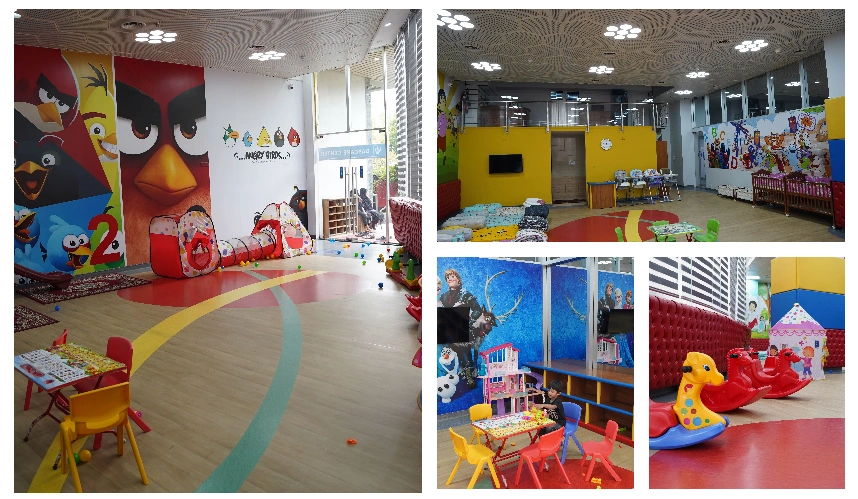
Together, these initiatives strengthen workplace support for parents, encourage women's continued participation in employment and contribute to more sustainable career development.
Equal Opportunities for Professional Development
AIUB promotes continuous learning and professional advancement by providing academic and administrative employees with access to educational and professional development opportunities [11]. These include:
- Tuition fee waivers: Full-time academic and administrative employees are eligible for tuition fee waivers when pursuing graduate programmes at AIUB, supporting their access to further education and advanced qualifications.
- Study leave and travel grants: Employees can access study leave and travel grants to participate in graduate studies, research activities, academic conferences and professional training programmes.
By supporting employees' continued education and professional development, AIUB strengthens opportunities for career advancement and reinforces an employment environment based on equal access to learning and growth.
Women's Empowerment, Voice and Leadership
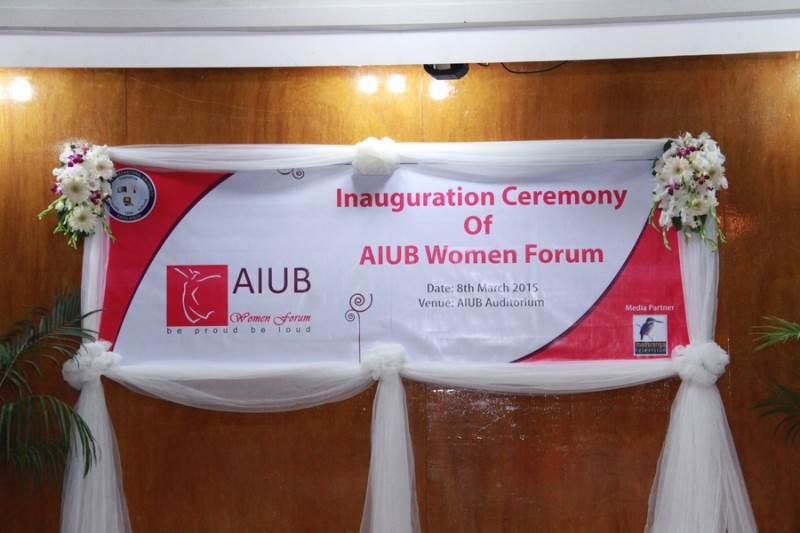
AIUB further promotes women's empowerment and participation in institutional and professional decision-making through the AIUB Women Forum, inaugurated on 8 March 2015 [14] [15].
The Forum works to empower women at different levels of decision-making, focusing on education, entrepreneurship and leadership development. Its activities provide an institutional platform for promoting women's participation, strengthening their professional capabilities and encouraging greater representation in leadership roles.
By fostering women's empowerment and leadership, AIUB reinforces an organizational culture that values equal opportunities, recognizes women's contributions and supports their professional advancement.
Institutional Governance and Employee Complaint Mechanisms
AIUB supports the implementation of its employment and pay equity commitments with institutional governance structures and accessible channels for employee feedback and complaints. These mechanisms promote accountability, support the consistent application of employment policies and provide employees with formal avenues to raise workplace concerns.
Office of Human Resources
The Office of Human Resources plays a central role in administering AIUB's employment policies and coordinating human resource practices across the University [16]. Its responsibilities encompass human resource planning, recruitment and selection, employee training and development, performance appraisal, regulatory compliance and employee retention.
These functions support the consistent administration of employment practices and reinforce the implementation of institutional policies concerning employee rights, professional development and fair working conditions.
Diversity and Equality Committee
AIUB's commitment to equality and non-discrimination is further supported by its Diversity and Equality Committee, chaired by the Vice Chancellor and comprising representatives from academic and administrative units, as well as the student community [4], [5].
The Committee brings together representatives from each faculty and key institutional offices, including the Office of the Registrar, the Office of Human Resources, the Office of Student Affairs, the Institutional Quality Assurance Cell (IQAC) and the Office of Administration [5].
Its responsibilities include periodically reviewing diversity, equality, inclusion and human rights policies, recommending policy improvements and monitoring their implementation. The Committee also assesses progress in diversity and equality and evaluates the impact of institutional initiatives on the University's stakeholders [4], [5].
This governance structure reinforces institutional accountability and supports the integration of equality and non-discrimination principles into AIUB's employment environment.
Confidential Employee Feedback and Complaint Channels
AIUB provides employees with several channels to communicate concerns, submit complaints and offer suggestions to the Office of Human Resources. These include dedicated forms, email and institutional complaint and suggestion boxes. The University also maintains the confidentiality of individuals raising concerns through these mechanisms [16].
Additionally, AIUB's employment practice appeal process provides a formal mechanism for employees to raise concerns regarding their employment rights, remuneration and workplace conduct [17].
These channels strengthen transparency and accountability in employment management, allowing employees to communicate workplace concerns through established institutional procedures and supporting the fair application of employment policies.
References
| [1] | American International University-Bangladesh, “AIUB Non-Discriminatory Employment Policy,” [Online]. Available: https://aiub.edu/offices/hrd/aiub-non-discriminatory-employment-policy. [Accessed 2026]. |
| [2] | American International University-Bangladesh, “SDG 8: Decent Work and Economic Growth.,” [Online]. Available: https://www.aiub.edu/sustainability/sdg8. [Accessed 2026]. |
| [3] | American International University-Bangladesh, “Employment Policies and Practices,” [Online]. Available: https://aiub.edu/sustainability/sdg8/sdg8-initiative/employment-policies-and-practices. [Accessed 2026]. |
| [4] | American International University-Bangladesh, “Diversity and Equality Committee,” [Online]. Available: https://aiub.edu/administration/institutional-policy/diversity-and-equality-committee. [Accessed 2026]. |
| [5] | American International University-Bangladesh, “Student representation at American International University-Bangladesh (AIUB),” [Online]. Available: https://aiub.edu/sustainability/student-representation-at-american-international-university-bangladesh-aiub-. [Accessed 2026]. |
| [6] | Worksuite, “Labour Act, Section 345 (Law Prohibiting Discrimination or Harassment),” [Online]. Available: https://worksuite.com/glossary/labour-act-bangladesh-law-prohibiting-discrimination-or-harassment. [Accessed 2026]. |
| [7] | The Daily Star, “Confronting gender inequality in Bangladesh's labour laws,” [Online]. Available: https://www.thedailystar.net/supplements/international-womens-day-2026/news/confronting-gender-inequality-bangladeshs-labour-laws-4122936 . [Accessed 2026]. |
| [8] | The Business Standard, “Employment Discrimination: A Bangladeshi perspective,” [Online]. Available: https://www.tbsnews.net/thoughts/employment-discrimination-bangladeshi-perspective-528086. [Accessed 2026]. |
| [9] | Bangladesh Employers' Federation and International Labour Organization, “Gender Operational Manual,” [Online]. Available: https://bef.org.bd/wp-content/uploads/2026/06/Gender-Operational-manual_ILO_BEF_JUNE-2026.pdf. . [Accessed 2026]. |
| [10] | International Labour Organization, “Compilation of selected observations and direct requests of the Committee of Experts on the Application of Conventions and Recommendations: Bangladesh,” [Online]. Available: https://tradefordecentwork.ilo.org/wp-content/uploads/2024/09/Compilation-of-selected-observations-and-direct-requests-of-the-Committee-of-Experts-on-the-Application-of-Conventions-and-Recommendations-Bangladesh.pdf. [Accessed 2026]. |
| [11] | American International University-Bangladesh, “Employee Benefits & Policies,” [Online]. Available: https://aiub.edu/offices/hrd/employee-benefits. [Accessed 2026]. |
| [12] | American International University-Bangladesh, “Maternity Policy at AIUB that Supports Women Participation,” [Online]. Available: https://aiub.edu/sustainability/sdg5/sdg5-initiative/maternity-policy-at-aiub-that-supports-women-participation. [Accessed 2026]. |
| [13] | American International University-Bangladesh, “Daycare Facilities,” [Online]. Available: https://aiub.edu/oncampus/aiub-daycare-facilities. [Accessed 2026]. |
| [14] | American International University-Bangladesh, “The Launching of the AIUB Women Forum,” [Online]. Available: https://www.aiub.edu/the-launching-of-the-aiub-women-forum. [Accessed 2026]. |
| [15] | American International University-Bangladesh, “Forums and Networks at AIUB,” [Online]. Available: https://aiub.edu/sustainability/sdg8/sdg8-initiative/forums-and-networks-at-aiub. [Accessed 2026]. |
| [16] | American International University-Bangladesh, “Office of Human Resources,” [Online]. Available: https://www.aiub.edu/offices/hrd. [Accessed 2026]. |
| [17] | American International University-Bangladesh, “Employment Practice Appeal Process,” [Online]. Available: https://aiub.edu/sustainability/sdg8/sdg8-initiative/employment-practice-appeal-process. [Accessed 2026]. |